
Kazbek: all tours and programs
If you’re looking for a place where mountains whisper ancient legends and adrenaline surges like a mountain stream, then Kazbegi in Georgia is your ticket to an unforgettable adventure. Imagine glaciers sparkling in the sun, peaks calling like old fairy tales, and rivers with waterfalls below for pure relaxation. The 2026 season promises to be epic, with tours for every taste—from conquering five-thousanders to easy walks. Grab your backpack, friends, and head out—the Caucasus is waiting!
Check out all the tour options in Kazbegi — from classics to combos. Now let’s break it down step by step, what you can choose this year.

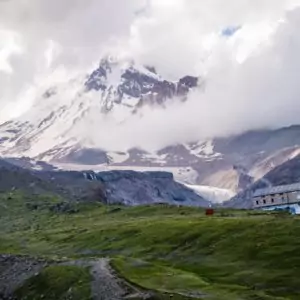
Kazbek Ascent: The Main Challenge of the Season
The biggest hit is the ascent to Kazbek at 5,054 meters. It’s not just a climb—it’s a real story of overcoming limits. The tour lasts 6–7 days, including acclimatization, glacier training, and a night summit push. It starts from Tbilisi, passes the Gergeti Monastery to the weather station, and then heads to the summit with panoramic views across the entire Caucasus. Price starts from $650, groups of 4–8 people, full gear included: crampons, ice axes, harnesses. Guides help beginners, but you need solid fitness—start running in advance!
The 2026 schedule is crystal clear, like mountain air. Group departures in August, when weather is most stable:
- July 26 – August 1
- August 3–9
- August 9–15
- August 15–22
- August 24–30
Each tour includes reserve days for wind or snow—safety first. August is peak season: fewer storms, better chances for a sunrise over Elbrus. Groups of 5–6 people, full package with gear at $695.
Detailed route from the Georgian side: starts in the village of Kazbegi, through moraine and glacier to base camp at 3,660 meters. Day 1: drive from Tbilisi to Kazbegi (up to 3 hours), hike ~10 km from Gergeti Monastery to overnight near Altihut shelter for initial acclimatization. Day 2: trek to Gergeti glacier moraine, cross the glacier (crampons if needed), short climb to the Weather Station, tent camp with rest and training (crampon use, rope team skills, ice axe self-arrest). Day 3: acclimatization hike to ~4,200 m to preview the summit route in daylight, return to base for rest (also a weather backup day). Day 4: summit push starting 1–2 a.m., 12–15 hours of effort with crampons, ropes, and ice axe on snowy slopes. Day 5: descent to the valley, arrival in Stepantsminda around 7 p.m. for rest. Days 6–7: reserve for bad weather, transfer back to Tbilisi. Past group successes motivate: most reach the top thanks to experienced guides and solid teamwork.
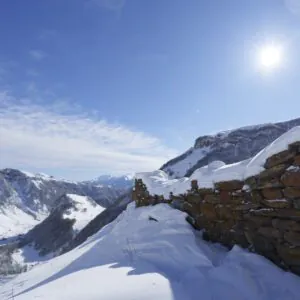
All Ascents in Georgia: From Easy to Advanced
Besides Kazbek, there’s Tetnuld at 4,869 m for pros—5 days with steep rocks and snowy slopes. Or Laila at 4,008 m for beginners: 6 days through forests, with training and tent nights. Everything ties back to Kazbegi—glaciers, passes, epic panoramas. Perfect for combo trips: warm-up first, then the main peak.
Ortsveri — Perfect Warm-Up Before Kazbek
Ortsveri at 4,258 meters as an ideal prep climb. 3–4 days, medium difficulty: three passes, glaciers, stunning views of the Gergeti glacier and Sherkhota volcano. Day 1: from Tbilisi to base camp; Day 2: across glacier to weather station with ice training; Day 3: summit and descent. Horses carry loads, nights in huts or tents. Price from $450, plus-gear package $540. After this, real altitude feels much less scary!
Hiking in Kazbegi Park: Easy Trails and Views
Hiking for those wanting something lighter. Two days: trails up to 12 km with 700 m gain, from Arsha and Toti waterfalls to Chaukhi pass at 3,200 m. Unexpected angles on Kazbek, lakes, ruins of Svan towers. Rain? Switch to Truso gorge with mineral springs. Overnight in guesthouse or camp, meals included. Price $180, great for families and beginners—excellent acclimatization.
Kazbegi Waterfalls: Relaxation After the Mountains
One-day chill to four cascades: Miketi, Toti, Arsha, and Gvelati. Easy walks through abandoned villages, river crossings, picnics by the water. 11 hours total, hot snacks and rain ponchos included. Back by 7 p.m. The contrast to harsh slopes—fresh air, water noise—as the perfect reward.
Rafting: Adrenaline on the River
One-day multi-tour: 2 hours trekking to the Aragvi source and waterfall, then 2 hours rafting on a wild river. Easy level, life jackets and helmets provided, guide, lunch, photos. From Tbilisi and back by 6 p.m. Price $95—total nature immersion, speed, and splashes as a perfect reset after glaciers.
Отзывы клиентов
 Nikita ChesnokovAny trip with PVD was a true adventure to remember for me! I've had 4 of them already, including one 1-week hiking trip, and really looking forward for more in the future.Сергей ФКлассные ребята. Много куда с ними ходил за последние два года: Джута, озера Абуделаури, озеро Удзиро, Тушетия и восхождения на Орцвери и на Казбек.Ivan SemerХороший и удобный сервис по аренде туристической оборудования. Спасибо, буду обращаться еще )Aleksei AzarovОтличный оператор различных туров по Грузии и не только. Ездил с ними несколько раз в Гудаури, Бахмаро, Тушети и каждый раз получал от поездки больше чем ожидал. Организаторы общительные, но не навязчивые, готовы помочь в случае каких либо трудностей, подсказать, дать совет, поддержать и вписаться в веселую затею, а также реализовать какую-нибудь нестандартную хотелку, вроде дать в аренду оборудование и проводить скитуром волн на ту гору. Для меня эти ребята - лучшее соотношение цены и качества и я точно планирую съездить с ними ещё не раз.Кристина КужальХодила с ребятами на Казбек - это восхождение останется в сердце навсегда! Спасибо гиду - Глеб, ты невероятный! Всё четко организовано, слажено. Атмосфера дружелюбная и веселая, но при этом все, что касается безопасности и временных лимитов - строго и четко. А еда! Ммммм... одно какао на высоте 3653 м чего только стоит! Всегда были накормлены, проинструктированы, помощь и поддержка от гида была всегда. Первый мой поход, где абсолютная уверенность в гиде и команде вселяла личную уверенность. Было интересно, захватывающе, местами непросто, но абсолютно комфортно, спокойно, безопасно и весело) Спасибо!))Dmitry DrozdКогда следующий тур, ребята? После успешного восхождения на Казбек нужно обязательно сделать еще несколько) Гид Глеб решал в процессе любые вопросы, четко определил погодное окно для восхождения и наша группа была первая на горе. Это мелочь, но это важно! В общем до встречи! Я в восторге от организации тура!Сергей ИодоСпасибо вашей команде за незабываемое восхождение на Казбек! Всё было идеально организовано, гид суперпрофи, поддерживал и мотивировал на каждом шагу. Мы взошли на вершину и получили массу невероятных эмоций!Yana SavischevaПутешествовали семьёй и брали у ребят машину. Всё прошло отлично: автомобиль в хорошем состоянии, никаких проблем не возникло. Коммуникация была быстрой и приятной. Остались только положительные впечатления. Рекомендуем! :)Showing our latest reviews


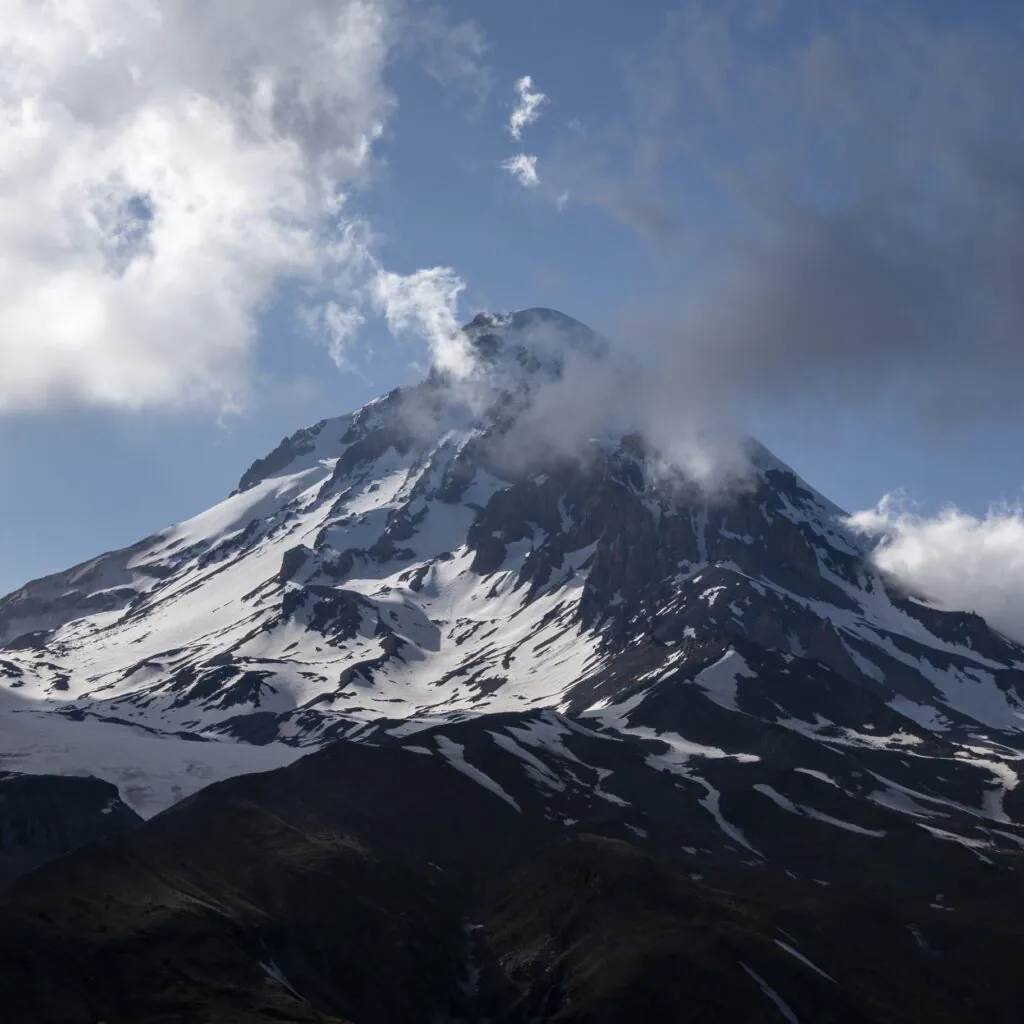
Real Stories from Guides: Lessons from the Mountains
Guide Allsvobod shares an honest account of a failed Kazbek summit attempt. The group started strong: acclimatization smooth, climb to weather station at 3,660 m and carry to 4,200 m easy, everyone felt great. But during the push, wind picked up—first 10–11 m/s, then stronger—ice particles flying into faces, forcing masks on while goggles failed. At 4,400 m one participant, a tough marathon runner with no experience above 2,000 m, began stopping often, breathing hard, wind pressing on the chest, every step draining energy. The guide decided to turn back—summit still far, risking the group’s health wasn’t worth it. A clear example: even strong people break under altitude and weather. Key lesson: never underestimate Kazbek, prepare for wind in advance, listen to forecasts and your body—not just the drive to reach the top at any cost.
The second part adds drama: at the same 4,400 m, acute mountain sickness hit. First pulling the rope more often, then swaying; at a rest stop—vomiting, unbearable sleepiness—coffee and bars didn’t help. Worse: signs of delirium, insisting he was descending to the USSR, falling, stumbling, but denying anything wrong. Guide immediately organized descent to weather station at 3,660 m—fast but careful, roped up. Symptoms eased almost completely in camp, and next day the group safely returned home. This reminds us: altitude is unpredictable, it can strike even after acclimatization. Never ignore signals—drowsiness, confusion, stubbornness—these are red flags. Better to descend alive and try again than play hero.
Kazbek History: From Myths to Modern Days
Kazbek has always been more than a mountain: in Georgian folklore it’s called Mgeri, with the kind spirit Aminato living on the summit—guardian of light and the valley, protecting locals from harm. Legends also tie it to Prometheus—the chained titan, adding epic scale to its suffering. The first official ascent happened in 1868: British explorer Douglas Freshfield with a team of eight Georgian highlanders and six Armenians from Tbilisi climbed the classic route, opening the era of serious Caucasus exploration. In the 19th century scientists and adventurers came to study geography and culture; in the 20th century Kazbek became a true alpinism hub—various routes appeared, from simple tourist ones to technical, plus glaciology and climate expeditions. Today the mountain draws thousands of tourists: nearby Gergeti Trinity at 2,200 m, where many stop for a blessing before climbing, and views blend ancient monasteries with glaciers. It’s a place where physical effort intertwines with Georgia’s spiritual heritage, every step a touch of millennia-old history.

What to Bring: Summit Gear Checklist
What to pack? The right gear makes all the difference on Kazbek, especially when weather flips in minutes and altitude adds load. Layer up for quick heat adjustments, and don’t skimp on wind/sun protection—UV is brutal on the glacier. Almost everything can be rented from organizers, but personal items like thermals and first aid are best your own—they’re more comfortable and reliable. Here’s the full checked list by category—bring extras; better to overpack than freeze or burn.
Clothing (layered, from base to summit):
- Thermal underwear (top and bottom) — essential for starts and nights
- Fleece jacket or sweater — mid-layer warmth
- Insulated jacket (synthetic or down) — for cold nights and summit
- Gore-Tex membrane jacket — wind, snow, rain protection
- Gore-Tex membrane pants — moisture and snow shield
- Softshell pants (for approaches), shorts and trekking t-shirt
- Warm gloves + overmitts — hands freeze first on top
- Thin fleece gloves — for rope work
- Hat, cap, buff — mix depending on weather
- Rain poncho — light but saves in downpours
Footwear and socks:
- Mountaineering boots (single- or three-quarter-layer) — rigid, warm, crampon-compatible
- Trekking sneakers (ideally with membrane) — for approaches and acclimatization
- Flip-flops/sandals — camp and weather station use
- Gaiters — keep snow out of boots
- Socks: 2–3 regular pairs + 2 thermal pairs for summit
Technical gear (mandatory for glacier and push):
- Harness
- Locking carabiner
- Crampons
- Ice axe
- Helmet
- Headlamp + spare batteries
- Trekking poles
- Main backpack 60 L + rain cover
- Summit daypack 25–30 L
- Synthetic sleeping bag (comfort –5 °C)
- Sleeping mat (foam or inflatable)
- Waterproof stuff sacks for gear
- Mess kit (mug, spoon, bowl, knife)


