Mont Blanc Guided Ascent: Climb the Roof of Western Europe with PVD Club
Climb Mont Blanc: Your Complete Guide to the Trois Monts Route with PVD Club
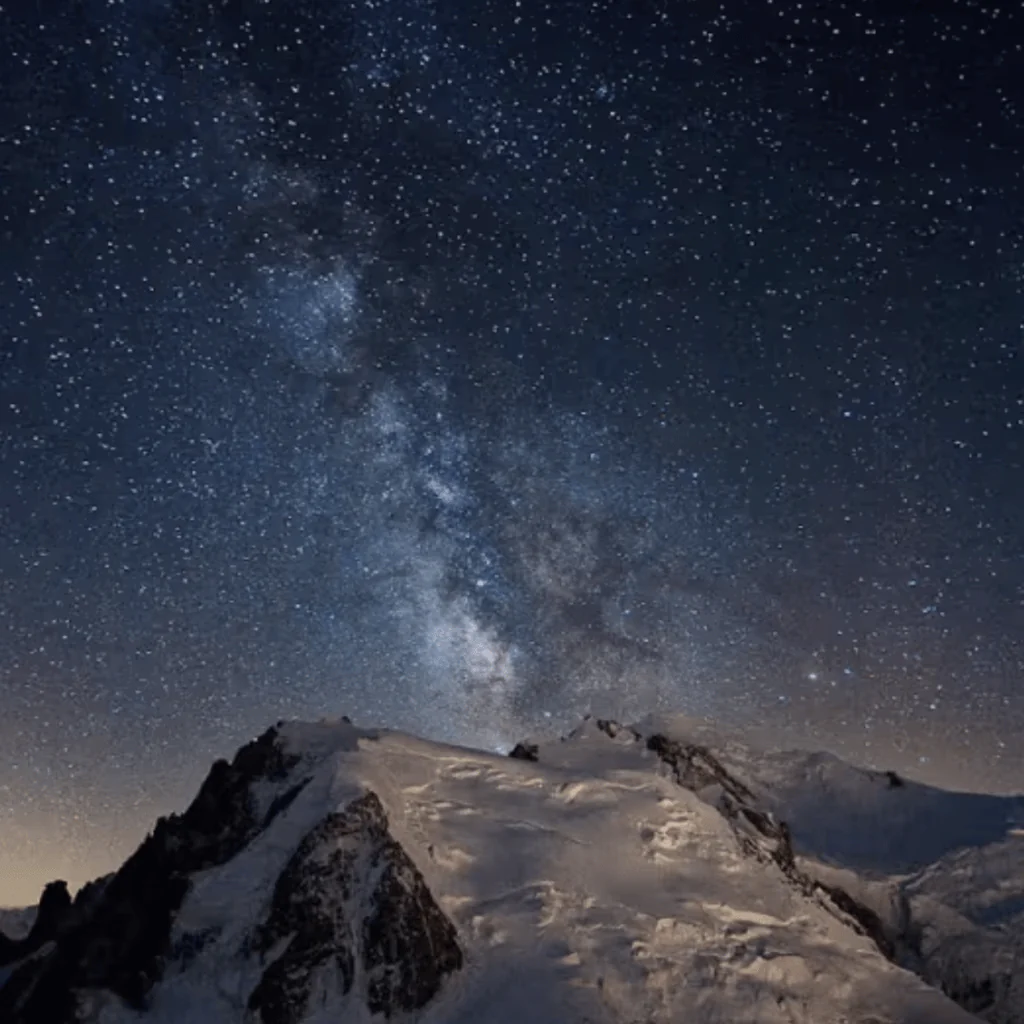
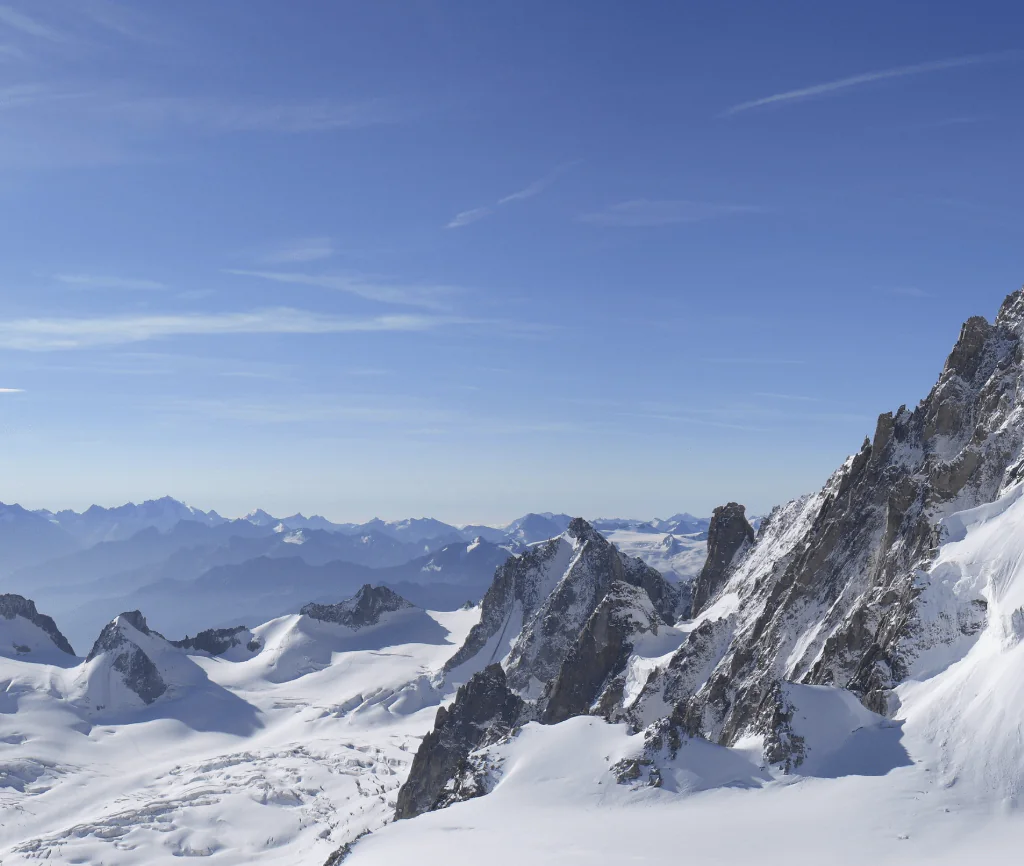
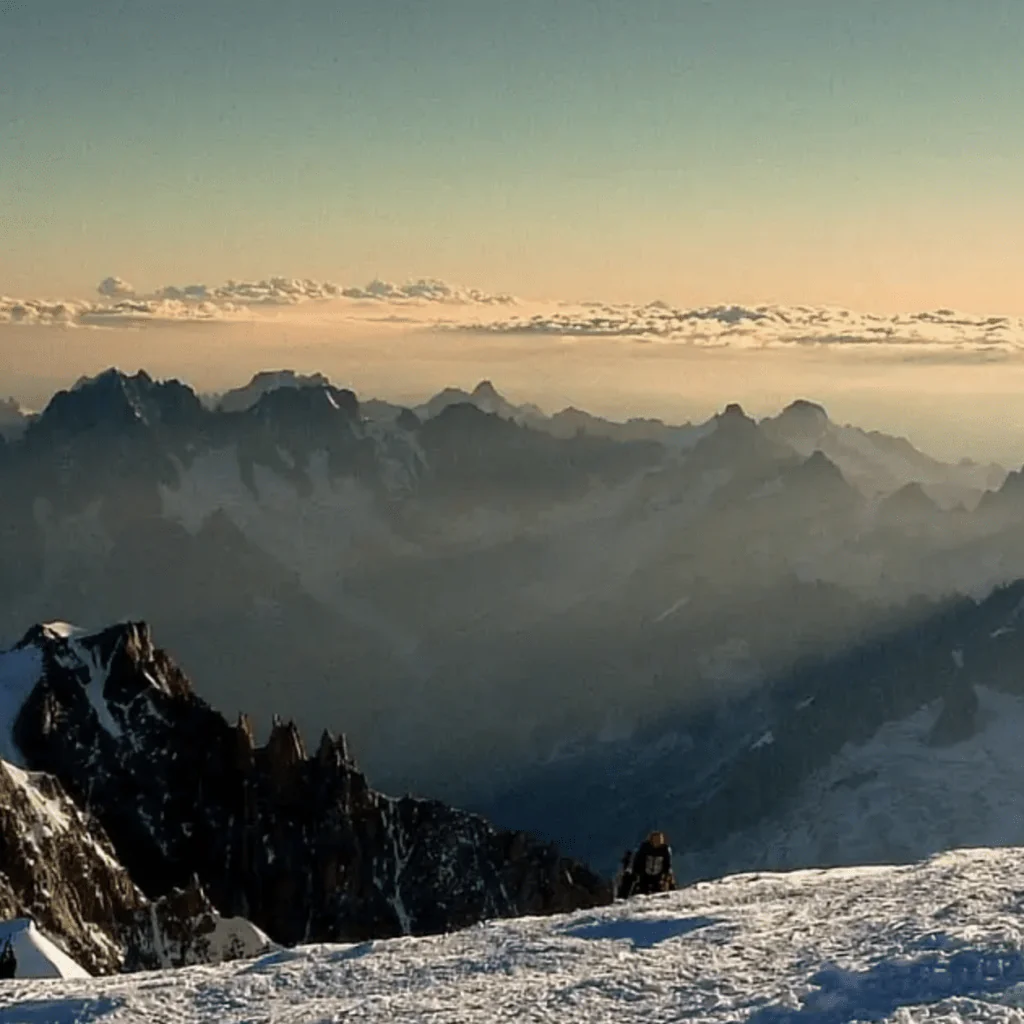
Picture yourself standing on the roof of Western Europe. Snow stretching in every direction, the entire Alpine arc laid out beneath you — the Matterhorn, Monte Rosa, the Grand Paradiso. To the south, Italy. To the west, France. To the east, Switzerland. You made it. 4,810 meters above sea level.Now picture the other part — the one nobody puts on Instagram. The 2 AM alarm, the cold that bites through three layers, the burning in your legs at 4,500 meters, and that quiet voice in your head asking why you signed up for this. That is the real Mont Blanc. And whether you get the summit photo or the misery story depends entirely on one thing: preparation.At PVD Club, we have been guiding high-altitude ascents for years — Kazbek, Elbrus, Tetnuldi, and now Mont Blanc. We know what works and what breaks. This guide covers everything you need to climb Mont Blanc via the Trois Monts route: training, acclimatization, gear, timing, and what actually happens up there.
Why the Trois Monts Route?
The Trois Monts (Three Summits) route is Mont Blanc most spectacular line. Instead of the crowded Gouter approach, you traverse three separate 4,000-meter peaks in a single push:
Mont Blanc du Tacul (4,248 m)
Mont Maudit (4,465 m) — the technical crux
Mont Blanc (4,810 m) — the summit
Three 4,000-meter summits in one day. The route is less crowded than the classic Gouter ridge, more scenic, and far more satisfying. But it is also harder: rated AD- (rather than PD+), with steeper ice slopes, longer exposure, and a 12-16 hour summit day.Trois Monts is for climbers who want the full experience, not just a tick on a list. It demands respect: good fitness, solid crampon and ice axe skills, and experience moving on glaciated terrain.
Who This Is For
This climb is for you if:
You have climbed at least one 4,000-meter peak before (or have solid high-altitude experience)
You can hike 12 km with a 10 kg pack and 1,000 m of elevation gain in under 5 hours
You are comfortable on steep snow slopes (up to 50 degrees) with crampons
You want a guided, professionally organized ascent — not a DIY gamble
If this sounds like you, PVD Club can get you to the top. Our guides have decades of combined experience on Kazbek (5,054 m), Elbrus (5,642 m), and the European Alps. You are not hiring a random guide — you are climbing with a team that treats every summit as a shared mission, not a transaction.
Training: How to Prepare for Mont Blanc
Mont Blanc is not a fitness test you can cram for. You need eight weeks of smart, progressive training. Here is the condensed version of what works:
Running 3x/week, 8-10 km with intervals (400m fast / 400m slow, 6-8 reps)
Strength with weight: goblet squats, weighted lunges, Romanian deadlifts
Stairs 2x/week: 20-30 min with 8-10 kg pack
Weekend mission: 8-10 km hike with 500-700 m elevation gain, loaded pack
Weeks 5-6: Peak load
Stairs 3x/week: 30-40 min with 10-12 kg pack
Treadmill incline walking (5-7% grade)
Strength: Bulgarian split squats, weighted glute bridges, squats at 50-70% body weight
Weekend: 12-15 km hike with 800-1,000 m gain, full pack (12-15 kg)
Weeks 7-8: Taper and rest
Reduce volume by 30%, keep intensity moderate
Last long hike 7-8 days before departure
Final week: light jogging 3-4 km, stretching, no heavy lifting
Your legs are everything on Mont Blanc. Quads, glutes, calves — you will use them for 12+ continuous hours. Train them accordingly.
Acclimatization: The Difference Between Success and Evacuation
Altitude sickness does not care about your gym PR. At 4,810 m, there is roughly half the oxygen available compared to sea level. Your body needs time to adapt — to produce more red blood cells, increase lung capacity, and learn to function on less.Our standard acclimatization schedule for the Trois Monts route runs 6-7 days before summit day:Days 1-2: Arrive in Chamonix (1,035 m). Easy walking, gear check, hydration. Do not climb anything.Day 3: Cable car to Aiguille du Midi (3,842 m). Spend 30-40 minutes at the top to give your body the altitude signal, then descend. This triggers the adaptation process without exhausting you.Day 4: Radial hike to 3,000+ m — Brevent (2,525 m) or Aiguille du Tour (3,542 m). Practice moving at altitude, find your sustainable pace.Day 5: Rest. Eat well, sleep, walk around Chamonix. No hero moves.Day 6: Climb to Cosmiques Hut (3,613 m). Cable car up, traverse the Arete des Cosmiques ridgeline, overnight at the hut.Day 7: Summit day. Start at 2 AM. By now your body has adapted. Success rate with this schedule: 75-85%.A common mistake is rushing the acclimatization. The two-day “fly in, climb, fly out” approach works for people who already live at altitude. For everyone else, it is a direct ticket to AMS (Acute Mountain Sickness) and disappointment.
Gear: What You Actually Need to Bring
This is a lightweight alpine climb — a 30-45 liter pack for summit day. Everything else stays at the hut or in Chamonix.
Footwear
B2 or B3 mountaineering boots — must be broken in. New boots = blisters. Full shank for 50-degree ice slopes.
Crocs or sandals for the hut — your feet will thank you after 12 hours in boots.
2 pairs of merino wool thermal socks. No cotton. Cotton kills in the mountains.
Clothing system (layers are everything)
Base layer: merino or synthetic thermal top and bottom (two sets)
Mid layer: Polartec fleece 100-200 weight
Shell: Gore-Tex or equivalent jacket with helmet-compatible hood, plus shell pants
Insulated jacket: lightweight down or synthetic for stops and the summit push
Insulated pants: down or synthetic over your shell on the summit
Gloves: thin fleece for ropework + thick insulated waterproof for the summit
Hat, buff, face mask — wind at 4,800 m is no joke
Climbing gear
12-point steel crampons with anti-balling plates (test-fit to your boots in advance)
Ice axe: classic mountaineering, 50-70 cm
Helmet — seracs on Tacul are a real hazard
Harness with wide waist belt (fits over insulated layer)
Screw-lock carabiner + belay device
Trekking poles for approach (leave at the hut for summit day)
Essentials
Headlamp with fresh batteries — 2 AM start means total darkness
Thermos 0.5-1 L for hot tea on breaks
1 L Nalgene bottle (wide mouth does not freeze shut)
Sunglasses category 3-4 + backup pair. Snow blindness is real and happens fast.
SPF 50+ sunscreen and lip balm. UV on snow at altitude is brutal even in clouds.
First aid: ibuprofen, diamox (consult your doctor), nasal spray for dry air, blister patches, rehydration salts
Best Time to Climb Mont Blanc
Weather decides everything on Mont Blanc. You can be in peak shape with perfect gear — if the window closes, the summit closes with it.June: Lots of snow, crevasses hidden. Unstable weather, windows of 1-2 days. Success rate: 60-70%. Few people on the route.July: Popular month. More stable weather, more sunshine. Cosmiques Hut books out 2-3 months in advance. Early July is better than late July when crevasses open up and rockfall risk increases.August (best window): Most stable weather. Windows of 3-5 days. Lower wind speeds. Success rate: 75-85%. Best dates: August 1-20.Early September: For experienced climbers only. Empty routes, still decent weather. But colder nights and fresh snow after September 20 can spike avalanche risk.
Temperature guide
Chamonix (1,035 m): daytime +20 to +28 in summer
Cosmiques Hut (3,613 m): overnight -2 to -8
Mont Blanc summit (4,810 m): -8 to -20 depending on month and wind. Wind chill can hit -25.
Rule of thumb: every 1,000 m of elevation drops the temperature by 6-7 C.For reliable forecasts, use Mountain-Forecast.com (wind under 30 km/h = go, over 50 km/h = cancel) and Meteoblue for the bigger picture.
Program: Day by Day on the Mountain
Day 1: Arrive Geneva. Transfer to Chamonix (1.5 hours). Hotel check-in, gear check with your guide. Equipment rental shops in Chamonix have everything if you are missing something.Day 2: Easy acclimatization walk in the valley or cable car to Brevent (2,525 m). Afternoon training session: crampon technique, ice axe arrest, rope team movement.Day 3: Aiguille du Midi (3,842 m) — acclimatization outing onto the Vallee Blanche glacier. Practice moving in crampons on real terrain. Descend to Chamonix for the night.Day 4: Optional 4,000 m peak (Aiguille du Tour or Pointe Lachenal). Climb high, sleep low — the gold standard of acclimatization.Day 5: Rest day. Your guide monitors the weather forecast. If the window shifts, so does the summit attempt. This buffer day is why most climbers succeed.Day 6: Cable car to Aiguille du Midi. Traverse the Arete des Cosmiques — a narrow ridge with drops on both sides. Overnight at Cosmiques Hut (3,613 m). Dinner, gear prep, lights out at 8 PM.Day 7 — Summit Day:1:00 AM: Wake up. Light breakfast (porridge, tea, a bar. No coffee — it dehydrates and spikes your heart rate).2:00 AM: Depart. Headlamps on, rope checked. First 15 minutes is a descent from the hut, then the climb begins.2:30-5:00 AM: Mont Blanc du Tacul (4,248 m). 400 m of snow slope at 30-40 degrees. Slow and steady. If there is a queue on the fixed lines, wait — patience, not heroics, is the virtue at 4,000+ meters.5:00-7:00 AM: Mont Maudit (4,465 m) — the technical crux. 300 m of steep climbing at up to 50 degrees. Fixed lines with ascenders. This section drains everyone.7:00-7:30 AM: Col de la Brenva (4,350 m). Break. Eat, drink, breathe. Adjust your layers.7:30-9:00 AM: Final push to Mont Blanc (4,810 m). The technically easiest section but physically the hardest. Altitude is crushing you, fatigue is cumulative, every step takes effort.9:00-9:30 AM: Summit. 4,810 meters. If the sky is clear, the entire Alps are at your feet. Twenty minutes of joy.9:30 AM-2:00 PM: Descent. Via the Gouter hut or back down Trois Monts — your guide decides based on conditions. Most accidents happen on the descent when fatigue and complacency combine. Stay sharp.~3:00 PM: Back in Chamonix. Shower. Fondue. You earned it.Day 8: Buffer day. Weather in the Alps can shift for 2-3 days. If the summit window moves, this saves the trip. If everything went to plan — rock climbing, rest, or explore Chamonix.Day 9: Transfer to Geneva. Or continue your adventure.
Why Choose PVD Club for Your Mont Blanc Ascent?
You can book a Mont Blanc guide from a dozen companies in Chamonix alone. Here is why climbers choose us:Real high-altitude experience. We have been guiding in the Caucasus for years: Kazbek (5,054 m), Elbrus (5,642 m), Tetnuldi (4,858 m), and active volcano climbing. Mont Blanc at 4,810 m is within our comfort zone, not beyond it.Personalized preparation. We do not send you a gear list and hope for the best. We design your training, help with acclimatization strategy, and stay in touch from the moment you book until you are back home.Small groups, real attention. Our groups are capped so you get actual guiding, not crowd management. Each climber gets feedback on their technique, pacing, and gear choices.European-based, globally experienced. Our guides hold international certifications and have climbed across the Alps, Caucasus, and Central Asia. You are in professional hands.Risk management built in. Every program includes buffer days, a clear go/no-go decision process, and mountain rescue insurance guidance. We take safety seriously so you can focus on climbing.
FAQs: Everything Else You Need to Know
Is Trois Monts suitable for a first 4,000 m peak?
Generally, no. The Gouter route (PD+) is more forgiving. Trois Monts (AD-) demands prior experience with steep ice, fixed ropes, and sustained exposure. If this is your first 4,000 m peak, we recommend starting with the classic Gouter route or a guided Kazbek ascent with us as preparation.
How many days should I plan for?
Minimum 8 days from arrival to departure, with 5-6 days for acclimatization and approach. The two-day “fly and climb” plan works only for people living at altitude year-round.
Do I need a guide?
Technically, independent ascents are possible with the right experience. In practice, 99% of commercial Mont Blanc ascents use guides. You are paying for a partner who makes the call on weather, route conditions, safety, and pacing — not just someone who knows the path.
Do I need mountain insurance?
Absolutely. Not regular travel insurance — specific mountain rescue insurance covering helicopter evacuation and search operations. Expect 50-150 euros for a week. A helicopter rescue in France without insurance costs upwards of 5,000 euros.
How do I book the Cosmiques Hut?
The hut has about 50 beds and books out 2-3 months in advance for July-August. If it is full, your only option is waiting for cancellations. Book early.
Does training for Kazbek help with Mont Blanc?
Yes — 80% of the physical preparation overlaps. Kazbek is higher (5,054 m) but technically easier (PD). Trois Monts is lower but more technical. If you have trained for one, the fitness transfers. PVD Club runs Kazbek programs that serve as ideal preparation for Mont Blanc.
Ready to Stand on Top of Europe?
The Trois Monts route is not the easiest way to climb Mont Blanc. It is the most beautiful. Three separate summits, knife-edge ridges, vast snow slopes, and that final view from 4,810 meters where three countries unfold beneath you.It demands real preparation. Eight weeks of training. Proper acclimatization. Good gear. Respect for the mountain. But get it right, and it will be one of the strongest memories of your life.We guide small groups with serious attention to every detail. If you are ready to make this happen, check our current Mont Blanc programs or reach out directly. We answer personally — no form letters, no sales scripts.See you at the top.