
There Is a Climbing Wall in Tbilisi, and It Is a Soviet Monument
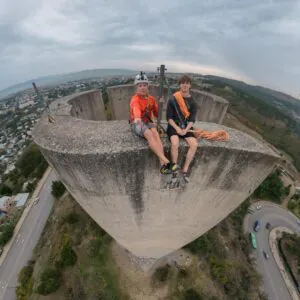
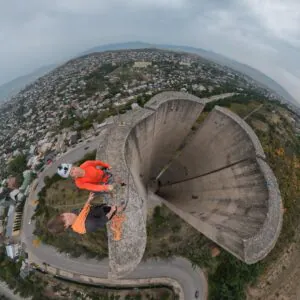
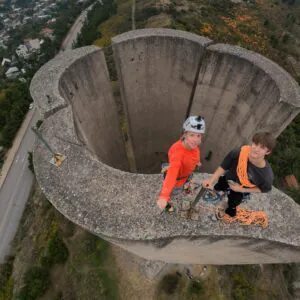
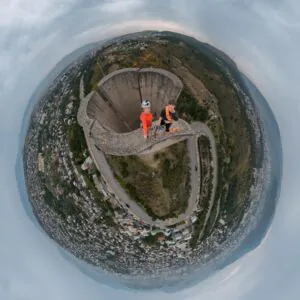
Every city has a climbing gym. Tbilisi has something better: a 40-metre concrete monument on a hill in the north of the city, half-finished since the 1970s, now covered in street art and bolted with climbing routes. Locals call it the Monument. On paper it is the Lotkini Monument, in the Nadzaladevi district. In practice it is the strangest and best half-day of climbing you can do in Georgia without leaving the city.
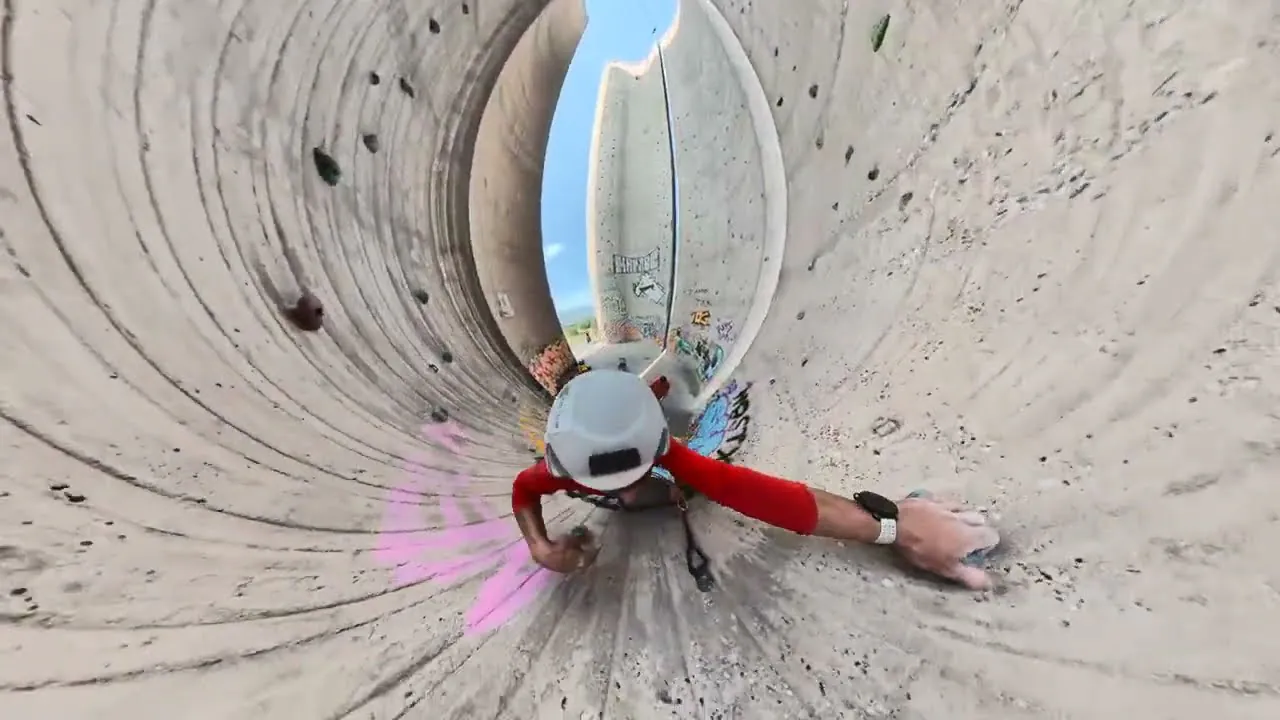
We filmed there in September. The video is at the bottom of this post, but the short version is this: you climb up the inside of a Soviet ruin, clip into anchors that the Georgian climbing community installed, and pull over the top into a view of the whole city. It does not feel like a tourist attraction. That is exactly why it is worth doing.
What the Lotkini Monument Actually Is
It was meant to be a cultural centre. Construction started in the Soviet era, local lore says to mark the 800th anniversary of the poet Shota Rustaveli, and then it stopped. A moratorium on new monuments in the 1970s left the structure standing unfinished on the hill, and there it sat for decades: concrete ribs, empty levels, a shell with no purpose.
urban climbing
Tbilisi being Tbilisi, it filled up with graffiti and teenagers. Then, in 2017, the Federation of Georgian Mountaineers and local climbers bolted routes onto it and turned it into an official urban climbing spot. Not a sculpture park with a harness experience attached. A real crag, in the middle of a city, on a monument nobody else wanted.
The Climbing: What You’re Actually Getting On
Routes run from about 20 to 40 metres, mostly in the 5a to 6b range. In plain language: easy to intermediate. There are lines for a first-timer in rental shoes and lines that will make an experienced climber think about their footwork.
- Height: 20 to 40 metres, depending on the line
- Grades: mostly 5a to 6b, with harder options
- Style: sport routes, top rope for beginners, lead for those who know how
- Setting: bolted concrete, graffiti, city noise, birds nesting in the gaps
The concrete is old and textured, which is kind and unkind in equal measure: good friction, sharp edges, and the occasional loose flake that reminds you this is not a purpose-built wall. Your fingers will know about it the next day.
The View Is Half the Point
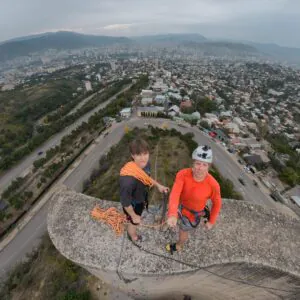
The monument sits on a hill above the city, so when you top out you get the payoff: rooftops, the Mtkvari, the ridges, and the whole messy spread of Tbilisi below you. Most people stop taking photos halfway up and just look. Then they remember they have to come back down, which is the part beginners underestimate.
If you have ever wanted that specific photo of yourself on top of something in a city, this is the place. Bring a phone you don’t mind hanging off a harness.
Who It’s For
Genuinely, almost anyone. The guided sessions are built around first-timers: instructor sets the rope, checks your harness, explains the basics, and belays you the whole way. Kids climb here. People who have never touched rock climb here. So do locals training for the Caucasus, on the same wall, at the same time.
What you need is a normal level of fitness and a normal tolerance for height. If ladders make you dizzy, say so before you tie in. Nobody is going to think less of you for starting on the shortest route.
What a Session Looks Like
A guided half-day usually runs five to six hours, but nobody forces you to stay. Climb until your arms say stop, then sit in the shade and watch other people suffer.
- Meet at the bottom of the hill, near Khudadovi 115 or Uiarago 66. A taxi from the centre takes about 15 to 20 minutes
- Walk up through the woods. Ten or fifteen minutes, depending on how lost you get
- Gear check, safety briefing, and a first easy route to see how you move
- Climb, rest, climb again. Routes are shared, so there is a lot of sitting around in the sun
- Photos on top, then the walk down through the trees
Expect to pay around «fee» per person for a guided session with equipment, less per head if you come as a group. Climbing shoes are worth bringing if you own them; sneakers are fine if you don’t.
What to Bring
- Water, 1.5 to 2 litres. There is nothing to buy on the hill
- Snacks. Climbing makes people hungry in a way they don’t expect
- A light jacket. It is a few degrees cooler up there than in the city centre, and the wind gets through concrete gaps
- Sunscreen, sunglasses, a hat. The wall faces the sun for a good part of the day
- Sports clothes you can move in, and shoes with a firm sole
- A small backpack, plus a mat or blanket if you plan to lounge between climbs
Getting There Without a Guide
You can reach the area by taxi, or by bus and metro to the Lotkini neighbourhood and then a walk. The last stretch is uphill through woodland, on a path that is not signed. If you are meeting an instructor, they will usually walk down to the street to collect you, which saves the confusion.
If you would rather not deal with any of it, we can organise the whole thing: pickup, instructor, gear, and a plan B for when the weather changes. More on our one-day trips in Georgia, and if you are building a bigger itinerary around climbing, our climbing camp in Turkey is the natural next step.
When to Go
Spring and autumn are the good windows: dry concrete, comfortable temperatures, long evenings. Summer works if you start early and hide in the shade at midday. Winter is possible on a clear, dry day, but the wind on that hill is not a joke. Rain makes the concrete slick and the walk up muddy, so skip it.
Etiquette: It’s a Crag, Not a Theme Park
This matters more than any packing list. The monument is a community spot, maintained by people who climb there for free, and it only keeps working because visitors behave.
- Do not climb without a guide or a competent partner. There are no staff, no signs, no rescue team on site
- Do not chip holds, brush chalk into the wind, or «improve» anything
- Take your rubbish down with you, including tape and snack wrappers
- Respect the graffiti. It is part of the place, and so are the people who made it
- If a local is mid-route, wait. Tourists get a lot of goodwill here, but not unlimited
The monument is not a protected attraction with a ticket office. It is a ruin that climbers rescued, and the arrangement works because everyone treats it that way.
Safety, Honestly
Climbing is a risk sport. The monument adds its own flavour: old concrete, weather, and an approach that involves walking up through woods. With a certified instructor and proper equipment, the risk is managed and the day is genuinely beginner-friendly. Without them, it is just you and a 40-metre wall.
Three rules we would give anyone:
- Check your knot and your belay before every route. Every time
- Wear a helmet. Falling concrete is a real thing on old structures
- Tell your instructor about injuries, fear of heights, or anything that affects how you move
Travel insurance that covers climbing is worth arranging before you go. Ours covers the basics in mountain insurance for Georgia, and the same logic applies to a city crag.
Why It’s Worth an Afternoon
Tbilisi has churches, sulfur baths, wine bars and a funicular. It also has a broken Soviet monument where you can climb 40 metres of concrete and look down at all of it. That combination exists nowhere else, and it costs you half a day.
Most tourists walk past it without knowing. Now you won’t.
Traveler’s FAQ
Can beginners climb the Lotkini Monument?
Yes. With an instructor, top-rope routes, and a harness that fits, complete beginners climb here every week. The 5a routes are the place to start.
Do I need my own gear?
No. Guided sessions include harness, helmet and rope. Climbing shoes help but sneakers with a firm sole are acceptable.
How tall is the monument?
About 40 metres, with climbing routes from roughly 20 to 40 metres depending on the line.
Is it legal to climb there?
It has been adapted as an urban climbing location with the approval of the Georgian mountaineering federation, and it is used openly by the local climbing community. Go with a guide, follow the local rules, and you are part of the normal scene rather than a problem.
How long does it take from central Tbilisi?
Fifteen to twenty minutes by taxi, plus a ten to fifteen minute walk uphill through the woods.
What if it rains?
You reschedule. Wet concrete is slick, the approach gets muddy, and the whole point is to enjoy it. Tbilisi weather changes fast, so a flexible day usually works out.
Climb It With Us
We are in Tbilisi most weeks, and we can put together a climbing afternoon around your trip: instructor, gear, transport, and the right routes for your level. If you are in the city for a few days, this pairs well with the longer tours around Georgia and with a transfer onward to Kazbegi or Imereti.
Send us a message with your dates and how many people you are. We will tell you honestly whether the weather will cooperate.


