
Georgia has three ski resorts that people actually argue about: Gudauri, Bakuriani and Goderdzi. On paper they look like the same product — snow, lifts, guesthouses, khachapuri — but they are not. One is a big lift-served mountain with a serious off-piste reputation, one is a family resort built around snowmaking and championships, and one is a remote pass in Adjara where the lifts are almost an afterthought and the snowcat does the real work.
If you are planning a freeride trip, the choice between them decides your whole week: how much vert you get, how much you pay, how far you travel and whether you spend your mornings queuing or skiing. This is the honest three-way comparison.
The short answer
- Gudauri — the best lift-accessed freeride in Georgia. Big vert, fast lifts, famous terrain, and a crowd that knows it.
- Bakuriani — the best resort for families, beginners and anyone who wants a town rather than a mountain. Not a freeride destination.
- Goderdzi — the best snow and the emptiest slopes, if you are willing to travel seven hours and pay for a snowcat or bring skins.
Everything below is the reasoning behind those three lines.
The three resorts at a glance
| Goderdzi | Gudauri | Bakuriani | |
|---|---|---|---|
| Region | Adjara, southwest Georgia | Kazbegi, along the Georgian Military Highway | Samtskhe-Javakheti, Trialeti range |
| Base / top | ~2,000 m / ~2,400 m lifts, ~3,000 m by cat | ~2,200 m / ~3,280 m | ~1,700 m / ~2,700 m (Kokhta) |
| Groomed piste | ~8 km | ~70 km | ~25–30 km |
| Lifts | 2 chairs | 10+ modern lifts | Several chairs and T-bars |
| Season | Late December – mid April | December – April | December – March |
| Snow reliability | Very high (5–7 m a season) | High above 2,500 m | Moderate, snowmaking-dependent |
| Freeride terrain | Excellent, mostly untracked | Excellent, heavily tracked | Limited |
| Crowds | Almost none midweek | Busy weekends and holidays | Busy, family-heavy |
| From Tbilisi | 6–7 hours | ~2 hours | ~3 hours |
| Best for | Freeride, cat-skiing, ski touring | Lift-served freeride, mixed groups | Beginners, families, non-skiers |
One warning about that table: the numbers hide the thing that matters most. Gudauri’s 70 km of piste is real, but nobody goes to Gudauri for the piste. Goderdzi’s 8 km is real too, and it is exactly why the off-piste stays fresh.
Snow and season: three different winters
Goderdzi sits on a pass that catches moisture straight off the Black Sea. It is one of the snowiest places in the country — five to seven metres in a normal season, with a base that holds into April. The season starts late, because the road and the resort open when the snow allows, but once it is running the cover is deep and reliable. Fog and wind are part of the deal; so are powder days in March that would be a memory in most resorts by then.
Gudauri is high and continental. The resort base is already above 2,000 m, and the top lifts run past 3,000 m, so snow holds well on the upper mountain even in a poor year. Lower runs get scraped and icy in a dry January, and the wind can shut the top lifts for a day at a time. When it snows, though, Gudauri gets proper storm cycles and the terrain above the treeline turns into the reason people come.
Bakuriani is the lowest and the most exposed to a bad winter. It relies heavily on snowmaking, which is fine on the main runs and less fine everywhere else. In a good year the glades around Kokhta are lovely and quiet. In a bad year you are skiing man-made snow between brown patches. If your trip is a fixed week in advance, that is a real risk; if you are flexible, it is manageable.
Terrain: steeps, trees and open bowls
Gudauri’s freeride reputation is earned. Off the Sadzele ridge and into the Khada gorge you get 600–900 metres of vertical in a single run, north-facing, with bowls, spines and gullies that hold powder for days after a storm. The terrain is genuinely serious: big convex rolls, loaded slopes and long runouts. There is no avalanche control outside the marked area, and the patrol will not come looking for you. Go with a guide, carry a transceiver, probe and shovel, and read the forecast every morning.
Goderdzi is the opposite shape. The lifts serve a modest ridge, but the mountain continues for kilometres in every direction: beech forest, open bowls, and long north-east facing slopes that nobody has touched. The snowcat takes you to the ridges around 3,000 m and drops you on terrain that would be a lift-served classic anywhere else. The tree skiing is exceptional in flat light and storm days, which is a big deal in a resort where the weather changes fast.
Bakuriani is gentle. Kokhta offers a decent pitch and some gladed off-piste, and Didveli is a wide, forgiving cruiser. There is nothing there that a strong freerider would call steep. What it does have is the best beginner progression in Georgia and a genuine town with restaurants, shops and things to do when the snow is bad.
How you get up the mountain
This is where the three resorts stop being comparable.
In Gudauri you ride lifts. Modern Doppelmayr chairs, ten of them, moving fast, with the top station a short traverse from world-class off-piste. A good skier can do eight to ten big freeride laps in a day without ever putting on skins. That efficiency is worth a lot, and it is why Gudauri remains the default for a short trip.
In Goderdzi you have two chairs, which cover the lower mountain and the piste. For the good stuff you either skin — a one to three hour climb depending on the line — or you book a seat in a snowcat. A cat day is the reason most people come: it turns a week of touring into a week of descents, with eight to twelve runs a day in deep, untracked snow. It also costs money, and it needs to be booked ahead. Our Goderdzi tours and programmes page explains the formats, from a single cat day to a full week.
In Bakuriani you ride lifts too, but the mountain runs out before your legs do. It is a place where you ski until lunch, eat, ski two more hours, and stop. Nobody is counting vert.
Crowds and the fresh-tracks test
Here is the blunt version. In Gudauri, a powder day is a race. The first chair at nine is a scrum, the traverse to the good line is a conga line, and by eleven the obvious runs are tracked out. You can still find fresh snow if you know where to look and are willing to hike, but you will not be alone.
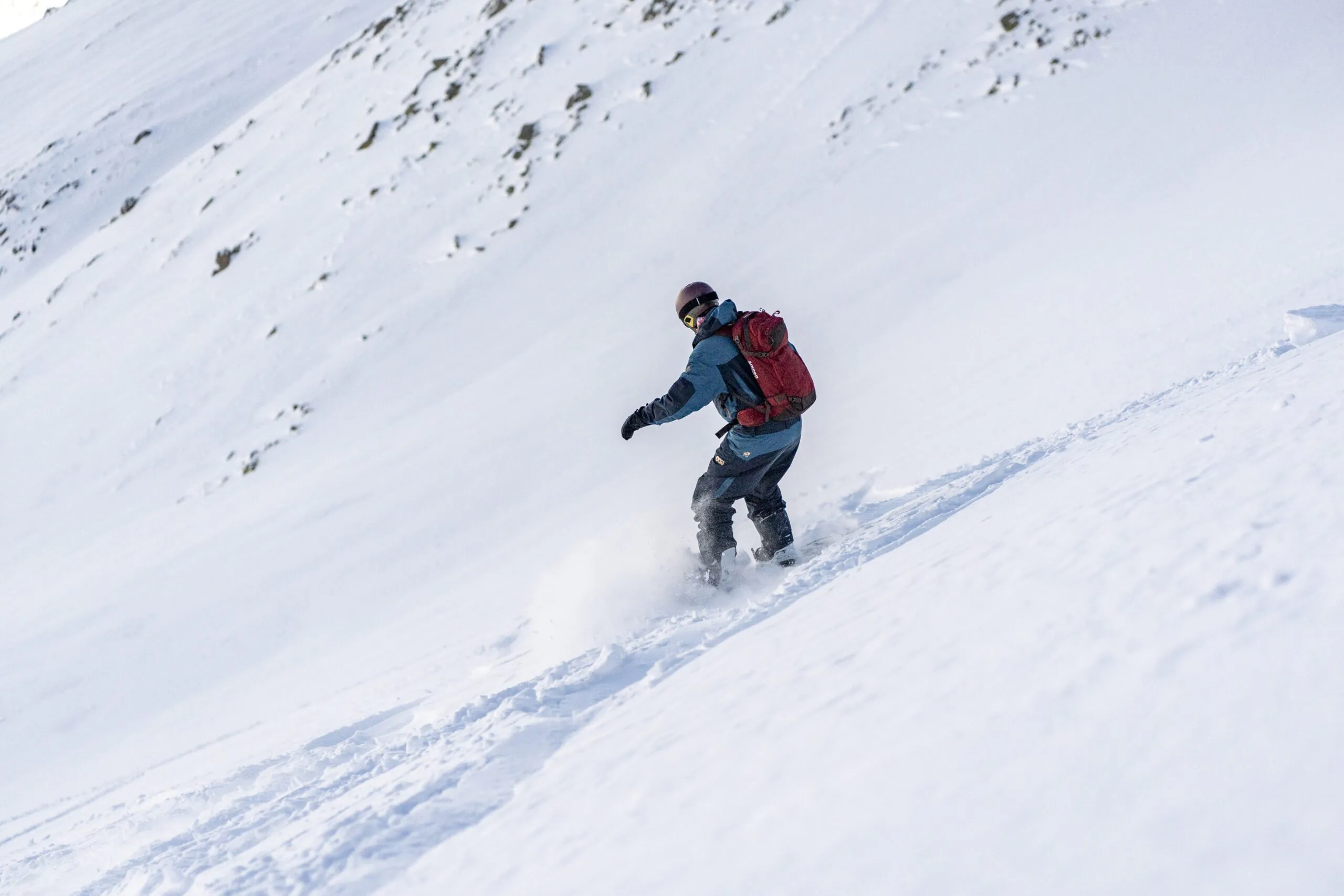
In Goderdzi, a powder day is quiet. Midweek in January you can count the people on the hill. The cat groups are small, the trees hold snow for days, and the main constraint is light and weather rather than other skiers. That solitude is the product — and it is why people who have skied both tend to get evangelical about Adjara.
Bakuriani is busy in a different way: families, school groups, weekenders from Tbilisi. The queues are at the beginner lifts, not on the mountain.
Cost: what a week actually costs
Bakuriani is the cheapest of the three for a family. Accommodation is plentiful, food is cheap, and there is a wide range from Soviet-era sanatorium to new apartments. Lift tickets are modest and there are usually multi-day deals.
Gudauri is mid-range and rising. Hotels near the lifts are not cheap in peak season, and the town has grown into a proper resort with prices to match. Lift tickets cost more than Bakuriani but buy you far more mountain.
Goderdzi is cheap on the ground and expensive on the snow. Guesthouses cost little, food is local and generous, lift tickets are a rounding error. Then you add the snowcat — the single biggest line in the budget — and possibly a guide. A cat-ski week is a premium product; a ski-touring week based in a guesthouse is one of the best-value mountain holidays in the Caucasus. The difference between those two trips is bigger than the difference between any two resorts in this article.
Getting there: the travel tax
Gudauri is 120 km from Tbilisi on a good road, two hours if the traffic behaves and the pass is open. You can leave the city after breakfast and ski in the afternoon.
Bakuriani is around 180 km, three hours, on a road that is generally fine but slow in winter. Easy enough for a long weekend.
Goderdzi is the commitment. Six to seven hours from Tbilisi over the Goderdzi pass, or two and a half to three hours from Batumi, three from Kutaisi. In winter the pass can close, chains are sometimes required, and the last stretch is a mountain road. The transfer guide covers the routes, the timing and what to do when the road shuts. None of this is difficult — it is just a day of travel each way, and you should plan for it.
Beds, food and evenings
Gudauri has the widest choice: hotels, apartments, hostels, a few good restaurants, bars that stay open late. It feels like a resort.
Bakuriani has a town, which means pharmacies, shops, a park, and something to do on a rest day. If you are travelling with non-skiers, this matters more than the terrain.
Goderdzi has guesthouses and hotel kitchens. Dinner is at a fixed hour, the food is Adjarian and heavy in the best way, and the evening ends early because there is nothing else to do and nowhere to be. Some people find that limiting. Others find it is the point.
Who each resort is for
Choose Gudauri if you have four or five days, want maximum vert per day, are comfortable in serious avalanche terrain, and value a real bed and a bar at the end of it. It is also the best choice for a mixed group where some people ski piste and some ski off-piste, because everyone can ride the same lifts.
Choose Bakuriani if you are travelling with beginners or children, if you want a town rather than a mountain, or if you are skiing for two or three days around a longer Georgia trip. Do not choose it for freeride.
Choose Goderdzi if freeride is the whole point of the trip, you have a week, and you would rather ski untracked snow with six people than tracked snow with six hundred. Bring a guide, book the cat, and accept that two of your seven days will be travel.
If the choice is really between Georgia’s two freeride mountains, our Goderdzi vs Gudauri comparison goes deeper on terrain, snow and logistics without Bakuriani in the mix.
FAQ
Is Goderdzi better than Gudauri for freeride?
For snow quality and solitude, yes. For vertical per day and ease of access, no. Goderdzi gives you deeper, less-tracked snow but requires touring or a snowcat and a long transfer. Gudauri gives you 900-metre lift-served runs and a crowd that gets there before you.
Can you freeride in Bakuriani?
You can ski off-piste around Kokhta and in the glades, and on a good snow day it is pleasant. But the terrain is low-angle, the snow is less reliable and there is no cat-ski or touring culture. It is a family resort with some sidecountry, not a freeride destination.
Which resort is best for beginners?
Bakuriani, clearly. Gentle slopes, snowmaking, ski school and a town to recover in. Gudauri has good beginner areas at the base but the mountain above is not for first-timers. Goderdzi’s piste is small and the off-piste is not beginner terrain.
Do you need a car?
For Gudauri and Bakuriani, no — marshrutkas and transfers run from Tbilisi. For Goderdzi, a transfer is the sane option in winter; driving yourself means dealing with the pass, chains and closures.
The verdict
Georgia does not have one ski resort. It has three products for three different trips. Gudauri is the efficient mountain, Bakuriani is the family town, and Goderdzi is the expedition — the one you plan a year around, travel a day to reach, and remember for the run you had entirely to yourself at eleven in the morning on a Tuesday.
Pick the trip you are actually taking, not the one with the best Instagram. Then book the cat, check the forecast, and go.


