
The Real Cost of Climbing Mont Blanc: Training, Guide, Gear, and Accommodation Breakdown
Everyone asks the same question before they even think about dates or routes: what’s the actual Mont Blanc climb cost going to be. And the honest answer isn’t a single number — it’s a range that depends on how prepared you already are, which route you pick, and how much gear you’re bringing from home versus renting on site. Let’s go through it piece by piece instead of throwing out one vague figure.
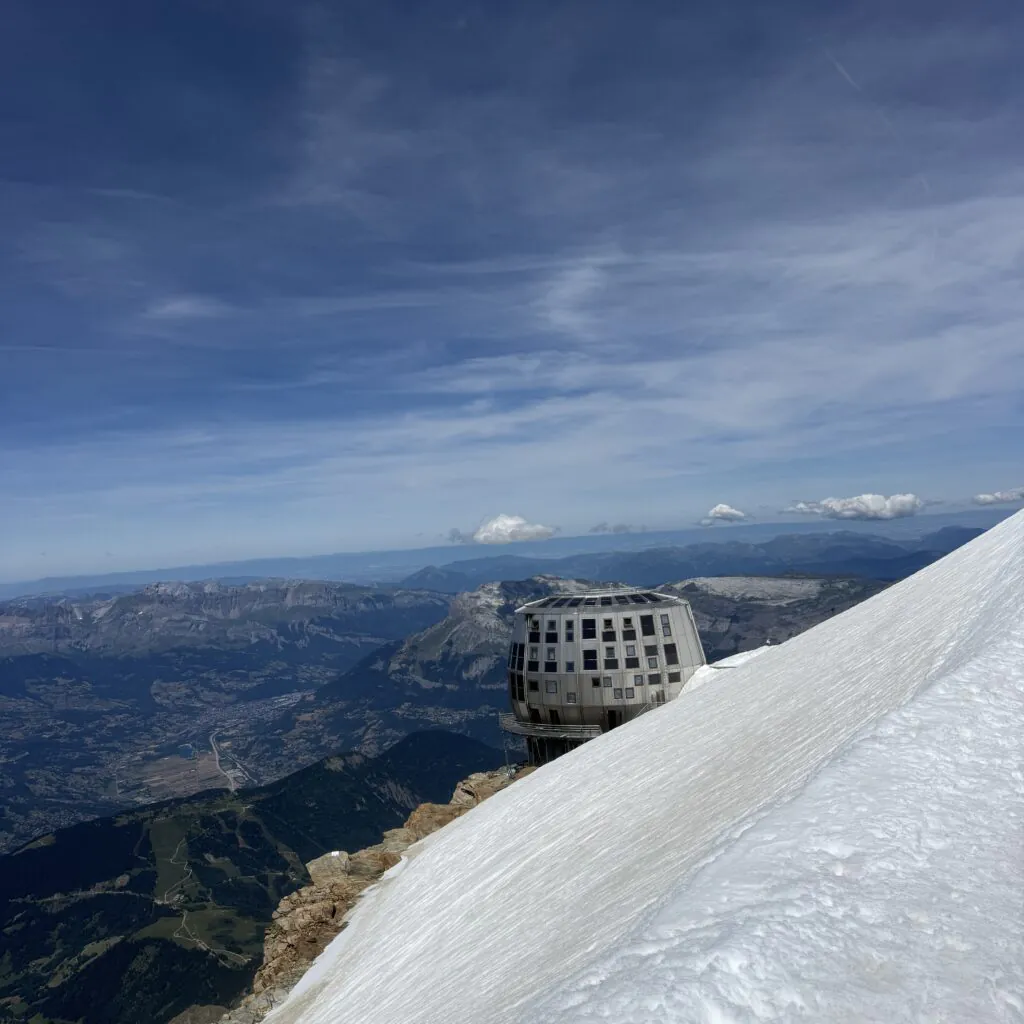
Training — the cost you pay before you even book
This is the part people forget to budget for. Mont Blanc isn’t a walk-up, and if you show up without any mountain background, you’re not just risking a wasted trip — you’re risking the guide turning you around on day one. Training costs vary wildly depending on where you’re starting from:
- If you’ve got general fitness but no mountain experience, plan for a season of hiking with a loaded pack, plus at least one or two days on real snow and ice learning to use crampons and an ice axe properly, not just watching a video about it.
- If you’ve never spent a night above 3,000 m, consider a cheaper test climb first. Kazbek or a similar peak works well for exactly this — it tells you how your body handles altitude before you commit real money to the Alps.
- Gear rental for a training weekend runs modest, but if this becomes a habit (it usually does), owning your own boots and crampons pays for itself fast.
None of this shows up on the invoice for the Mont Blanc trip itself, but skipping it is the single most common reason people either don’t summit or don’t enjoy the process of getting there.
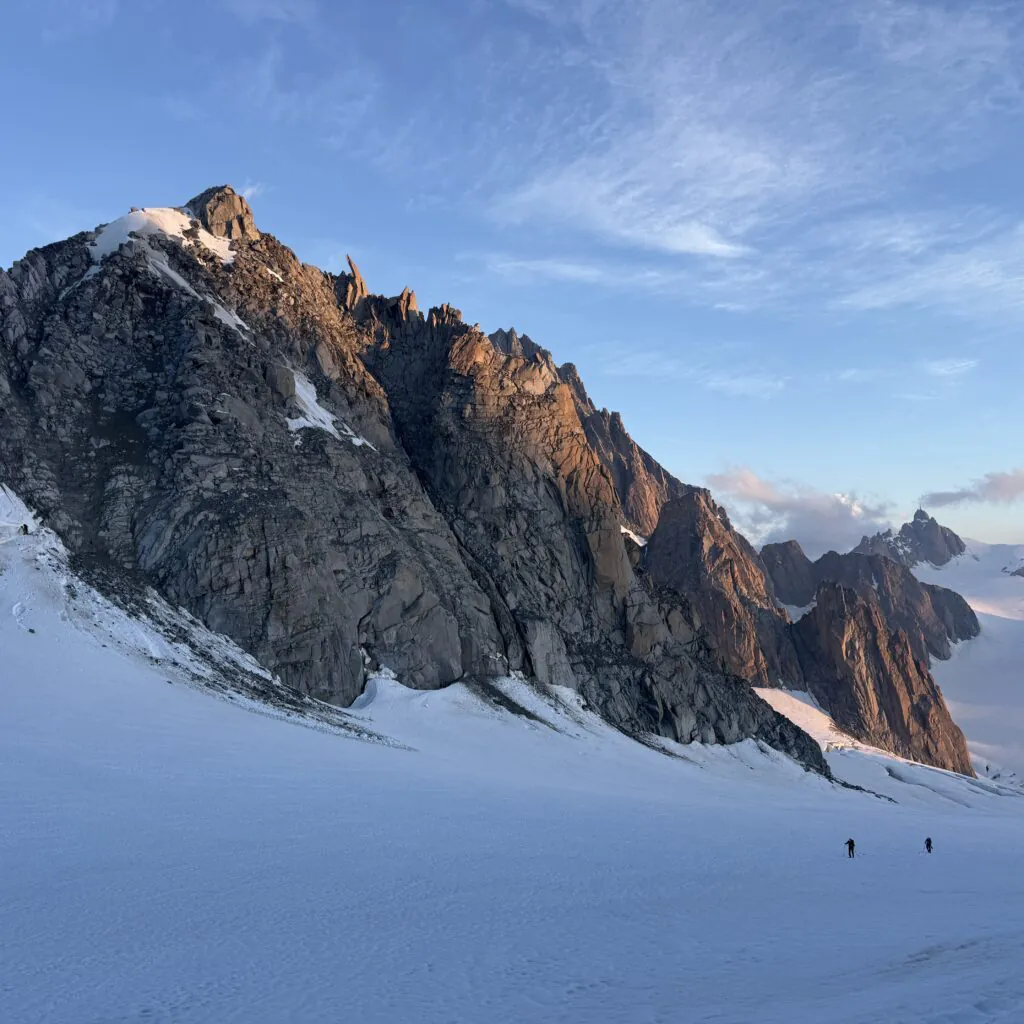
Guide — the biggest line item, and non-negotiable
On Mont Blanc, you’re not going far without a certified guide, and this is the core of the whole Mont Blanc climb cost conversation. Guide and gear together typically run from 2,000 to 2,500 euros, depending on the route:
- The classic route via the Gouter Hut is the cheaper option, from around 2,000 euros. It’s PD+ difficulty, a 5-6 hour summit push, and it gets genuinely crowded in July and August — queues on certain sections are a real thing, not an exaggeration.
- The Trois Monts route, crossing three summits in one push, is harder technically (AD-), longer on summit day (6-8 hours), but far quieter and, by most accounts, gives you the feeling of an actual mountain rather than a lineup. It runs from about 2,500 euros. If you want to see exactly how a program built around this route looks, our Mont Blanc guided ascent page breaks down the logistics, and our 2026 Trois Monts ascent covers the specific dates and daily plan.
For comparison, a guide on Kazbek or Elbrus costs a fraction of the Alpine rate for a similar or even harder summit day — it’s not about the mountain being tougher, it’s about the Alps running on European guide, hut, and cable car pricing.
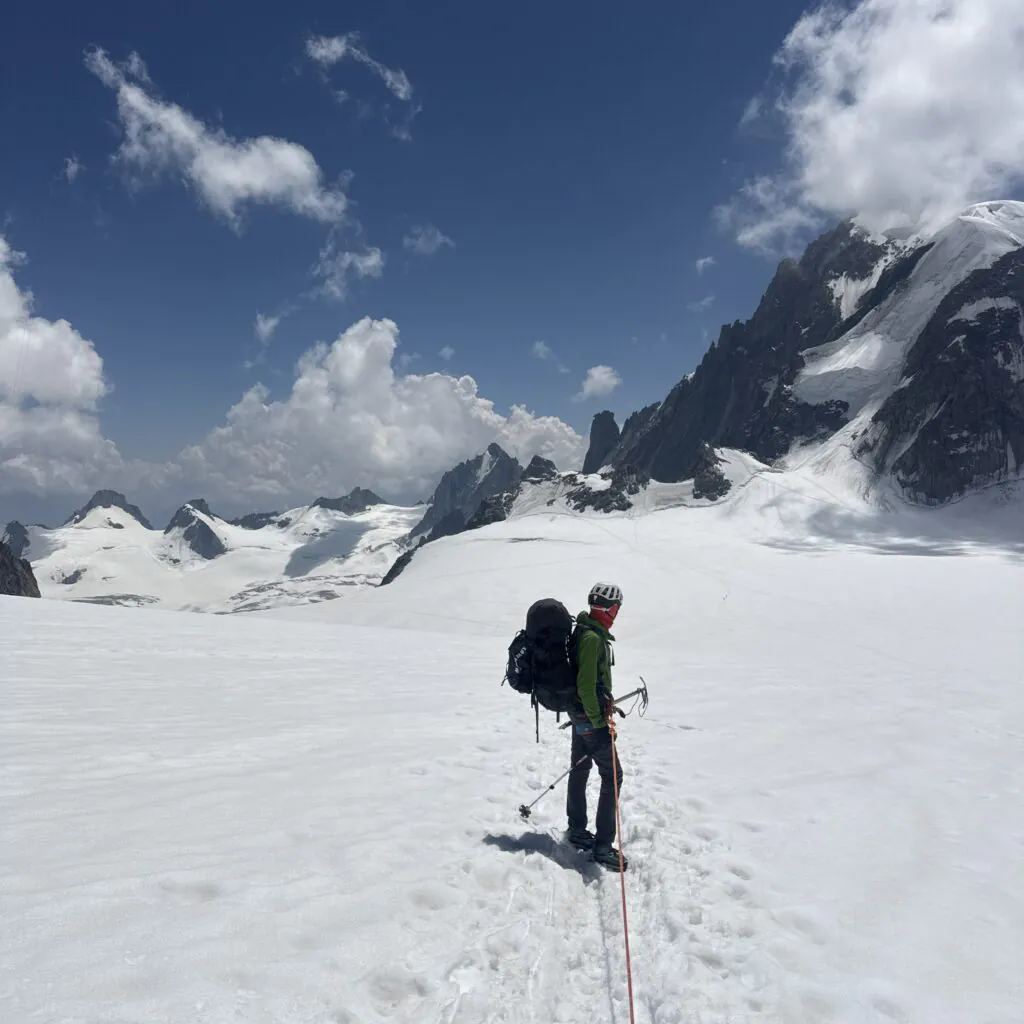
Gear — what you own versus what you rent
Crampons, an ice axe, a harness — these get rented easily and don’t need to be a big expense if you’re not doing this every season. Boots are the one item worth owning yourself; broken-in mountaineering boots beat a rental pair every time, and blisters at 4,000 m are not where you want to find out your rental boots don’t fit right. We’ve laid out the full list, item by item, in our Mont Blanc ascent gear checklist, so you know exactly what to bring from home and what to leave for the rental shop in Chamonix.
Accommodation and huts — not a budget hostel
Alpine hut stays cost real money on their own, and this catches people off guard — a bunk in a mountain refuge at 3,600 m is priced closer to a mid-range hotel than a hostel. Add the Aiguille du Midi cable car if your route runs through it, which is also not free and needs to be booked well ahead since slots fill fast. Budget separately, too, for a couple of nights in Chamonix before and after the climb — for acclimatization and as a buffer in case the weather doesn’t cooperate.
Weather — the line item nobody puts in the budget, but should
Mont Blanc weather is its own animal, completely disconnected from what you see in the valley. Wind at 4,000+ m, the freezing level, and the jet stream all matter far more than whether it’s sunny in Chamonix, and a guide will cancel a summit push even on a clear day if the numbers up high don’t line up. Practically speaking, this means budgeting an extra day or two in your schedule as a weather buffer — because if the window doesn’t open on your planned date, you either wait it out or you don’t summit at all.
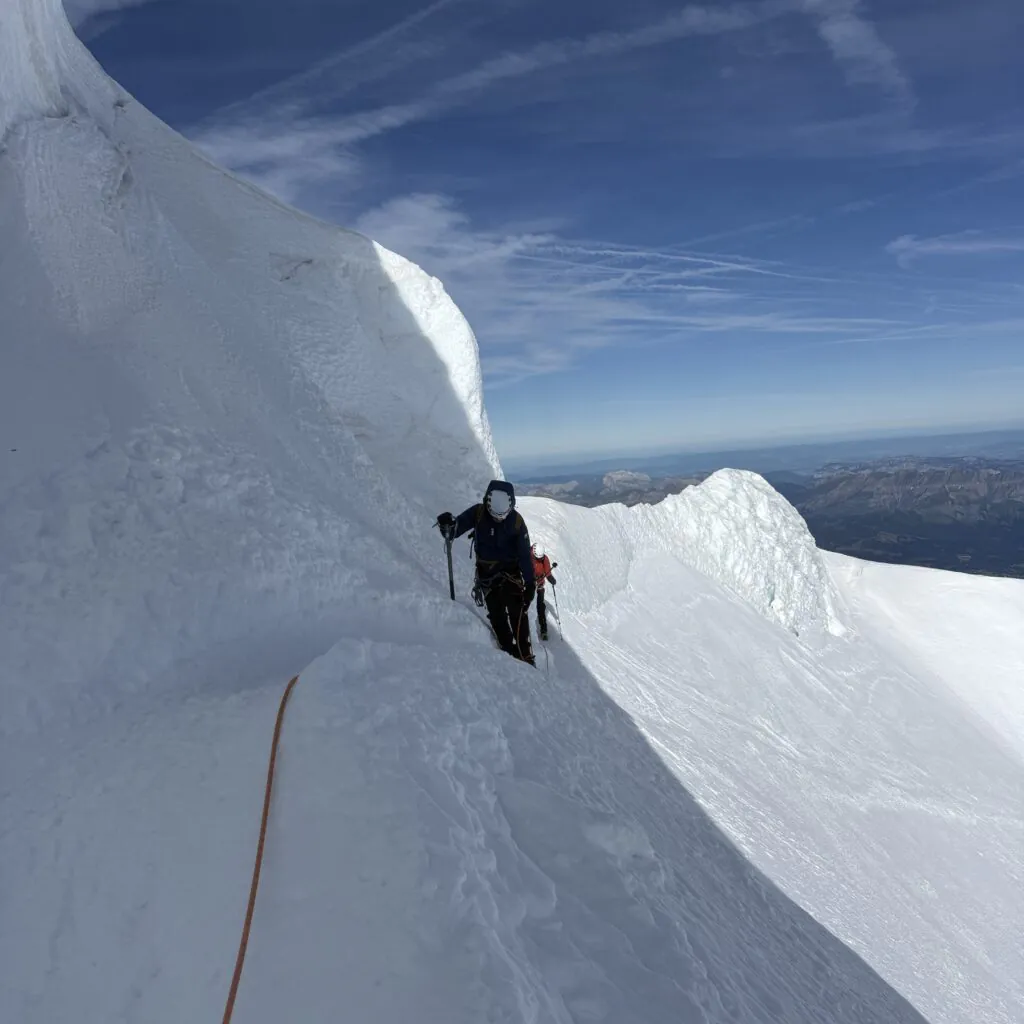
Insurance — not the place to cut corners
High-altitude rescue insurance is a separate, mandatory line item, not an optional add-on. A helicopter evacuation in the Alps without coverage can run into tens of thousands of euros — that’s standard practice in the region, not scare talk.
Flights and pre/post-trip stays
Add a flight to Geneva or Lyon, a transfer to Chamonix, and a night or two in town on either side of the climb. Expect roughly 300-500 euros on top of everything else, depending on season and where you’re flying from.
How PVD Club prices all of this
At PVD Club, our program bundles the guide, gear, hut stays, and route logistics into one number, specifically so you’re not assembling the Mont Blanc climb cost piece by piece and guessing what you missed. Our price sits at 1,900 euros, which comes in under the standard range for the classic Gouter route — the full breakdown of what’s included and what isn’t is on our how much does it cost to climb Mont Blanc page. If you’d rather see the Trois Monts route from the summit-day angle specifically, that’s covered on our Trois Monts summit page.
Not everything is included, and that’s intentional: your flight, personal insurance, and gear beyond the basic kit are yours to arrange, along with a buffer for the unexpected — a weather delay that eats into a reserve day, for instance.
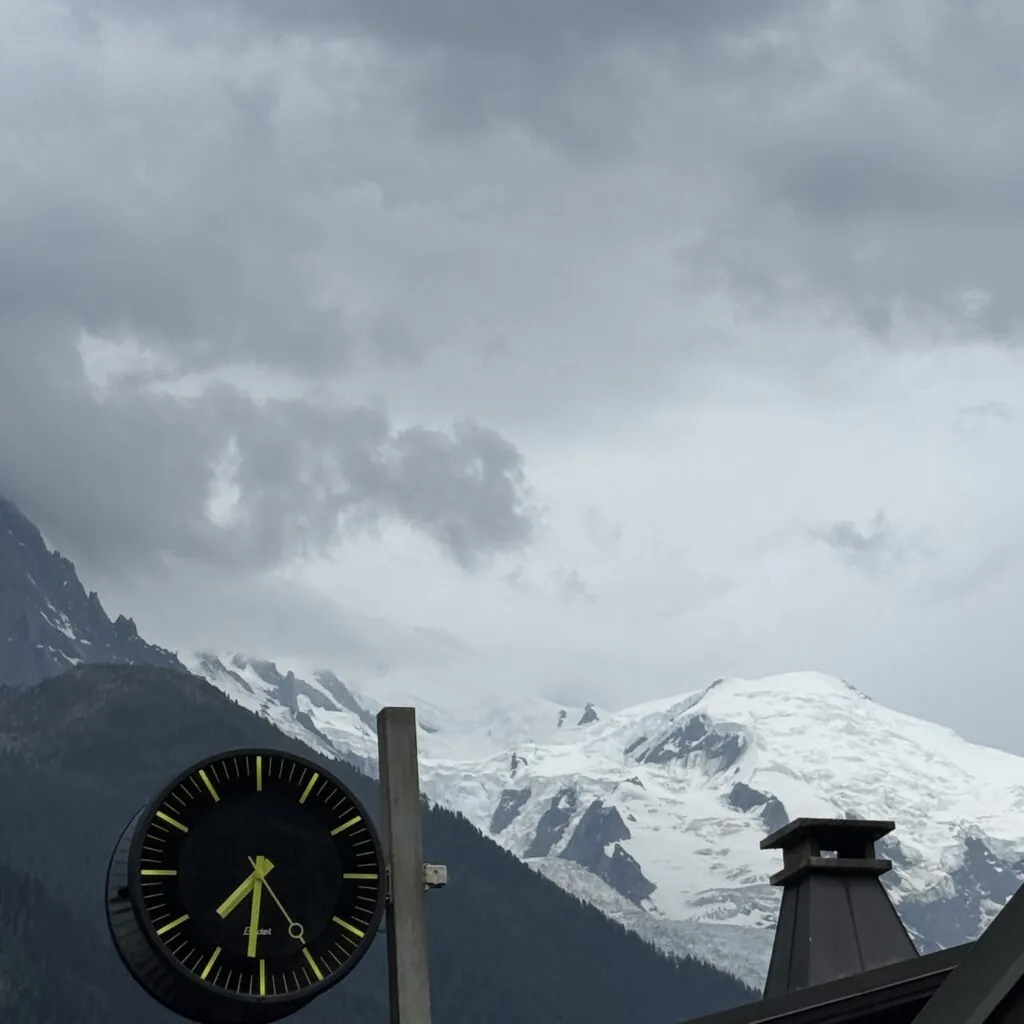
If summiting isn’t the plan
Not everyone wants to stand on top — some people would rather walk around the massif than up it, which is an entirely different budget and a much lower bar for experience. That’s covered separately on our Tour de Mont Blanc page, including timing advice in our best time to go on the Tour de Mont Blanc in 2026 guide — shoulder season tends to be both cheaper and quieter than the July-August rush, for a summit attempt and a trek around the massif alike.


