
View from the summit of Kazbek: what can you see from 5,047 meters and is it worth it?
Every other person coming down from Kazbek says the same thing: «My legs are done, but I’d do it again tomorrow.» Strange, right? You’re more exhausted than you’ve ever been in your life, you’re freezing, you’re gasping for air — and somehow you’re euphoric. At PVD Club we’ve been guiding people up this mountain for years, and people still ask us the same question: what’s actually up there to see? Why suffer through a 2 a.m. climb in the snow? Let’s be honest about what waits for you at the top and why it’s worth the trouble.
First, the uncomfortable truth
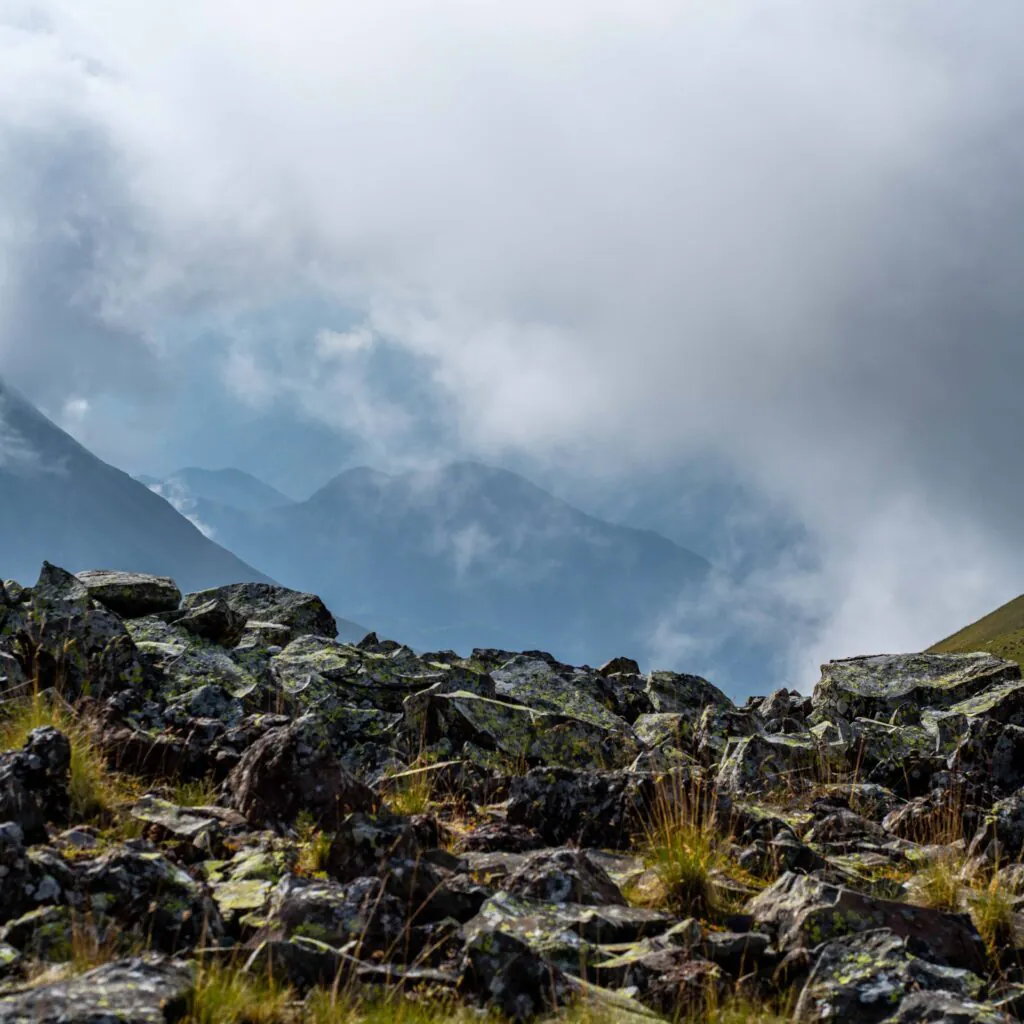
Nobody guarantees you a view. This is a mountain, not a scenic overlook with a schedule. Sometimes a group hikes for five days, pushes through the final push, and gets to the top to find nothing but a milky whiteout. A wall of fog, wind in your face, and the feeling that you’re just standing on a snowbank. Frustrating? Absolutely. But more often than not (about 70-75% of the time in August, by our numbers) the weather gives you exactly what you came for.
What you see on the way up, not just at the top
The view from Kazbek isn’t the only picture from this trip, and a lot of people remember the road there just as vividly as the summit push itself.
Gergeti Church and the first sunset
On day one, while you’re still fresh and full of energy, there’s a stop at Gergeti Church at 2,175 meters. From here you already get a sense of scale — the valley below, the mountains around, and Kazbek itself, waiting for you. Plenty of people photograph the sunset right here, not yet grasping what’s still ahead.
Gergeti Glacier
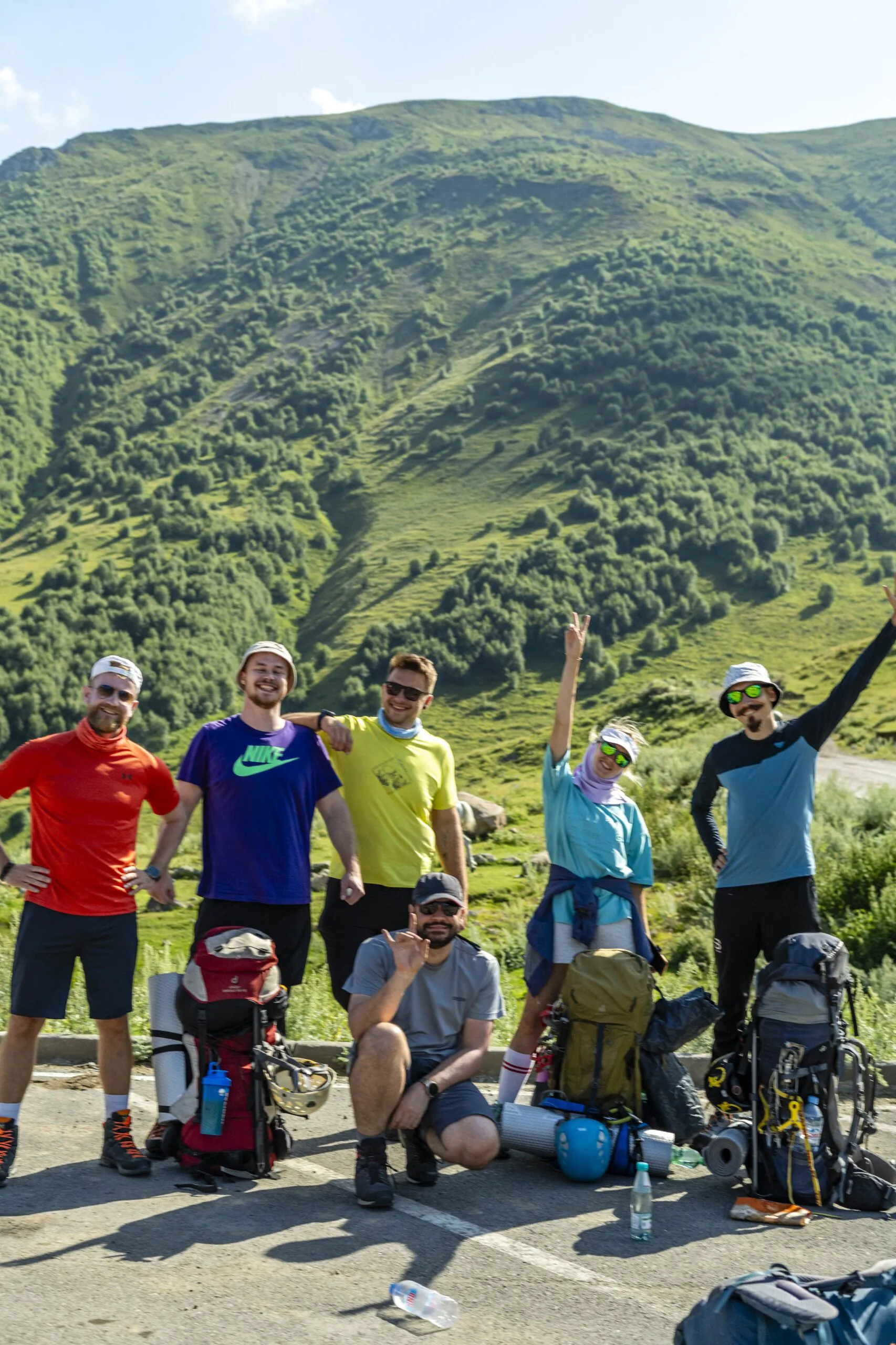
On day two or three, the route crosses the moraine and the glacier itself. It’s a different world — crevasses, ice blocks, the sound of meltwater dripping under your boots. The views are stark, almost otherworldly. This is usually where people put on crampons for the first time and realize the trip has shifted from «hike» to «actual mountaineering.»
The view from the Meteo Station (3,600 m)
Camp at the Meteo Station marks roughly the halfway point in elevation, and the panorama alone is worth the trip. In the evening, as the sun drops behind the neighboring ridges and the camp stoves fire up for dinner, the view is good enough to drain your phone battery.
What you really see from the summit
On a clear day, the picture looks like this: below you, the entire Caucasus range stretches out in a jagged line toward both horizons. To the north, toward Russia, smaller glaciated peaks come into view. To the south, the valley you left five days ago, and somewhere down there, tiny as a toy, Stepantsminda.
The church and the valley from above
That same Gergeti Church you photographed on day one now looks like a dot on a green hill — hard to believe it took you this many days to get from there to here. Looking down, you actually feel how much elevation you’ve gained.
Clouds beneath your feet
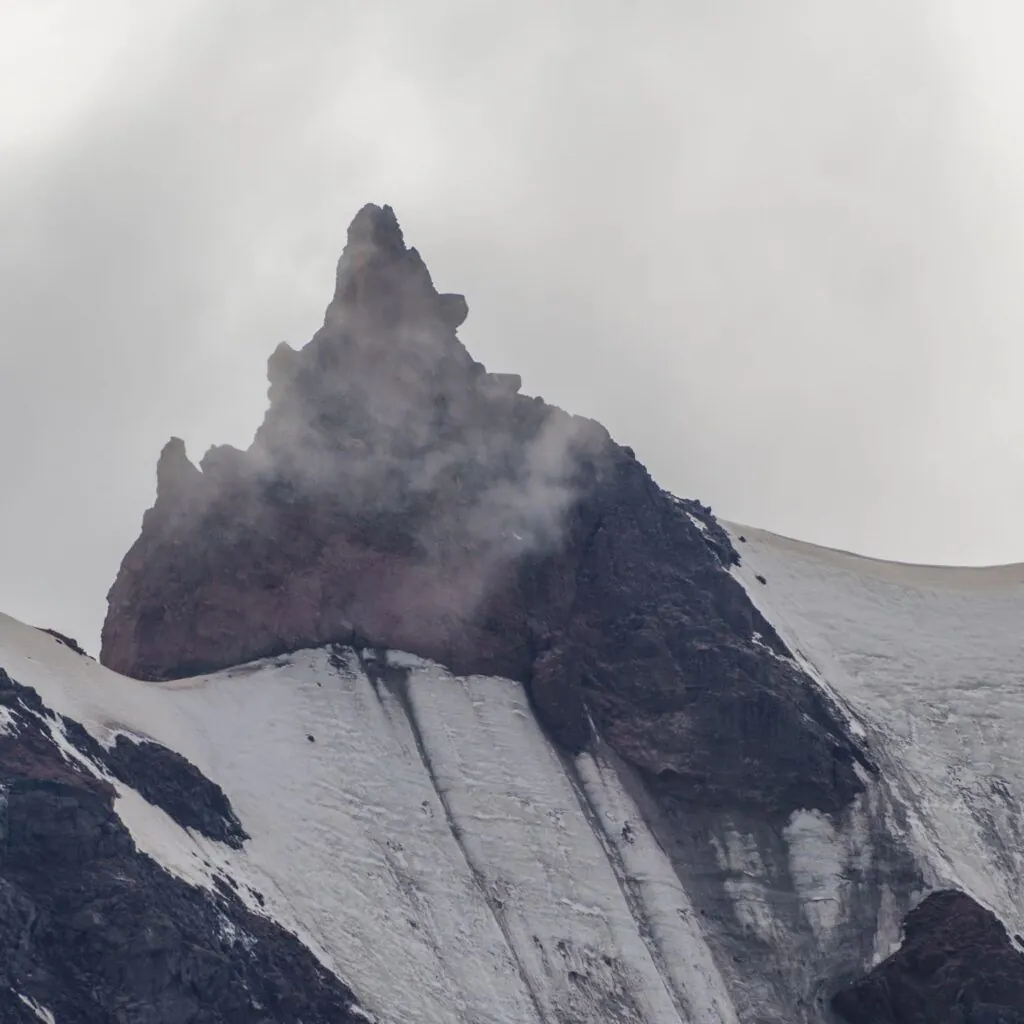
In good weather, the clouds often sit below you — you’re standing above the cloud layer, and it’s probably the single most surreal feeling of the whole climb. Not under them, not in them, but above. For the first few seconds, your brain flatly refuses to process it.
Sunrise, layer by layer
Sunrise at this altitude is its own event. The sky changes color in distinct layers — dark blue first, then violet, then pink, and at some point the sun clears the horizon and turns the snow orange. This is exactly why guides take groups up at night instead of during the day.
So is it worth it
This question is trickier than it looks. If you’re going purely for a good photo, honestly, it’s cheaper to fly to a resort with a cable car. But if what matters to you is the process itself — five days in the mountains, nights in a tent, conversations around a fire, the moment you doubt yourself on the climb and push through anyway — then yes, it’s worth it. The view at the summit isn’t a reward in itself; it’s a reward because you earned it.
Why the view «isn’t the point,» but still matters
Sounds contradictory, but it’s true. Guides often say: don’t go up Kazbek just for the photo, go for the experience — the view is a bonus. And oddly enough, the people who are mentally prepared for either outcome are usually the ones who end up getting the view, simply because they’re not burning energy on anxiety about the weather.
At PVD Club we guide Kazbek climbs specifically so people have the best possible chance of reaching the top and seeing this view in person, not through a helicopter window. You can read the full tour program on our site — every day is laid out in detail, from arrival in Stepantsminda to the summit push.
What it takes to get there
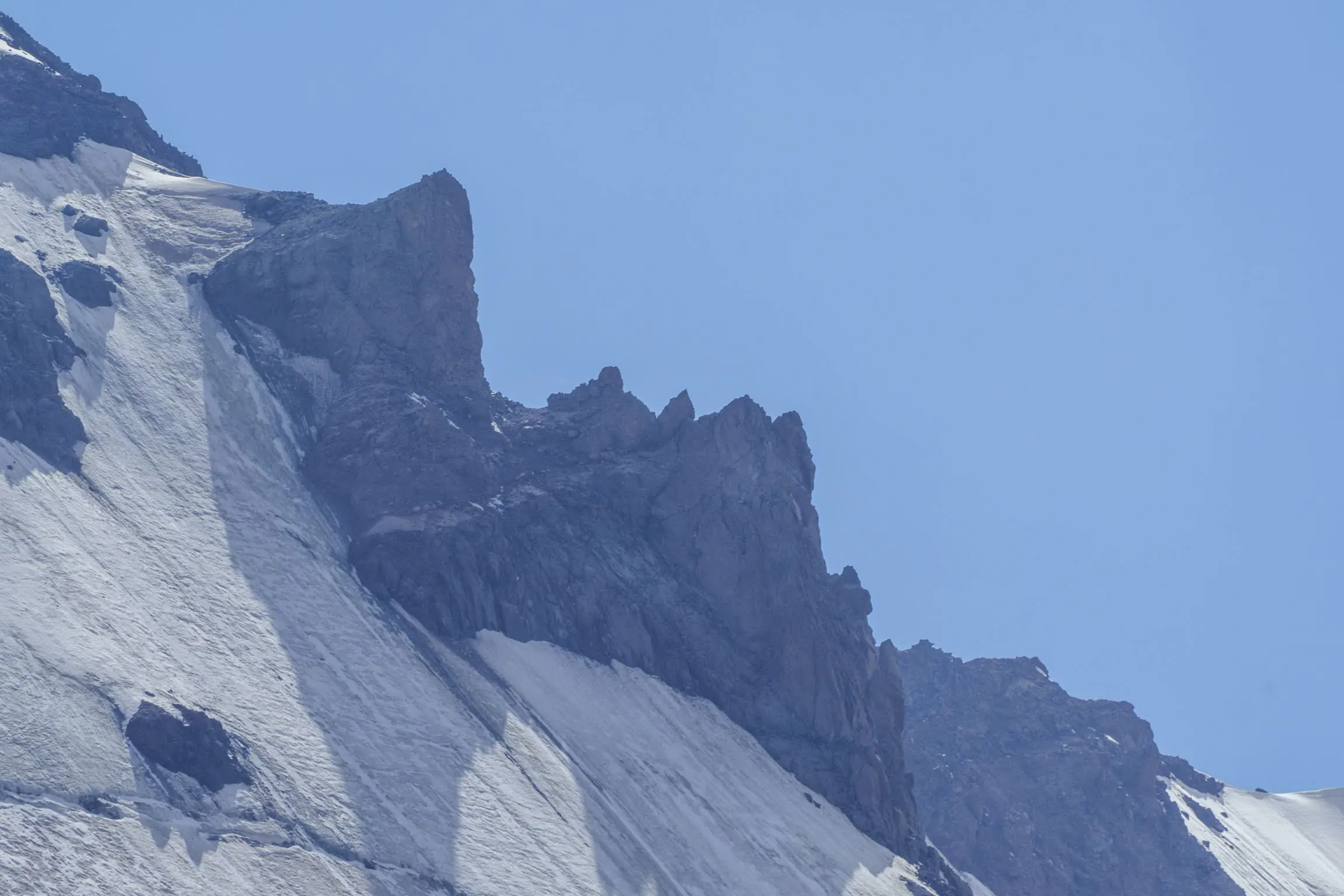
Nothing superhuman. A solid physical base, willingness to listen to your guide, and a bit of stubbornness on the last stretch of the climb, when it feels like you have nothing left.
Acclimatization is everything
We deliberately build the route around gradual acclimatization, so your body has time to adjust to altitude — without that, your chances of reaching the summit (and of feeling okay once you’re there) drop sharply. The acclimatization hike to 4,200 m before the summit push isn’t a formality; it’s the thing that determines whether you make it or not.
Fitness without the drama
You don’t need a mountaineering certification. You need to be able to walk 5-7 hours straight with a pack and not panic at the sight of snow and ice. Everything else comes down to your guide and the group’s pacing.
If you’re new to mountains and unsure whether you can handle it, check out the list of climbs we run — there are routes at different difficulty levels. Kazbek isn’t the easiest one, but it’s not the hardest either. It’s the sweet spot for anyone wanting their first serious five-thousander.
What to wear and bring so you don’t ruin the view for yourself
There’s a particular kind of pain in making it to the top and having the view ruined by your own condition — hands too cold to hold a phone, or goggles fogged up from breathing under a buff. Category-4 sunglasses, warm gloves under your outer mitts, and a phone kept in a warm pocket — and the view is yours, not your shivering, distracted version of it.
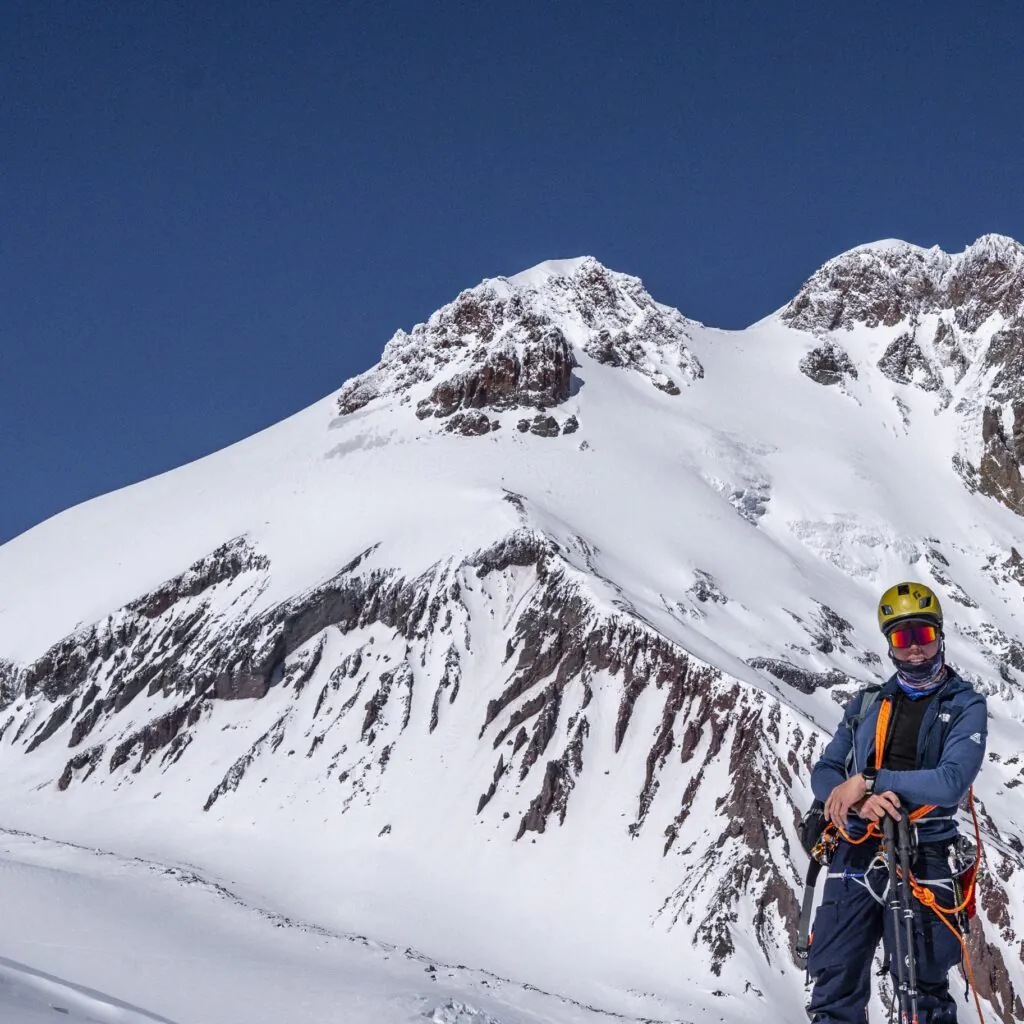
восхождение на казбеги
Questions we get asked the most
Can you really see Elbrus from up there? On a clear day, yes — Elbrus’s silhouette is visible on the horizon, though the distance is significant, so it looks more like a distant white cap among other peaks than the recognizable twin-summit mountain. What’s actually more impressive isn’t Elbrus in the distance, it’s the entire range around you — dozens of peaks you’ve never heard of and had no idea existed.
How much time do you actually get at the summit? Usually 15-20 minutes. That sounds short after all those hours of climbing, but at 5,054 meters your body is already working at its limit, and lingering there any longer is physically hard and unsafe — cold, wind, thin air. Your guide will let you take photos, catch your breath, and then start the descent while there’s still enough daylight to get down safely.
Can you see anything during the night climb? Yes, and it’s its own kind of unforgettable. Far from any city light pollution, the night sky is packed with more stars than you’ve probably ever seen. Plus the headlamps of the whole group stretch out in a line of little lights up the slope — beautiful too, even if it’s not quite what you came for.
What happens if it’s foggy at the top? Then you miss the view this time — and that’s a normal part of mountaineering, something you need to be mentally prepared for. But you still get everything else: the experience, the physical win over yourself, the company in the tent camp, and conversations that stick with you as much as any photo would. A lot of our guests come back for a second attempt specifically for the view they missed the first time.
Where can I find details on this exact route? All the logistics, departure dates, and packing lists are on the Kazbek climb page. If you’re interested in a shorter format in the same area without a full summit push, there’s also a three-day trek up to the Meteo Station — still great views, just without the night push to the very top.


