
The Best Time for Freeride and Ski Touring in Georgia
Georgia’s season is shorter than the Alps and it behaves differently. Get the timing right and you’ll ride deep, stable snow under blue sky. Get it wrong and you’ll be skiing rain crust in fog, wondering why you didn’t go to Chamonix. For the full country-wide picture, see our Georgia freeride guide.
Here’s the honest month-by-month breakdown, region by region.
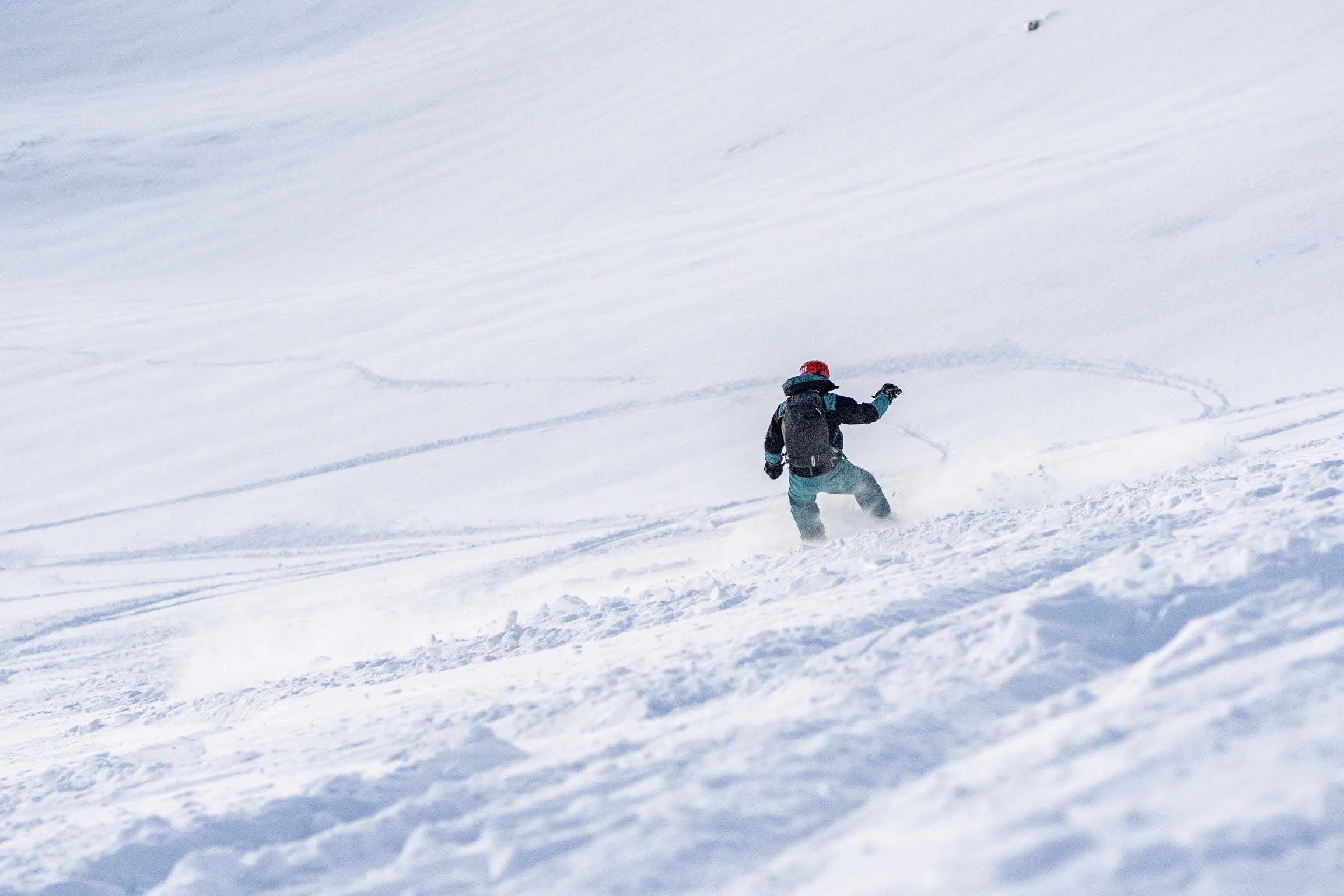
The short answer: February for depth, March for stability and bigger lines. The longer answer depends on where you’re going. Gudauri has the most reliable cover, Goderdzi needs a bigger base, Bakhmaro is a high wind-scoured plateau, and Svaneti runs later than anywhere else. For month-by-month terrain notes around the resort, our freeride guide to Gudauri goes deeper.
December: Early Season, Variable Snow
December is a gamble. Gudauri’s high-altitude terrain can be excellent, but the snowpack is still building and the off-piste is often thin. Lower regions like Goderdzi and Bakhmaro need more time.
Gudauri usually starts turning lifts in the second half of the month. The upper mountain holds snow earlier than the valley, but the off-piste is shallow and the rocks underneath are still in play. Goderdzi needs a real base and its access road can be interesting after a dump. Bakhmaro is normally out of reach, and Svaneti’s high villages get cut off whenever the weather turns.
Daylight is the constraint. At the solstice you get a little over nine hours, which in a deep valley means maybe six hours of usable touring. Plan short objectives and start early.
Early snow also turns into a faceted layer near the ground, and that layer comes back to bite you in January when the storms load it. December is when the season’s problems are set up.
January: The Season Starts Properly
By mid-January, Gudauri is usually in full swing and Goderdzi has a proper base. This is when avalanche conditions tend to be most active, because storm cycles stack up. Great snow, more careful decision-making required.
Each storm brings wind slabs onto lee slopes and fresh load onto old weak layers, so danger spikes during and just after a cycle, then settles. That’s fantastic snow and serious terrain choices at once. If you can’t read a forecast and pick a line to match it, January is not the month to teach yourself.
Cold snaps at 3,000 metres hit minus 20. Fine while moving, less fine when you stop, which is why a belay jacket earns its place in the pack.
Goderdzi has a working base by the second half of January and the cat-ski operation starts. Bakhmaro is still hit and miss. Svaneti has village snow, but the bigger lines want another few weeks.
Georgian Orthodox Christmas falls on 7 January, so the first ten days are a holiday period: resorts fill with Tbilisi families, prices rise, and the mood is festive rather than focused. After 10 January it goes quiet until February. Our 2027 season overview has resort dates.
February: The Best Month Overall
If you can only pick one month, pick February. Deep base, frequent snowfall, and enough daylight to do a full touring day. Goderdzi is at its best, Gudauri is reliable, and the temperatures are cold enough to keep the snow good.
This is when the base is deepest and most dependable across all four regions. Goderdzi is at its absolute best: lower, wetter, catching more snow, trees buried by mid-month. Bakhmaro usually becomes accessible from mid-February, weather permitting. Svaneti is in condition, though passes can shut for days.
February’s pack is deep and strong but not boring. Storm snow keeps arriving on old layers, so danger rises and falls with each cycle. The depth helps: safe steep terrain is often available even when the forecast is elevated. The downside is that obvious lines get tracked fast.
Cold temperatures are a feature. They keep north aspects dry and preserve the base into March. It’s also the busiest month, so book accommodation and guides early.
March: Longer Days, Stable Snow
March is the connoisseur’s month. The snowpack settles, the days get longer, and you can attempt bigger objectives — the Ortsveri summit day in our camp works best in stable spring conditions. You get sun-softened slopes in the afternoon and cold snow in the morning.
Buried weak layers gain strength as the snow around them densifies, and the pack falls into a melt-freeze rhythm: firm before dawn, soft by midday, refreezing late afternoon. That predictability makes bigger days possible. You’re not guessing any more, you’re timing.
By late March you get around twelve and a half hours of daylight, so you can start at seven, climb for five hours, ski down, and still be back before dark.
The trade-off is aspect and altitude. South-facing slopes below roughly 2,000 metres turn to slush by lunchtime and can release wet avalanches in the afternoon heat. North faces stay cold and dry. Lower approaches fall apart, and the last few hundred metres to the road become a mud walk.
Bakhmaro comes into its own in late March, when the plateau holds a deep base and the days are long enough to explore. It’s strange, beautiful, wind-scoured and usually empty.
April: Spring Tours and High Altitude Only
April is for high-altitude touring in Svaneti and the upper Caucasus. The resort season winds down, but the big lines come into condition. This is not beginner terrain — wet avalanches and falling seracs are real hazards.
Gudauri usually closes in early-to-mid April, so the lifts stop before the touring does. Up high the pack goes isothermal, glide cracks open, and seracs shed in the afternoon warmth. You want an early start, a conservative line and a guide who knows the exits.
Svaneti is the pick. Villages are quiet, roads are open, and peaks above 3,500 metres still hold winter snow. The season there runs later than anywhere else in the country.
April is also corn season: smooth, supportable snow on solar aspects after a clear cold night. Time it right and you get the best turns of the year. Time it wrong and you’re skiing porridge or setting off wet slabs.
Snowpack: What the Season Actually Does
The Georgian pack is a story in five chapters, each leaving something for the next.
- December builds a shallow, cold pack full of facets. It looks harmless and becomes the season’s persistent weak layer.
- January loads that layer with storm snow and wind slabs. The most active avalanche month, and the most consequential.
- February adds depth. The weaknesses are still there, just buried deeper, so triggering them is less likely but more serious.
- March strengthens and settles everything. Danger shifts from structure to timing.
- April melts it. Wet avalanches, glide cracks and rockfall take over, and the daily rhythm matters more than the forecast.
Wind is constant. The Caucasus funnels it across the ridges, scouring some slopes bare and loading others beyond the reported depth. Reading where the wind has been often beats reading the numbers.
Daylight: The Real Constraint
Touring days are shorter than most people expect, and valleys make them shorter still. Rough numbers for planning:
- Late December: just over nine hours
- Late January: around ten
- Late February: around eleven
- Late March: around twelve and a half
- Late April: close to fourteen
In December and January a 7am start isn’t enthusiasm, it’s necessity. In March and April you can wait for the light and still get home safely, which is one reason those months ski better.
Holiday Crowds and New Year
The New Year period runs from roughly 28 December to 10 January and is the busiest stretch of the season. Gudauri fills up, some guesthouse prices double, and the road from Tbilisi crawls. Orthodox Christmas on 7 January keeps it going. Wrong window for quiet powder, excellent one for fireworks and khinkali.
February brings school holidays and weekend visitors. Saturdays and Sundays are noticeably busier on the lifts and the popular touring routes; midweek days give you a much calmer mountain.
March is quieter apart from the first weekend. April is quiet everywhere except Svaneti, which picks up as the high-altitude season starts.
Region by Region
- Gudauri: December to late March, best February and March. The most reliable all-round option, with lift access, huge sidecountry and the Ortsveri terrain above. See the Gudauri freeride page.
- Goderdzi: January to March, best February. Lower, wetter, tree skiing, plus a cat-ski operation once the base is deep enough. Details on the Goderdzi adventure page.
- Bakhmaro: February to early April, weather-dependent. A high plateau with snow-laden trees and almost no infrastructure. Late March is the sweet spot. See Bakhmaro freeride.
- Svaneti: February to April for tours, later for altitude. The biggest terrain in the country and the longest season. Start with the Svaneti freeride programme.
For more detail on the resorts themselves, see ski resorts in Georgia. Choosing between the two main bases? We’ve written a separate comparison: Goderdzi vs Gudauri.
What About the Weather?
Georgian weather is volatile. A forecast three days out is a guess. Moisture off the Black Sea hits the Caucasus and dumps unpredictably, so a predicted 20 centimetres can land as five or forty in a different valley.
That’s why guided programmes stay flexible. You go where the snow is good, not where the plan said: a Gudauri base can chase the Ortsveri side, drop into the Kobi valley, or head towards Kazbegi.
Our winter in Georgia guide covers conditions in more depth.
Traveler’s FAQ
When is the cheapest time to ski Georgia?
Early December and late March. Both come with trade-offs in snow quality. See the cheapest ski holiday in Europe for the budget angle.
Is New Year a good time?
Busy and expensive, with variable snow. It’s a holiday trip more than a freeride trip. For an empty mountain, come in the second half of January or the second week of March.
Can you ski in November?
Rarely, and only on the highest slopes after early storms. Don’t plan a trip around it.
February or March?
February is deeper and colder, with more fresh snow and more active avalanche cycles. March is more settled, with longer days and better conditions for big objectives. Both are excellent; they suit different appetites.
Pick Your Window
February for depth, March for stability and bigger objectives. Want the best single week and don’t mind sharing the mountain? Take early February. Want longer days, a settled pack and a shot at the Ortsveri summit? Take March. Want solitude and steep cold snow without much margin? April in Svaneti.
Our camp dates for 2027 are 1–7 February, 15–21 February, 8–14 March and 15–21 March — deliberately placed in the best two months of the season. Seven days in Gudauri and Ortsveri, maximum five riders, $1,300 per person including accommodation, breakfast and dinner, transfers from Tbilisi, avalanche gear rental, snowshoes, poles and pack. Small groups by design.
See the freeride camp page for dates and what’s included, browse all freeride camps, or look at the multi-region programme if you want to combine regions in one trip.


