
Climbing Mont Blanc: What You Need to Know Before You Start
Mont Blanc has a way of getting under the skin of almost anyone who’s ever daydreamed about big mountains. The highest point in the Alps, 4,810 meters, a name that sounds good on a postcard, and photos that look great on your feed — it’s basically the mountain people put on their list before they even know what «putting it on a list» means. But between «I want to climb Mont Blanc» and actually standing on the summit, there’s a pile of questions: which route to pick, how much it’ll cost, what to pack, and whether you need serious prior experience. Let’s go through it properly — no vague «it depends» answers, and no fluff.
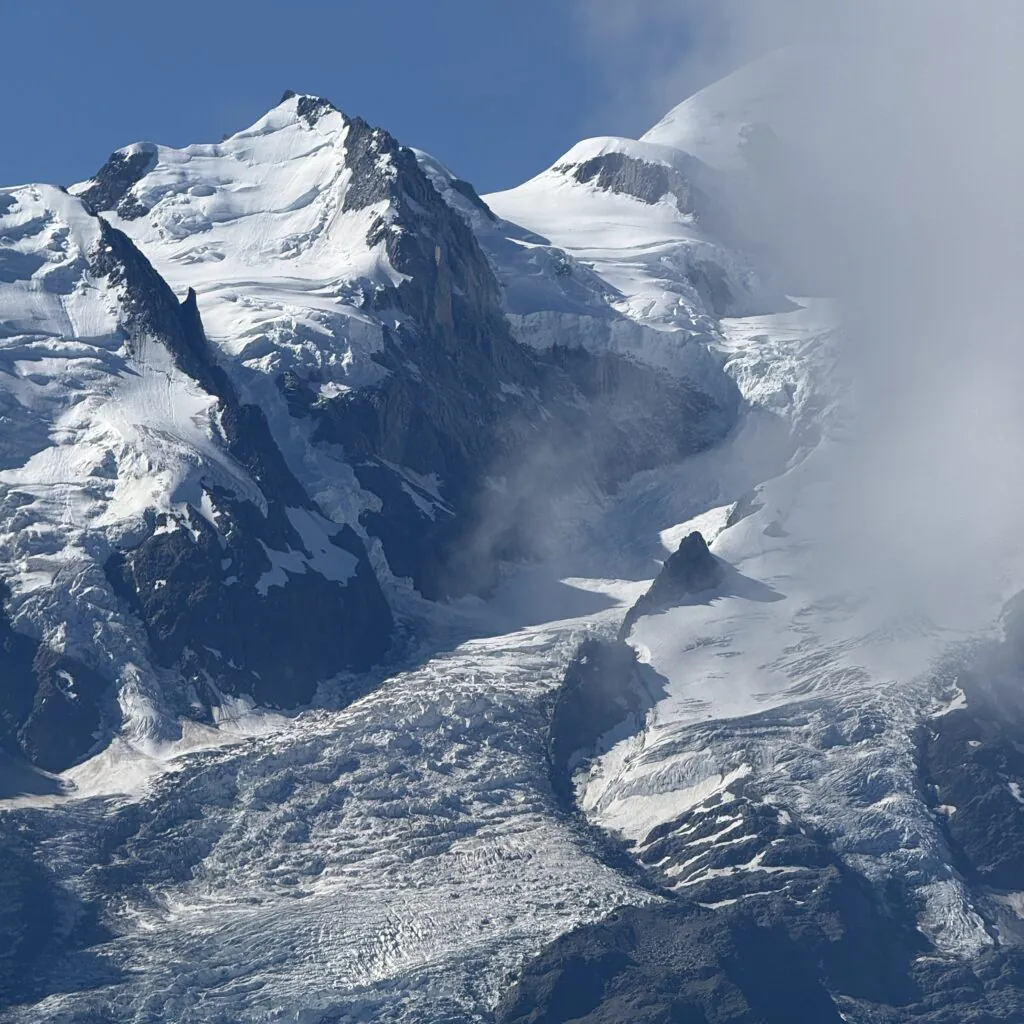
Two routes, two very different mountains
Mont Blanc doesn’t have one «standard» way up, and that’s the first thing worth understanding. There are, essentially, two very different routes, and they differ not just in difficulty but in the whole feel of the climb.
The classic route goes through the Gouter Hut (Refuge du Gouter). Difficulty grade PD+, summit push around 5-6 hours. It’s the most popular way up, which also makes it the most crowded — in July and August some sections of the route start to feel less like a mountain and more like an assembly line, and yes, there really are queues on certain stretches. On the upside, it’s the more budget-friendly option of the two.
Trois Monts — the three-summit route — is the one for people who want quiet and a genuine sense of being on a real mountain, not a highway. It’s technically harder, grade AD-, and demands confident work with crampons and rope. The summit day is longer too, 6-8 hours up, but there are far fewer people on the route, and the views and overall atmosphere are on a different level entirely. We run this exact route as our program — see our 2026 Trois Monts Mont Blanc ascent if you want a full breakdown of how the trip is structured, or check out the Trois Monts route overview for more on the character of the climb itself.
How much does it actually cost
This is the first question every friend asks once you mention Mont Blanc: «isn’t that crazy expensive?» And the honest answer is both «no, it’s cheaper than you think» and «yes, there’s a way to spend twice as much just by picking the wrong option.» Some climbers reach the summit for around 2,000 euros, while others end up paying one and a half to two times more for the exact same mountain, simply because of the route and format they chose.
The main cost categories break down like this:
- guide and gear — the biggest chunk of the budget, from 2,000 euros on the classic route to 2,500+ on Trois Monts;
- huts and cable cars — nights in alpine refuges and lifts like the Aiguille du Midi aren’t cheap, and tickets are worth booking well in advance since slots fill up fast;
- insurance — a non-negotiable line item. A helicopter rescue in the Alps without insurance can run into tens of thousands of euros, and that’s standard practice in the region, not scare talk.
We go into the full budget breakdown in a separate piece — how much it costs to climb Mont Blanc — including exactly where the price gap between the two routes comes from, and why the «cheaper» option can quietly end up costing more once everything’s added up.
How Mont Blanc stacks up against its neighbors
Here’s an interesting detail: Mont Blanc is the most expensive mountain among the usual beginner-friendly five-thousanders, even though it’s neither the highest nor the most technically demanding one on that list. Kazbek, for comparison, sits at 5,054 meters with a similar difficulty grade and can cost a fraction of the price — it comes down to the economics of the region rather than the mountain itself. The Caucasus generally wins by a wide margin on «experience per euro spent» compared to the Alps.
We compared the two mountains side by side in a separate article — Mont Blanc vs Kazbek: where to start your first 5,000m peak — worth a look if you’re not sure which mountain should be your first «five-thousander.»
What to actually pack
Gear for Mont Blanc is its own topic, and it’s easy to either overload your bag with things you’ll never use, or forget something genuinely important. Crampons, ice axe, rope, and a helmet are usually included as part of the guided package, but personal gear — clothing, footwear, base layers, sun and cold protection — is on you.
To make sure nothing critical gets left behind (and that you’re not hauling dead weight up the mountain), we put together a full gear checklist — Mont Blanc ascent gear: a complete A-Z checklist — it covers everything from base layers to the first-aid kit. If you’re not planning to summit but instead want to hike around the massif, the packing list looks quite different — check out what to pack for a Mont Blanc hike for the trekking-specific version.
What if the summit isn’t the goal
Reaching the top is impressive, sure, but it’s far from the only way to experience Mont Blanc. If what you’re actually after is a slow, scenic loop around the massif — taking in views from France, Italy, and Switzerland as you go, rather than fighting for crampon placements on a summit ridge — that’s a completely different trip, and a completely different budget. That format is called the Tour du Mont Blanc, and we cover it in detail on a separate page — Tour du Mont Blanc. It’s a great option if you want the full Mont Blanc experience without any technical climbing involved.
How PVD Club fits into all this
We at PVD Club run guided expeditions to Mont Blanc on both routes described above, including the quieter, more technical Trois Monts line, and we handle the parts that usually cause people the most stress when planning solo: certified guides, permits and logistics, hut and cable car bookings, and route selection based on your fitness level and experience. If you’d rather skip the guesswork on gear, dates, and budgeting and just show up ready to climb, that’s exactly the kind of thing we sort out as part of the program.
Mont Blanc works equally well as a first serious five-thousander and as a technically interesting climb for people who’ve already been higher and want more of a challenge, like Trois Monts. The key is understanding the difference between the routes upfront, budgeting realistically, and never cutting corners on insurance or gear. After that, it’s really just a matter of choosing your format — summit push or a scenic loop around the massif — and starting to prepare.


