
Mont Blanc Ascent Gear: A Complete A-Z Checklist
Every year dozens of people set out on a Mont Blanc ascent with gear packed «by eye» — and regret it the moment they reach the glacier. Someone hauls an extra sweater «just in case,» someone forgets a helmet and spends half the day nervously eyeing the loose rock overhead. Someone tries to save money on crampons or boots — and ends up either slipping on the ice or simply unable to move properly on the rope. We at PVD Club have seen enough of these stories, so we decided to lay it all out once: what you actually need for an ascent, what you can safely leave at home, and the five things you shouldn’t set out on the route without. Read to the end — there’s an uncomfortable truth about the first aid kit waiting for you.
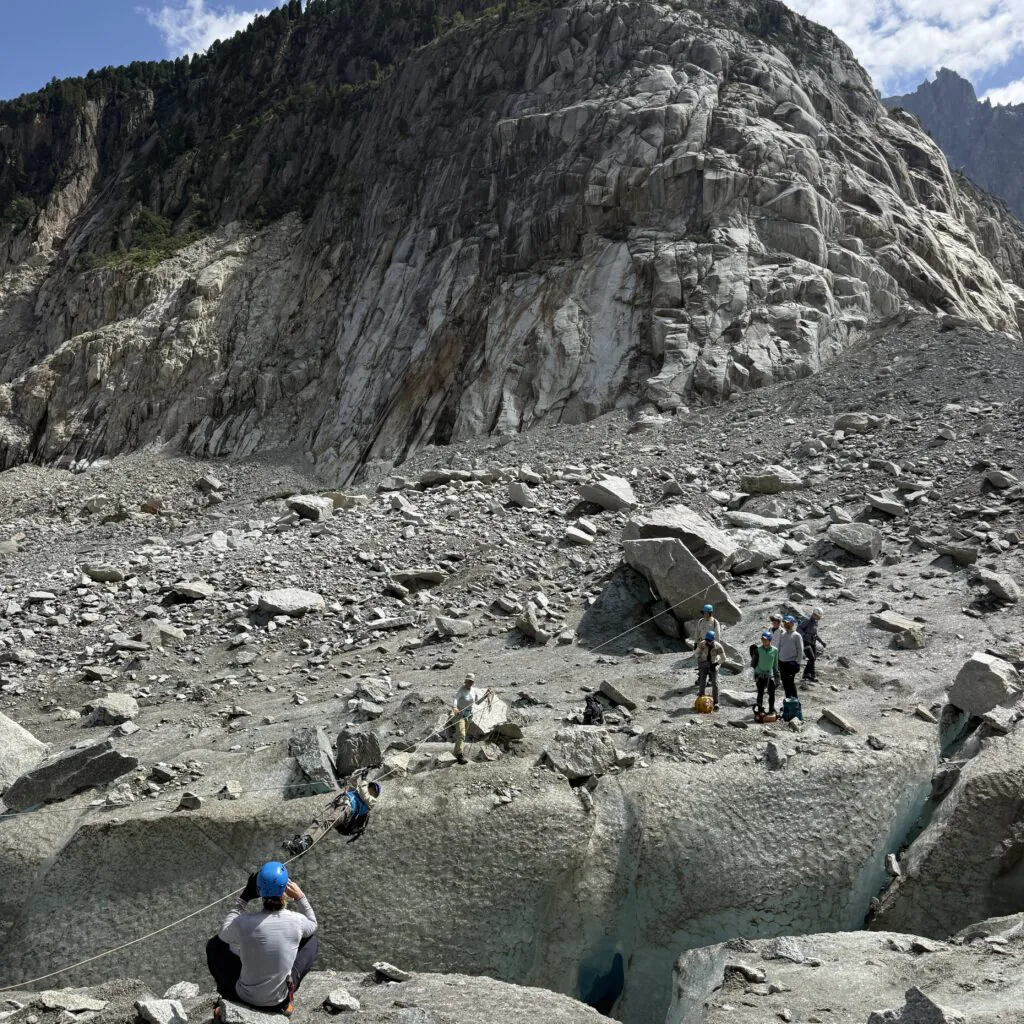
Rule number one: weight is the enemy — except where safety is concerned
Before we go item by item, remember this. An ascent isn’t a trek, where an extra kilogram just tires your legs out. Here, extra weight affects your pace on the glacier, and pace at altitude is a safety question: the longer you’re out on the route, the higher the risk of getting caught in bad weather or in softened snow. That said, technical gear is not where you cut corners — crampons, an ice axe, a harness, and a helmet are non-negotiable, they’re the mandatory minimum, not an option. A classic ascent via the Goûter hut or the Trois Monts route calls for one gear setup, while longer, more technical variants are a separate conversation with your guide.
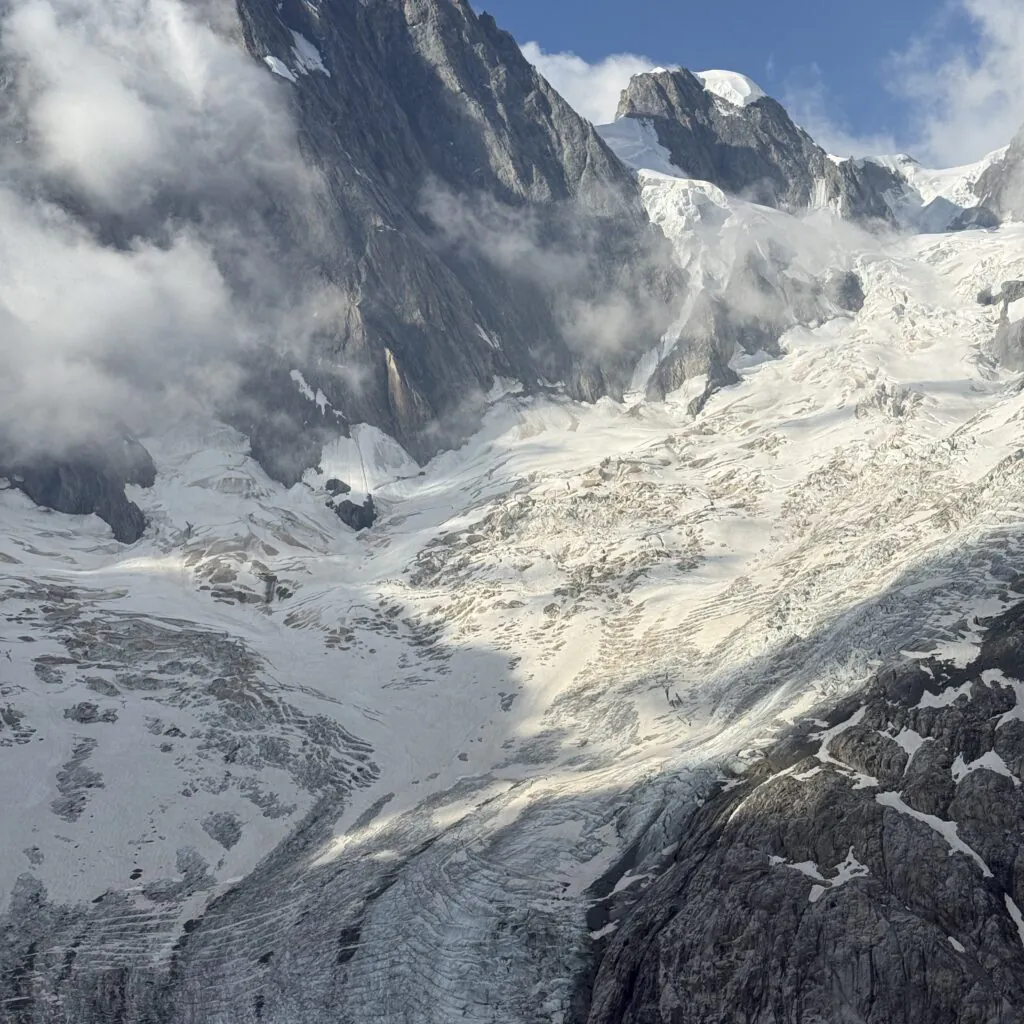
Boots: this is not where you cut corners
Rigid mountaineering boots built for crampons — with a semi-stiff or fully stiff sole compatible with automatic or semi-automatic crampons. Regular trekking boots, even very good ones, won’t cut it here: they lack the rigidity crampons need to hold reliably. As with trekking, boots need to be broken in well before the trip — several outings in the mountains, or at least fifty kilometers on foot beforehand. New boots on an ascent aren’t just a blister risk; they can cost you your footing on the ice at exactly the wrong moment. The same logic applies even if you’re joining a guided Mont Blanc ascent — a guide brings route knowledge, not broken-in feet.
A word on socks too. Bring at least three pairs of warm trekking socks with reinforced heels, ideally with some merino wool, plus one extra-warm pair specifically for the high camp and cold nights. Skip cotton entirely — on a trek and even more so on ice.
Crampons and ice axe — the technical backbone of the climb
Crampons need to be matched precisely to your boots — fitted at home, not at the hut the night before you set out. The ice axe should be a classic model, medium length, with a comfortable leash: you’ll need it both for self-belay and for self-arrest in case of a fall. This is not where you save weight — these are the two items without which you simply won’t be allowed onto the glacier.
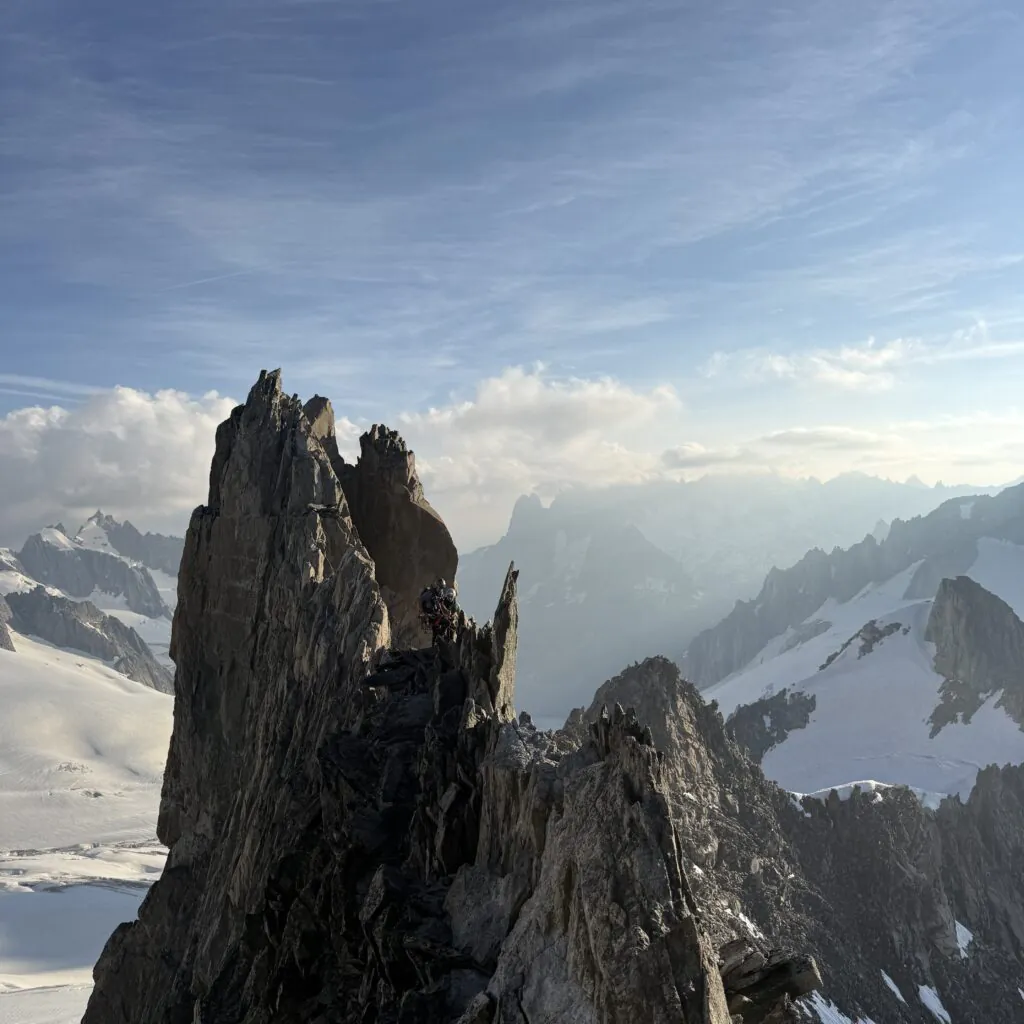
Harness, helmet, and roped-travel gear
A climbing harness, a helmet, carabiners (including a couple of locking ones), a rope or your share of one for the rope team, ice screws, and slings — this whole set is usually provided or coordinated by your guide, but knowing exactly what you’re carrying yourself matters. A helmet is mandatory not only on the glacier but on any section where rockfall is possible — taking it off «because it’s hot» isn’t really an option.
Backpack: size and fit matter
For an ascent, a 35–45 liter summit pack is enough, plus a separate cache of bulkier gear left at the hut if the route calls for it. The pack needs to sit tight against your back and not swing around while you’re moving on ice or rock — a loosely bouncing pack throws off your balance at exactly the moment you can least afford it.
Don’t forget a waterproof pack cover or a shell jacket with an extended back panel. In the Alps, and especially in the glacier zone, weather turns fast, and soaked outer layers at altitude cool your body down far quicker than they would in the valley. Timing your trip well helps too — this breakdown of the best time to go on the Tour du Mont Blanc in 2026 is worth a look before you lock in your dates, even for an ascent, since the surrounding trekking season shapes conditions on the massif as a whole.
Clothing: the layering principle, adjusted for altitude
Three layers remain the foundation: a base layer, a fleece or light down jacket, a shell on top. But for an ascent, a fourth level gets added — a warm down jacket for the high camp and the pre-dawn start, when temperatures drop well below freezing even in summer. You’ll also need warm gloves (ideally two pairs — thin ones for moving and thick down ones for stops) and a balaclava or a buff to shield your face from the wind on the final push to the summit.
Headwear comes in two forms as well: a cap or bandana against the sun on the glacier, plus a warm hat that fits under your helmet for the cold stretches. Sun reflected off the snow burns just as badly as direct sun, so high-protection sunglasses (category 3-4, ideally with side shields) aren’t a cosmetic detail — they’re mandatory.
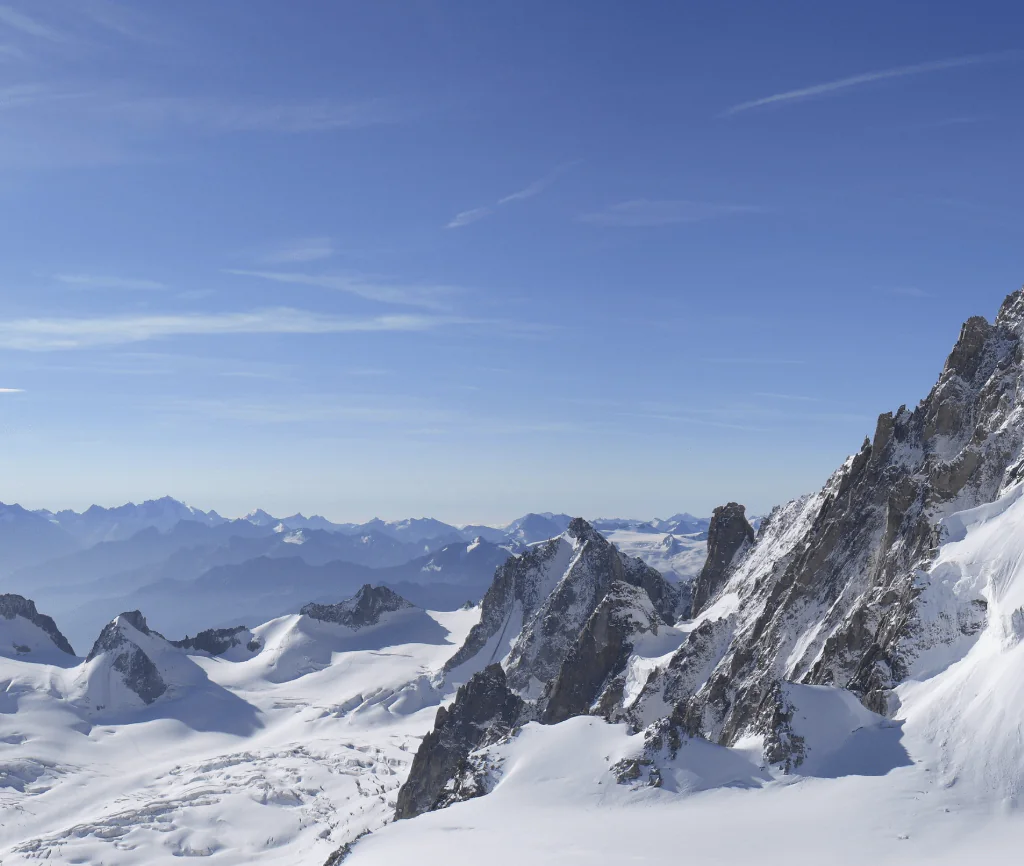
Trekking poles won’t replace an ice axe, and crampons won’t replace themselves
We’re calling this out separately because the confusion comes up regularly. Trekking poles are useful on the approach and on the descent over moraine, but on the glacier itself their job is taken over by the ice axe — it provides self-belay that poles simply can’t. If your route includes long approaches before the glacier, lightweight folding poles are still worth bringing, but strictly as a supplement, not a substitute for technical gear. If you’re weighing a full multi-day circuit alongside your ascent, our general gear guide for a Mont Blanc trek covers that lighter, non-technical setup in detail.
Sleeping bag and the high camp
If your ascent involves a night at a hut, you usually won’t need a sleeping bag — a light silk or fleece liner is enough, since huts on the Mont Blanc route provide blankets. If the route includes a night in a tent on the glacier, you’ll need a sleeping bag rated to at least -10°C — nights at altitude are considerably colder than they look on the valley forecast.
Now, the uncomfortable truth about the first aid kit. A lot of people think of it as optional, something only for the overly cautious. It isn’t. The bare minimum for an ascent: blister plasters (hydrocolloid ones are best), pain relievers, an elastic bandage, something for stomach upset, and — this one’s essential — a high-SPF sunscreen and a lip balm with sun protection. Sunburn and frostbite both happen much faster at altitude and on snow than they do down in the valley.
Five things you shouldn’t set out on an ascent without
Short version, straight to the point — here’s the bare minimum you shouldn’t be without on the route:
- Rigid boots built for crampons, broken in well ahead of time
- Crampons, fitted and matched to those exact boots
- An ice axe
- A helmet and a full protection setup (harness, carabiners)
- A warm outer layer (down jacket) for the high camp and the pre-dawn start
Everything else is detail. These five items are the ones most often behind an ascent being cut short earlier than planned.
For the full gear breakdown — down to exactly how many pairs of gloves to pack and what pack weight already counts as too much for an ascent — check out this complete gear guide for a Mont Blanc ascent. And if you’re still deciding between a technical climb and a classic circuit, it’s worth reading up on trekking Mont Blanc as well, to see how the two formats and their gear lists actually compare.
FAQ: Gear questions for a Mont Blanc ascent
Can you climb in regular trekking boots instead of rigid mountaineering boots?
Not really, once you’re on the glacier itself: trekking boots don’t hold automatic crampons securely, and without a stiff sole your foot flexes on the ice, which raises the risk of a slip. Even trekkers well broken in on flat trails still need a dedicated pair of boots built for crampons when it comes to the ice.
How much does your gear weigh if you’re staying at a hut during the ascent?
Usually a summit pack with technical gear, warm clothing, and water comes to around 8-12 kg — no sleeping bag or tent, but including the weight of crampons, an ice axe, and a harness, which add up on their own.
Do you need a camping stove if you’re staying at a hut?
No, huts along the ascent route provide meals, so there’s no need to cook. A stove only matters for a self-sufficient variant with a tent night on the glacier.
Should you bring trekking poles if you’ve never used them before?
Yes, but it’s worth practicing beforehand — on the approach and the descent over moraine they take real load off your knees. On the glacier itself, the ice axe takes over, and it helps to know in advance where the poles’ job ends and the technical gear’s job begins.
What do you do if your boots start rubbing on day one?
Tape it right away with a hydrocolloid plaster — don’t wait for the hot spot to turn into an open blister. That’s exactly why plasters belong in an outer pocket of your pack, not buried at the bottom under your warm layers.
Can you skip the helmet if the route looks straightforward?
Better not to risk it. Rockfall and falling ice are possible even on classic ascent routes, and a helmet is minimal protection that weighs almost nothing while cutting out a meaningful share of the risk.
What clothing do you need for a hut stay during the ascent?
Dry warm clothes, thick socks, and a light down jacket — changing into something dry after a day on the glacier isn’t just about comfort, it’s also about staying warm before the early wake-up for the summit push.


