The Half-Day Tour That Makes People Fall for Skinning
Every resort has one route that quietly converts downhill skiers into tourers, and above Gudauri it is Lomisa. You leave the car in a village twenty-five minutes down the valley, climb on skis through beech forest for two or three hours, and then the trees open up and there it is: a ninth-century church alone on a bare ridge, the Aragvi river shining a long way below, and nobody around except your group and a monk or two.
What is the Lomisa ridge ski tour? A four-to-five-hour round trip starting from Kvemo Mleta, roughly 30 minutes’ drive from Gudauri. Expect about 750 to 800 metres of skinning through forest to the Lomisa monastery on the ridge, then a descent back down to the same village. It is moderate, beginner-friendly in good snow, and it fits comfortably into a half day.
Why Lomisa Suits a Half Day Better Than Anything Else Here
Gudauri’s big-name touring — Sadzele, Bidara, the long lines off the ridge above the resort — all reward you with serious terrain and ask for a full day, an early start and a decent set of lungs. Lomisa is the opposite proposition. The vertical is honest but not brutal, the angle is friendly, the forest shelters you from wind, and the exit spits you back out where you started rather than 15 kilometres down a road.
That combination is why it works so well as a first tour or as a rest-day activity when your legs are wrecked from three days of freeride. You still get the full touring experience — route-finding, kick turns on the forest switchbacks, transitions in the cold, a summit you earned — but on a schedule that leaves you back in Gudauri for a late lunch.
If you have never toured before at all, start with our explainer on what ski touring is and what gear you need. Lomisa is a very good place to put that theory into practice.
Getting to the Start: Kvemo Mleta and the Drive from Gudauri
The tour starts in Kvemo Mleta, a village in Dusheti municipality on the eastern side of the Aragvi valley. From Gudauri it is a short drive down the Georgian Military Highway and then off onto the valley road — around 25 to 30 minutes in normal winter conditions, and a lot less stressful than it sounds, because you are driving away from the pass rather than over it.
You need a car, or a driver who is happy to drop you and come back for you in five hours. There is no lift, no shuttle, no bus that will do this for you, and the village is small enough that turning up and hoping for a taxi is not a plan. This is the practical reason most people do Lomisa with a guide: the logistics are simple, but they are not zero.
Park where the road is ploughed and clearly not blocking anyone, get your skins on, and walk. The track usually starts as a farm track through the lower village before it turns into forest.
The Skinning: Forest, Switchbacks, Then Air
The climb breaks into three parts, and each one feels different. The first is a gentle warm-up through the village and the lower fields, where you are still fiddling with your layers and wondering why your pack feels heavy. The second is the long forest section — beech and hornbeam, a proper skin track cut by whoever went up before you, and a series of switchbacks that make the 750 to 800 metres of gain feel considerably gentler than it is.
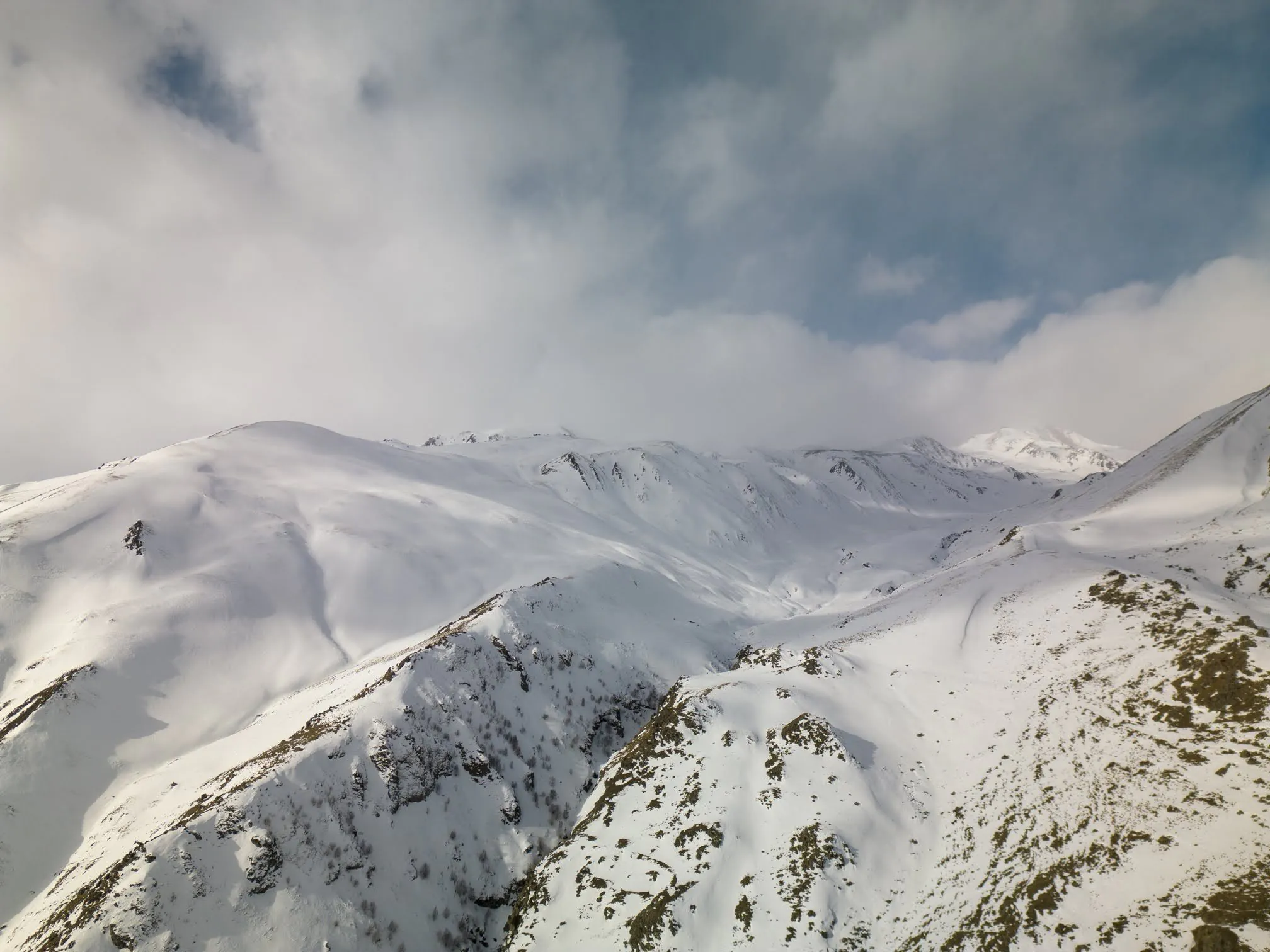
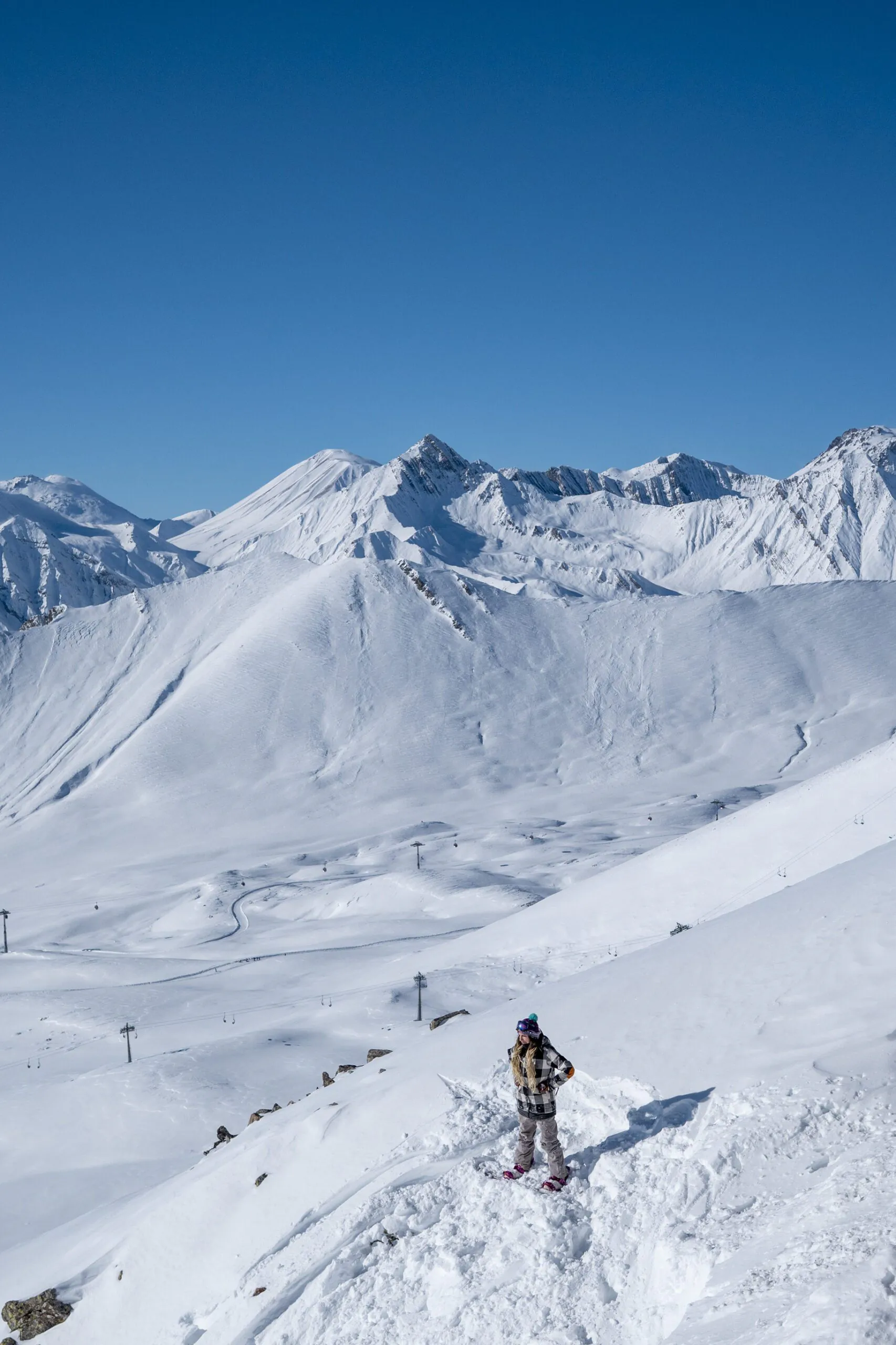
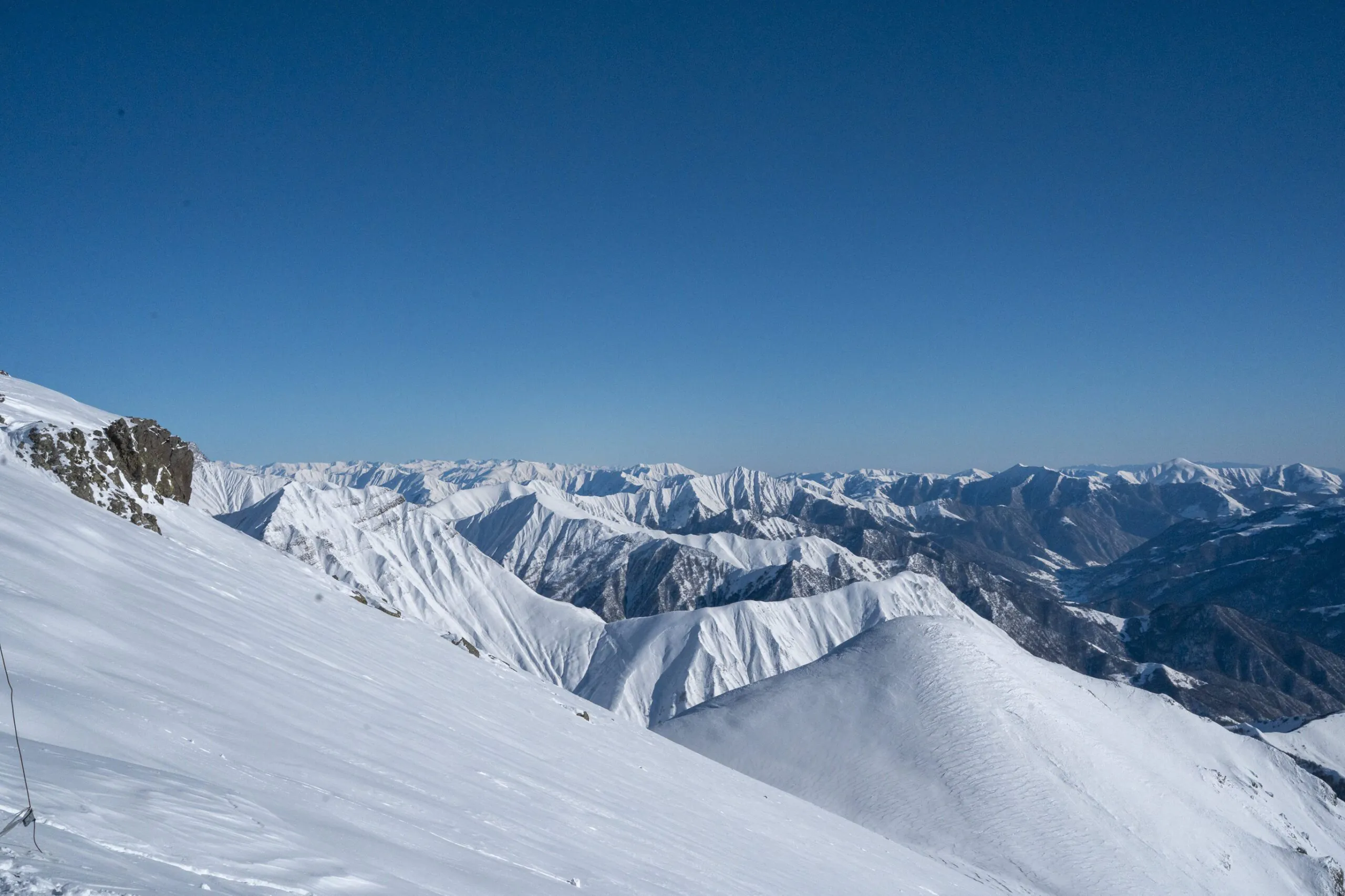
The third part is the payoff. Somewhere around 2,000 metres the trees thin, the ridge appears, and the last stretch opens onto the wide, wind-scoured shoulder below the church. On a clear day you can see the whole Aragvi valley, the Jvari pass behind you, and the Caucasus wall stretching off to Kazbegi. It is the kind of view that makes people stop talking for a minute.
Total climbing time is usually two to three hours at a normal group pace. Slower if there is fresh snow to break trail, faster if the track is set and you are fit. The angle stays moderate throughout — there is nothing here that requires a rope or a course, though a couple of the forest switchbacks are tight enough that you will be glad you practised kick turns.
Arakhveti: The Other Start, and Why People Pick It
Mleta is the standard start, but it is not the only one. A second line goes up from the Arakhveti side, through older, quieter forest, and some guides prefer it in late season when the Mleta track gets tracked out or the lower fields turn to mud. The gain is similar, the forest is arguably prettier, and you see fewer people.
Which one you take depends on snow conditions, where your driver can park, and what your guide knows about the day’s stability. Both end up on the same ridge, and both descend the way they came — this is a round-trip tour, not a traverse, so there is no car shuttle to arrange.
Lomisa Monastery: The Reason This Ridge Has a Name
The church at the top is not a scenic afterthought — it is one of the oldest and most important shrines in Georgia, and it has been sitting on that ridge since the ninth century. The Lomisa festival, Lomisoba, draws pilgrims up here every year, and the monastery is lived in year-round, which is a remarkable thing when you consider the walk you just did with skis on.
Treat it accordingly. Keep your voice down, do not wander into the buildings with your boots on, and if a monk is outside, a nod and a «gamarjoba» goes a long way. Some groups eat lunch at the church; others drop just below the ridge to get out of the wind. Either is fine — just pack out everything, including the orange peel.
The Descent: Trees, Corn, and the Long Run Back
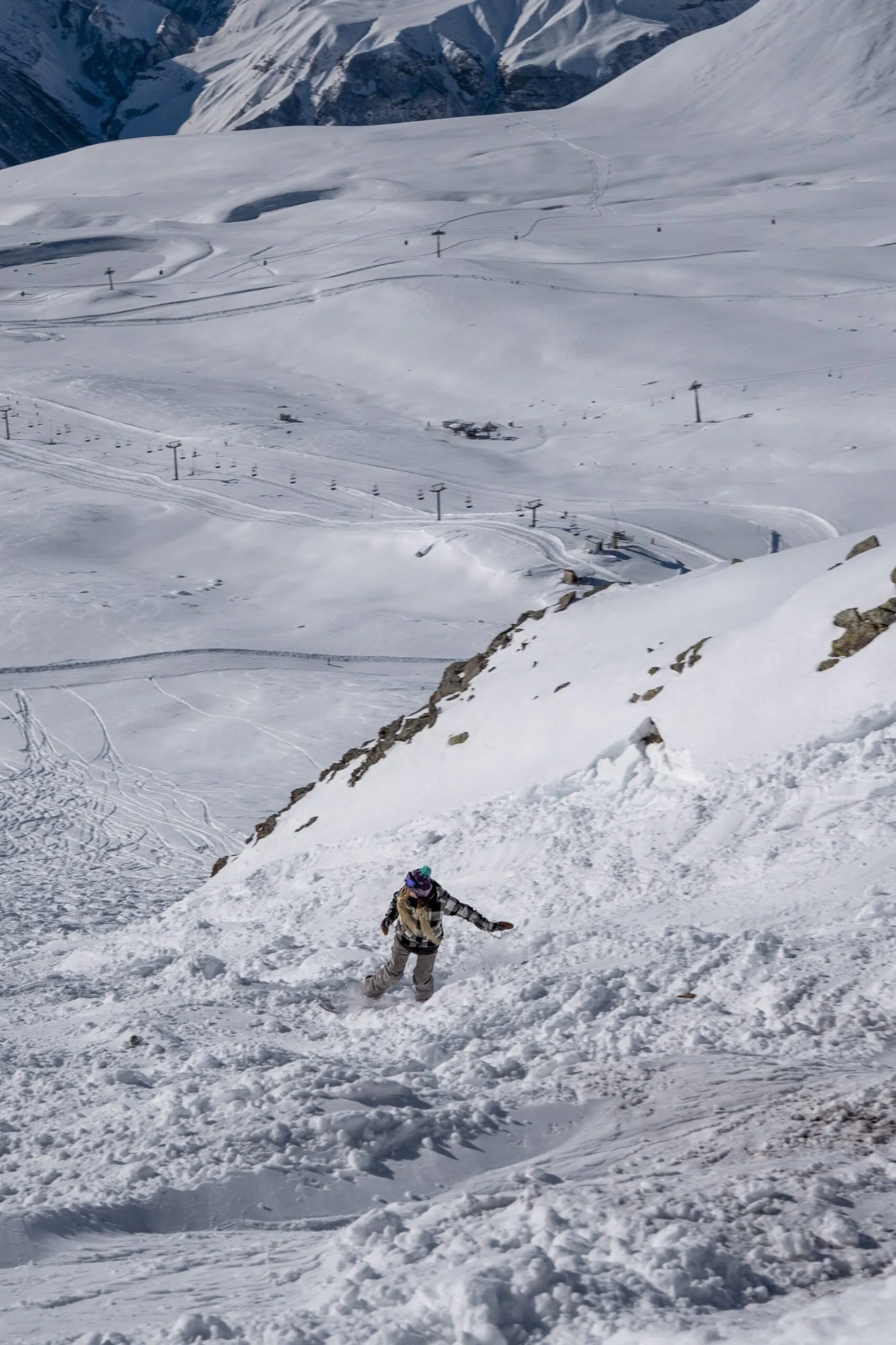
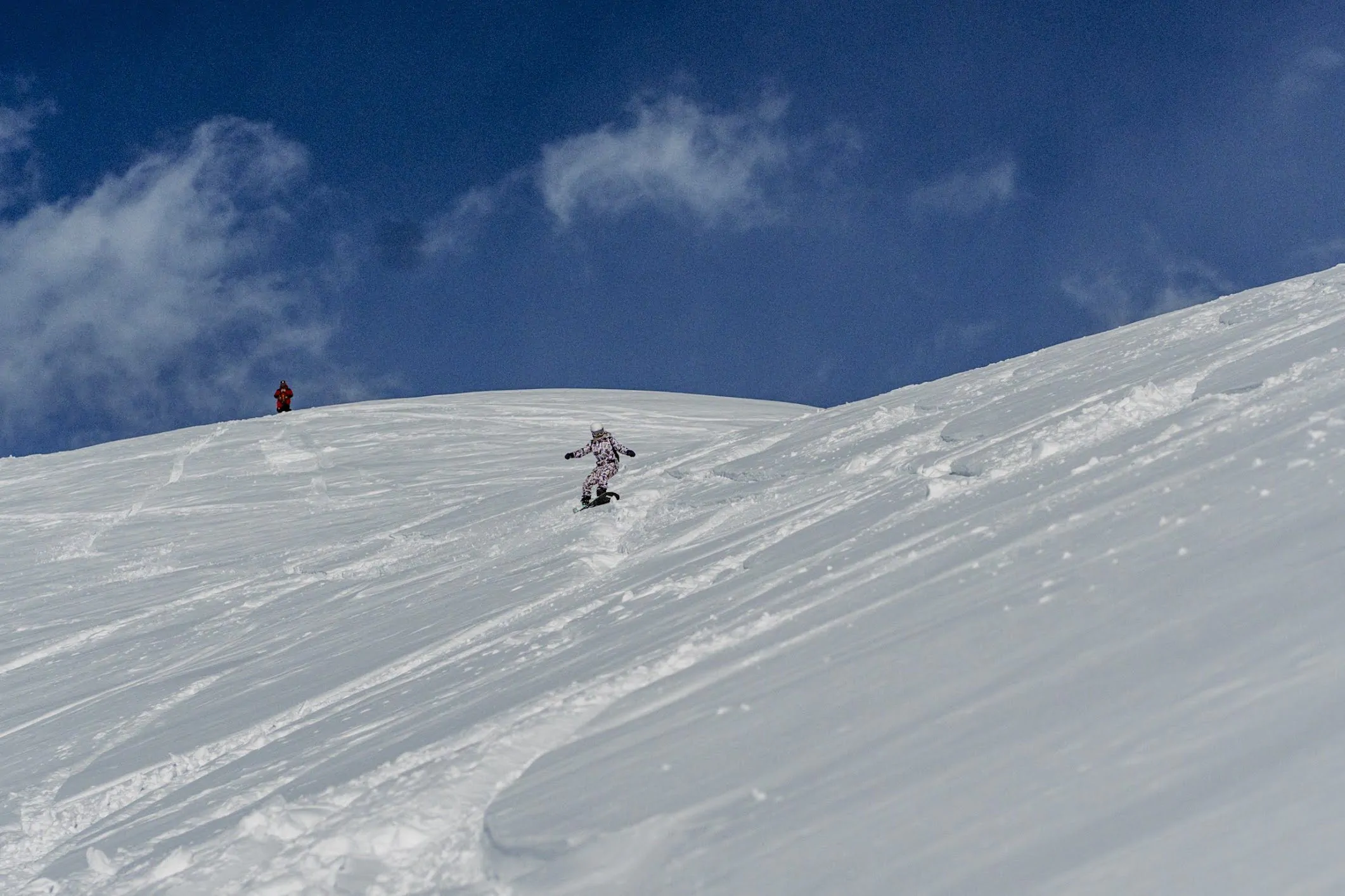
Here is the honest bit about Lomisa: the tour is famous for the climb, but the descent is genuinely good fun — just not a face-shot factory. You get roughly 750 to 800 metres of skiing, most of it through forest, on slopes that are mostly under 30 degrees. In January and February that means cold, light snow between the trees. In March and April the south-facing openings soften into proper corn, and the whole run becomes a series of linked arcs down a mountain that is suddenly very forgiving.
Ride it in short sections with regroup points, especially with a mixed-ability group. Tree skiing is where people separate, and the forest here is dense enough that losing sight of someone is easy. Pick a meeting spot at every third switchback and stick to it.
The last part of the descent follows the lower track back into the village, where your driver — or the car you left — is waiting. Boots off, thermos out, done by early afternoon.
Timings: What a Realistic Half Day Looks Like
People underestimate how much of a tour happens before you start skinning. A workable Lomisa schedule looks like this:
08:30 leave Gudauri, drive to Kvemo Mleta. 09:00 gear check, skins on, start walking. 11:30–12:00 on the ridge by the monastery, lunch, photos. 12:30 transition and start down. 13:30–14:00 back at the car, back in Gudauri by 14:30.
Add an hour if the group is large, if there is deep unconsolidated snow to break, or if someone is on rental gear for the first time. Subtract nothing — tours almost never run early, and the mountain does not care about your dinner reservation.
Gear and Safety: What You Actually Need
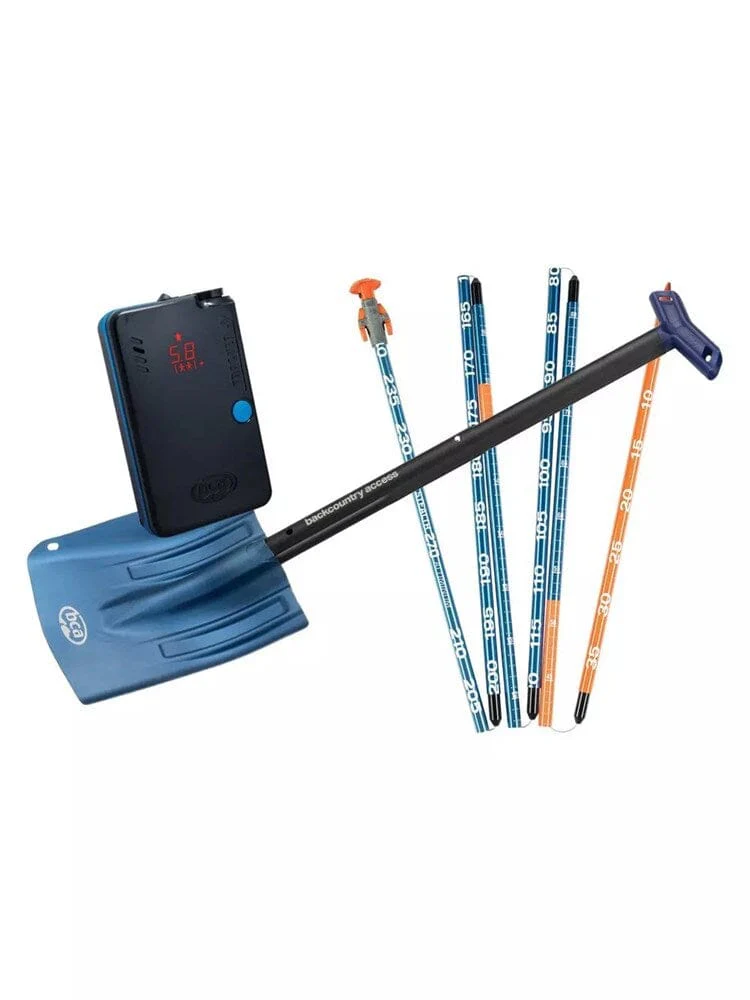
Lomisa is a beginner tour, not a walk in the park. You are above 2,000 metres in the Caucasus in winter, in avalanche terrain for part of the climb and most of the descent. The kit list is short but non-negotiable: touring skis or a splitboard with skins, boots you can actually walk in, poles, a helmet, and a full avalanche set — transceiver, shovel, probe — with everyone in the group carrying one and knowing how to use it.
On top of that: a shell, a warm mid-layer, spare gloves, sunglasses and goggles, one and a half litres of water, and food you will actually eat at altitude. A small repair kit and a headlamp cost nothing in weight and save the day roughly once a season. If you need to rent, our piece on ski touring gear covers what to ask for; gear rental in Gudauri runs around 90 GEL a day for a full avalanche set.
Two more things before you go. Check the avalanche forecast the evening before and again in the morning — the forest is protected, but the upper ridge and the open south faces are not, and wind-loaded slopes near the church deserve respect. And tell someone your plan: which start, what time you expect to be back, and who to call if you are not.
When to Go, Month by Month
Lomisa works from December through April, with a different personality each month. December is early-season: thin cover in the lower forest, and you may end up walking the first hundred metres. January and February are the classic window — deep snow, cold temperatures, and the best chance of powder in the trees. March is when the tour gets fun for intermediates: longer days, softer snow, more reliable corn on the south faces. April is spring touring at its best if the overnight freeze holds, and slushy misery if it does not.
If you are planning a whole week rather than one morning, our guide to the best time for freeride in Georgia goes into the season in more detail.
Guided or On Your Own?
If you already tour regularly, have your avalanche training and read the forecast properly, Lomisa is a reasonable independent objective — the route is obvious, the angle is moderate, and the exit is straightforward. If you are new to touring, or new to this valley, go with a guide. It is not about the difficulty of the climb; it is about the decisions in the forest and on the ridge, and about someone in the group who has been up there thirty times.
A guided half-day on Lomisa is the cheapest possible introduction to real touring, and it pairs naturally with a day of resort freeride. We run it as part of our freeride camp in Gudauri, and as a standalone day for anyone staying in the valley — the same guides who teach the beginner freeride progression on the resort.
If you are weighing formats, our comparison of a private guide versus a group camp covers the trade-offs, and the ski touring in Gudauri guide has the bigger routes for when Lomisa has given you the taste.

Traveler's FAQ
How long does the Lomisa ridge ski tour take?
Four to five hours round trip from Kvemo Mleta: about two to three hours of skinning for 750 to 800 metres of gain, half an hour on the ridge, and an hour or so down. Add time for a bigger group or fresh snow.
Is the Lomisa ski tour suitable for beginners?
Yes, with a guide and in reasonable snow. The angle is moderate and the route is a round trip through forest, so it is one of the most beginner-friendly tours in the Gudauri area. You still need touring gear and an avalanche set, and you still need to be able to ski trees.
Where does the Lomisa ridge ski tour start?
Most groups start in Kvemo Mleta, about 30 minutes’ drive from Gudauri. A second, quieter line starts from the Arakhveti side. Both reach the same ridge and both descend back to the start.
Can you visit the Lomisa monastery in winter?
The monastery is inhabited year-round and the church sits right on the ridge above the skin track. Keep it quiet, take your skis off before entering, and dress respectfully. Lomisoba, the annual pilgrimage, happens in spring.
Do I need a guide for the Lomisa tour?
Not legally, and the route is not technically hard. But if you are new to touring, or new to the Caucasus, a guide removes the avalanche decision-making and the logistics. It is the cheapest way to learn the terrain.
What is the best month for the Lomisa ski tour?
January and February for cold powder in the trees, March for softer snow and corn on the south faces. December can be thin low down; April depends entirely on the overnight freeze.
Final Word
Lomisa is the tour I recommend to people who have never skinned before, and to people who have skinned plenty and just want a beautiful morning out. Eight hundred metres, a forest, a ninth-century church and a run back to the car — it is a lot of mountain for half a day, and it leaves the afternoon free for the resort or for khinkali.
Book it early in your trip, while your legs are fresh. Then spend the rest of the week on the bigger stuff: the 2026/27 ski pass covers the lifts, the Tbilisi–Gudauri transfer covers the road, and the mountain does the rest.