
What is the weather like on Kazbek and why does the mountain have its own character?
You know what’s more annoying than packing your bag, buying flights, or grinding through training? The weather. The one thing you can’t buy, beg for, or reschedule. We at PVD Club have been guiding people up Kazbek for years now, and if you asked us to name the single thing that decides whether you reach the top or turn back halfway — we’d say it without hesitation: the weather. Not «good» or «bad» weather in some general sense, but Kazbek’s own particular weather, with its own character and rules that nobody writes down in bold letters anywhere. Here’s how we learned to read it — and what came of it.
Why Kazbek Even Has a «Character»
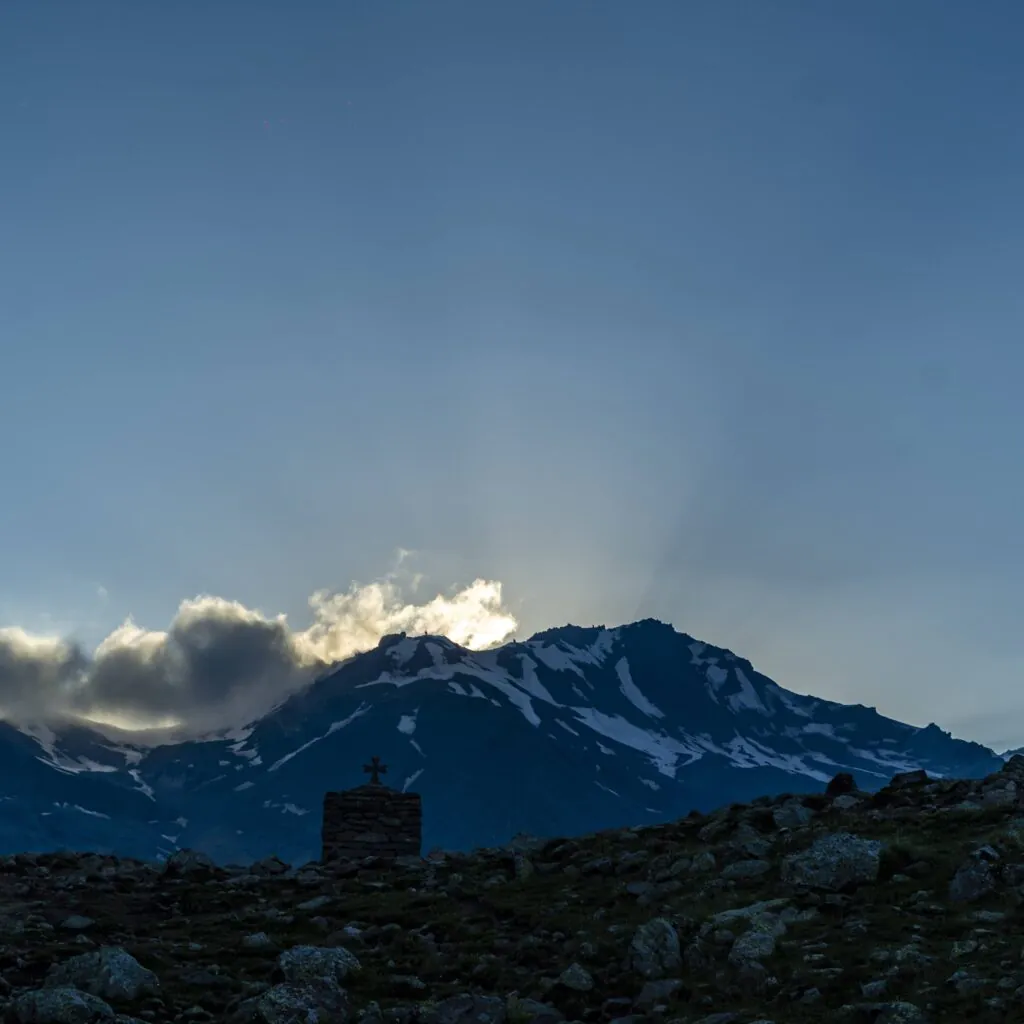
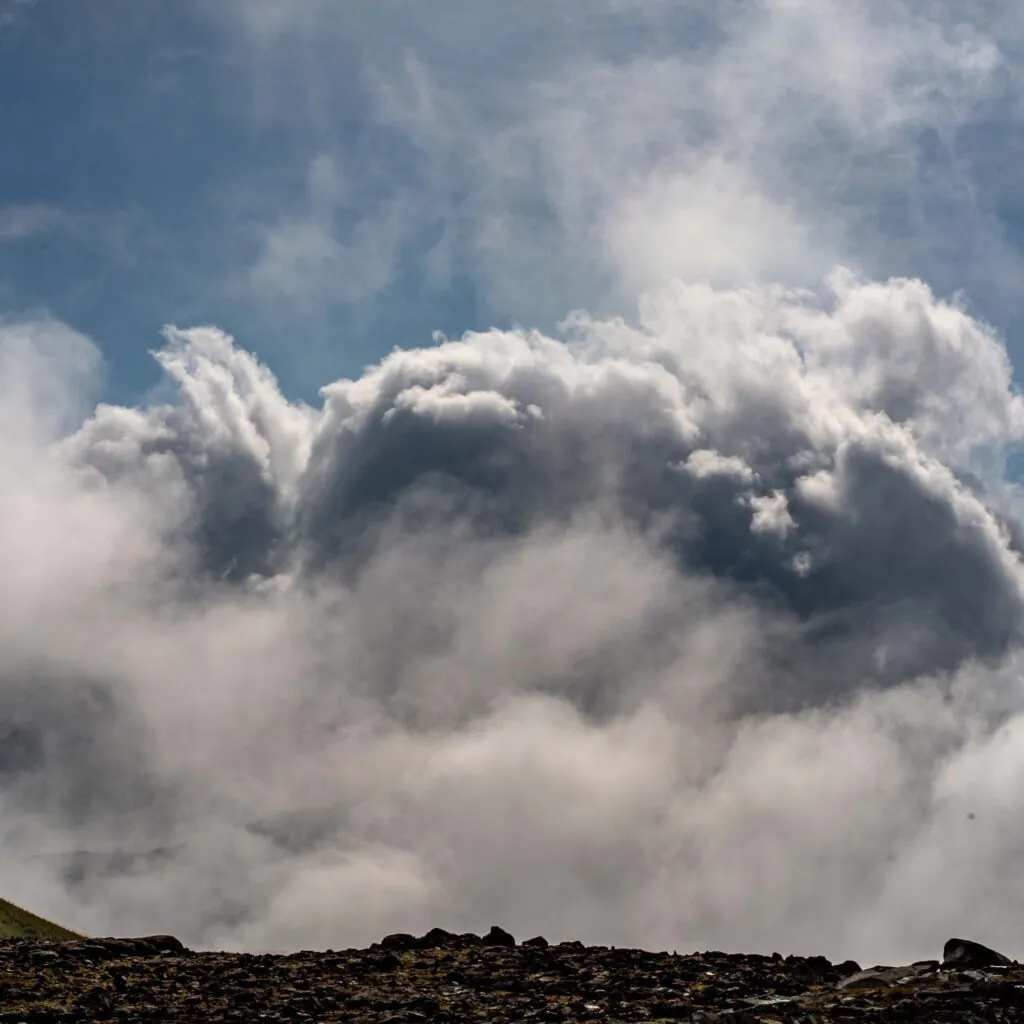
Nothing about this is random. Kazbek sticks out on its own in the eastern part of the Greater Caucasus Range, like a lone pillar catching storms from two directions at once — from the Black Sea and from the Caspian. The mountain basically gathers weather around itself that nowhere nearby behaves the same way. That’s where all the confusion comes from: down at the weather station at 3,600 meters it’s calm and sunny, people are drinking tea in T-shirts, and at the same moment the summit is buried in a blizzard with visibility down to three meters.
One of our guides told us a story that fits perfectly here. A guy showed up — gym rat, marathon runner, the works. Never been above 2,000 meters in his life. The weather on summit day was excellent, everyone was thrilled. And halfway up the route he hit acute altitude sickness — simply because his body hadn’t adjusted, and the good weather had nothing to do with it. Other times it goes the opposite way: a group of complete beginners catches a perfect window between storm systems and everyone reaches the top without a single hiccup. If you want the full story, our guide wrote it up here.
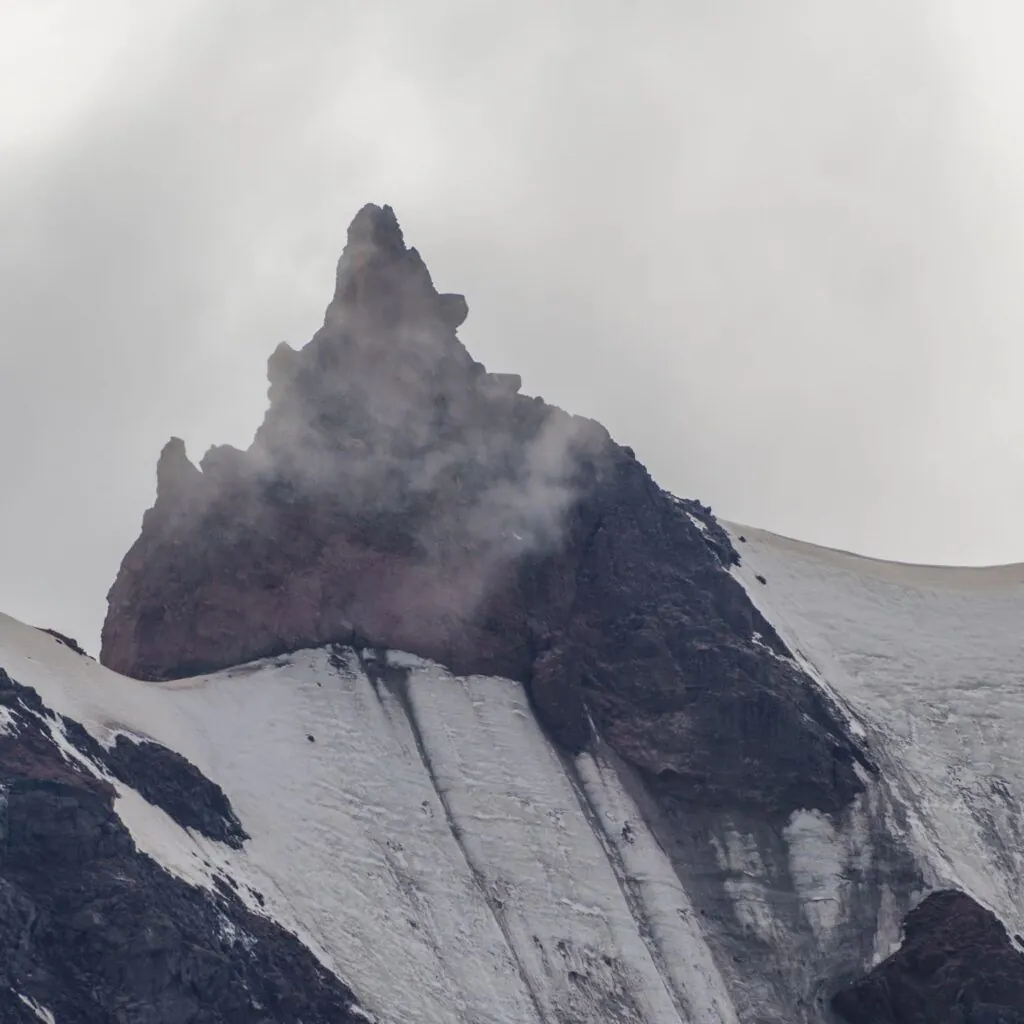
In dry technical terms, Kazbek rates as PD on the alpine grading scale — not the hardest mountain out there. But the weather can turn a straightforward route into a serious ordeal in a matter of hours.
When to Go If You Actually Want to Summit
The reliable window runs from July through September. Here’s the breakdown month by month, no sugarcoating.
June. The mountain hasn’t really shaken off spring yet. Down in Stepantsminda (Kazbegi) it’s +15…+25°C during the day, and up top it’s 0…-10°C. The weather swings hard — thunderstorms, rain, sudden mood changes in the sky. But between those swings you get windows of 2-3 days, which is enough to go up and come back down. On the plus side, fewer people, and the snow bridges over the crevasses still hold their shape. On the downside, not all the crevasses are visible yet, and success rates sit around 60-70%. If you’re experienced and like an empty route, June is your month. For a first attempt, wait for July.
July. This is where the real season kicks off. Storms come through less often, there’s more sun. At base camp (3,600 m) it’s 0…+10°C during the day, and -10…-15°C at the summit. We usually schedule our first planned groups for this month. During the day you can walk the glacier in a single fleece layer, but for the night push (setting out around 2 a.m.) you need to be dressed for winter, no exceptions. Our honest tip: the first half of July beats the second half. Later in the month the glacier starts melting faster, crevasses open up wider, and the route demands more careful roped travel.
August. This is our favorite month, and we won’t pretend otherwise. The weather is at its most stable, with windows holding for 3-5 days straight without precipitation. Base camp sees +2…+12°C, the summit -8…-15°C, and the wind is noticeably calmer than in June or July. Success rates hit 75-85%, the best of the entire season. Yes, the crevasses on the Gergeti Glacier are wide open by August — but that doesn’t make the climb harder, it just calls for discipline on the rope and attention underfoot. No surprise most of our scheduled Kazbek climbs land in August — not because it’s convenient for us, but because it genuinely gives participants the best odds of reaching the top. The best dates within the month run from the 1st to the 20th; after that the weather starts to turn, though individual groups still summit successfully.
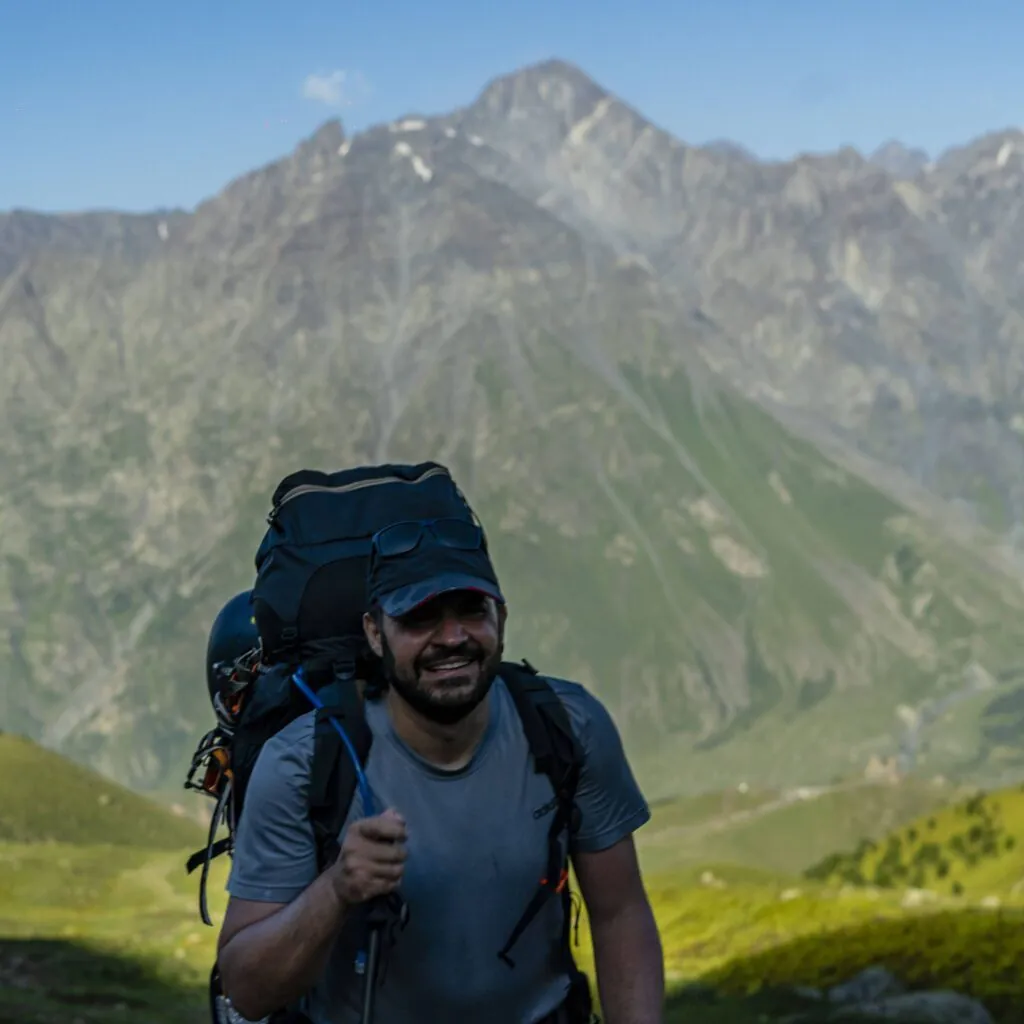
September. The first half is a solid option if you already have some experience. There are noticeably fewer people on the route. During the day at base camp it’s -1…+6°C, and nights get cold fast, down to -8…-10°C, with the summit at -12…-18°C. After September 20th, windows become scarce, storm systems roll in with fresh snow, and avalanche risk climbs on the upper sections. For beginners, we honestly recommend not taking the risk and sticking to July or August. You can check the current schedule and dates for climbs on Kazbek directly.
October through May. This is winter, plain and simple: summit temperatures drop to minus 20-35°C, the glacier turns to solid ice under a thin layer of snow, and winds at 3,500-5,000 meters blow almost constantly. Commercial groups don’t operate during this stretch, and the success rate drops below 30%. Sure, there are a few enthusiasts out there with skis and full winter gear, but for the vast majority of climbers, winter is simply not the time to attempt Kazbek.
What Happens to the Temperature as You Climb
It helps to know ahead of time what awaits you at each stage of the route.
Stepantsminda/Kazbegi (1,750 m) — the starting point, +20…+25°C in summer, a T-shirt is perfectly fine. Gergeti Church (2,100 m) — the start of the trek, +12…+22°C during the day, +5…+12°C at night. Weather station (3,600 m) — base camp, where you spend two nights for acclimatization: 0…+10°C during the day, -5…-8°C at night. Kazbek summit (5,054 m) — the goal itself, during the push: -10…-20°C, and with wind it feels like -25°C.
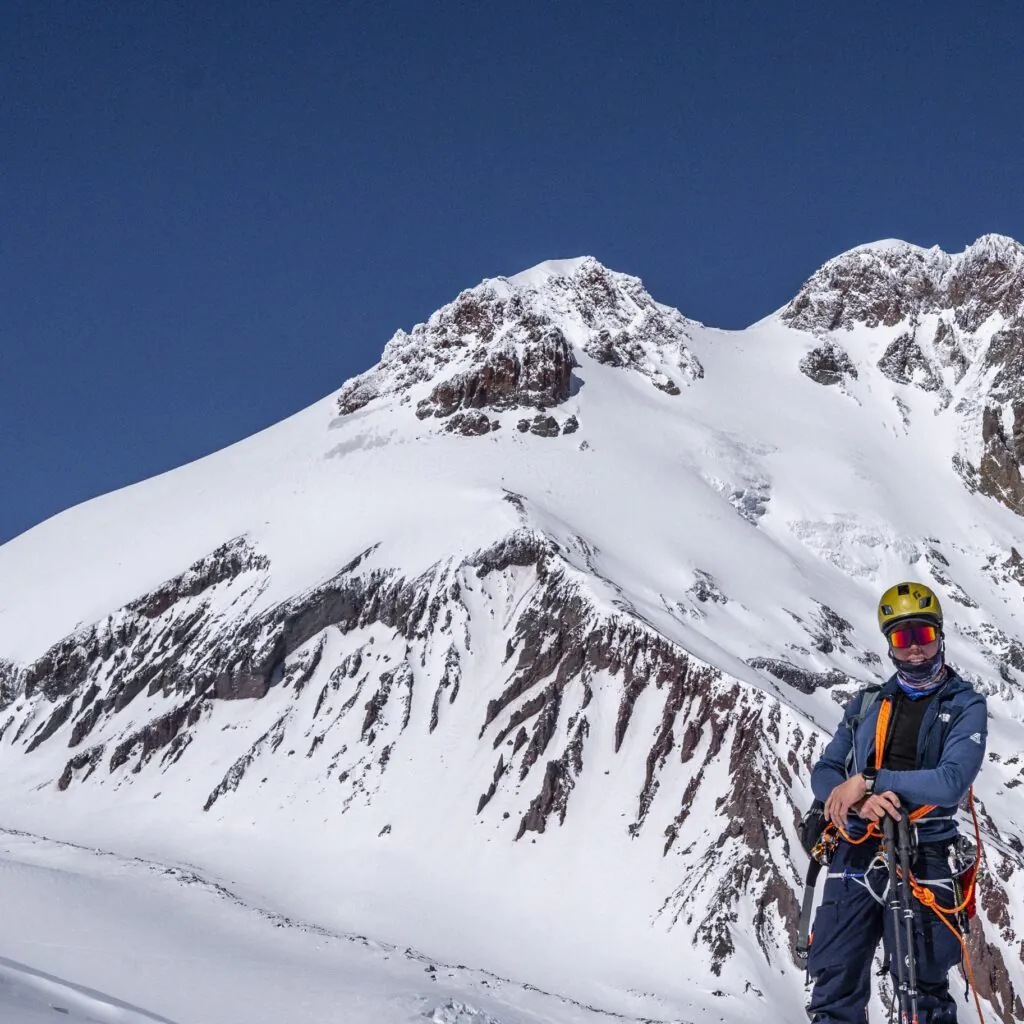
The rule of thumb: every 1,000 meters of elevation gain costs you about 6-7 degrees. And with wind factored in, the difference between Kazbegi and the summit can reach 25-30 degrees — essentially two different climate zones within a single day’s walk.
What to Pack If You’re Planning Around the Weather
We put together a full gear guide for Kazbek, but in short — build a layering system covering the range from +25°C at the bottom to -25°C at the top. The non-negotiables: a Gore-Tex jacket with a hood that fits over your helmet, insulated summit-push pants, two sets of base layers (one for camp, one for moving days), boots compatible with crampons, a buff or face mask with protective goggles (mandatory above 4,000 meters or in wind), SPF 50+ sunscreen and glacier glasses (UV at altitude is brutal even under cloud cover), and trekking poles for the descent over moraine and glacier. We supply part of the group gear — ropes, ice screws, the first-aid kit, gas — everything else is on you.
How to Tell for Yourself If a Window Is Open
Regular weather forecasts for the town are basically useless here — forget them entirely. Use specialized services instead: Mountain-Forecast.com gives a fairly accurate forecast specifically for the 5,047-meter elevation, check wind and precipitation there for the next 6 days; Meteoblue is good for understanding the broader picture across the Caucasus region.
Signs of a good window: clear skies in the morning that hold through midday, wind at the summit under 30 km/h, no precipitation in the 48-hour forecast, and stable or rising atmospheric pressure.
Signs you should not go: wind above 50 km/h means the push is off, no discussion; thunderstorms forecast in the valley mean waiting a day; fresh snowfall above 4,000 meters means waiting 24-48 hours for avalanche risk — and that’s not caution for caution’s sake, it’s basic safety practice.
Success Rates by Month
Based on statistics from our own groups and colleagues in the field, the picture looks like this: late June — 60-70%, July — 70-80%, August — 75-85% (the best of the season), first half of September — 60-70%, after September 20th — 45-55%, winter — under 30%. The gap between August and June has nothing to do with people or preparation — it’s purely about the weather. So if you have any flexibility on dates, use it wisely.
Where Else to Go if You Liked This
Kazbek is far from the only summit in Georgia we take groups up. If you’re after something technically harder with fewer crowds, take a look at Tetnuldi (4,869 m). All of our climbing programs across Georgia, including Laila and Ushba, are gathered in one place. And if you want some context before the trip, it’s worth reading up on the history of Mount Kazbek — it adds a bit of meaning to the whole undertaking.
By the way, if you’re arriving in Kazbegi before or after the climb — the climb itself takes 7 days — make sure to hike up to Gergeti Church (Sameba), that’s the postcard shot with Kazbek in the background; try khinkali at a local cafe, it’s its own art form; take a trip to Gveleti Waterfall, just 30 minutes from Kazbegi; and spend a night at a guesthouse with a view of the mountain — when the clouds part in the evening and Kazbek lights up with the sunset, it’s worth seeing with your own eyes. For a broader sense of when to go and how to plan the trip, that’s covered in more detail on our site.
Check the weather 5-7 days before your climb date. If the model shows a storm system coming in, reach out to us and we’ll help adjust the dates. We can’t guarantee perfect weather, but we can guarantee we’ll go for the best window available. Take a look at the Kazbek climb schedule and pick your date.
Q&A
What’s the temperature on Kazbek in summer? At base camp (3,600 m) it’s 0…+10°C during the day, -5…-8°C at night. At the summit, -10…-20°C, depending on the month and wind strength.
When’s the best time to climb Kazbek? August. The most stable weather, the highest success rate, and the warmest temperatures of the whole season.
Can you climb Kazbek in September? Yes, the first half of the month works fine. After September 20th the weather turns unpredictable, and without experience it’s best to steer clear.
How strong is the wind at Kazbek’s summit? In summer, usually 20-40 km/h. During a storm, over 80 km/h — at that point climbing is simply not physically possible.
Do you need special training for Kazbek? Yes, basic physical fitness and the ability to use crampons and an ice axe are essential. We run a briefing on the glacier for all participants on the first day — more on that in our climb program.


