
Juta and Chaukhi: The Best Hike to the Most Beautiful Mountains in Kazbegi
There’s the Kazbegi region, and then there’s its signature landmark — Mount Kazbek, the peak everyone’s heard of, seen in photos, and half of all visitors come specifically to climb. But just about half an hour’s drive from Stepantsminda hides a route that many people who’ve done it call even more beautiful than Kazbek itself. That’s Juta and the Chaukhi ridge — sharp, jagged peaks that look more like the Dolomites than classic Caucasus terrain.
If you’re already thinking about climbing Kazbek but want a day or two in the region for something less extreme, Juta and Chaukhi are exactly what you need. No mountaineering gear, no multi-day acclimatization — just a solid hike with some of the best views in all of Georgia.
Where it is and what it looks like
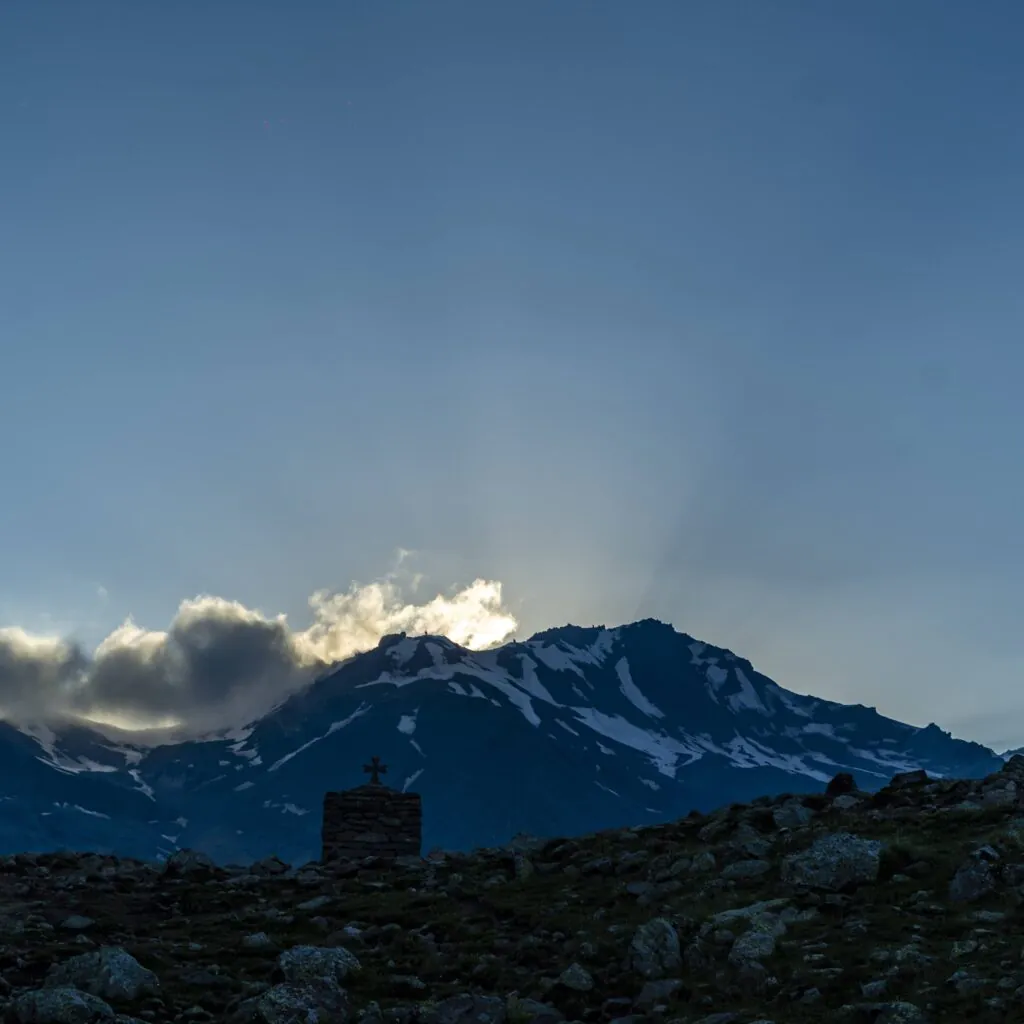
Juta is a tiny village in the Sno Valley, reachable by car via a dirt road that branches off the main highway toward Kazbegi. The village itself is minuscule, just a handful of houses, but it’s exactly where the trail to the Chaukhi ridge begins.
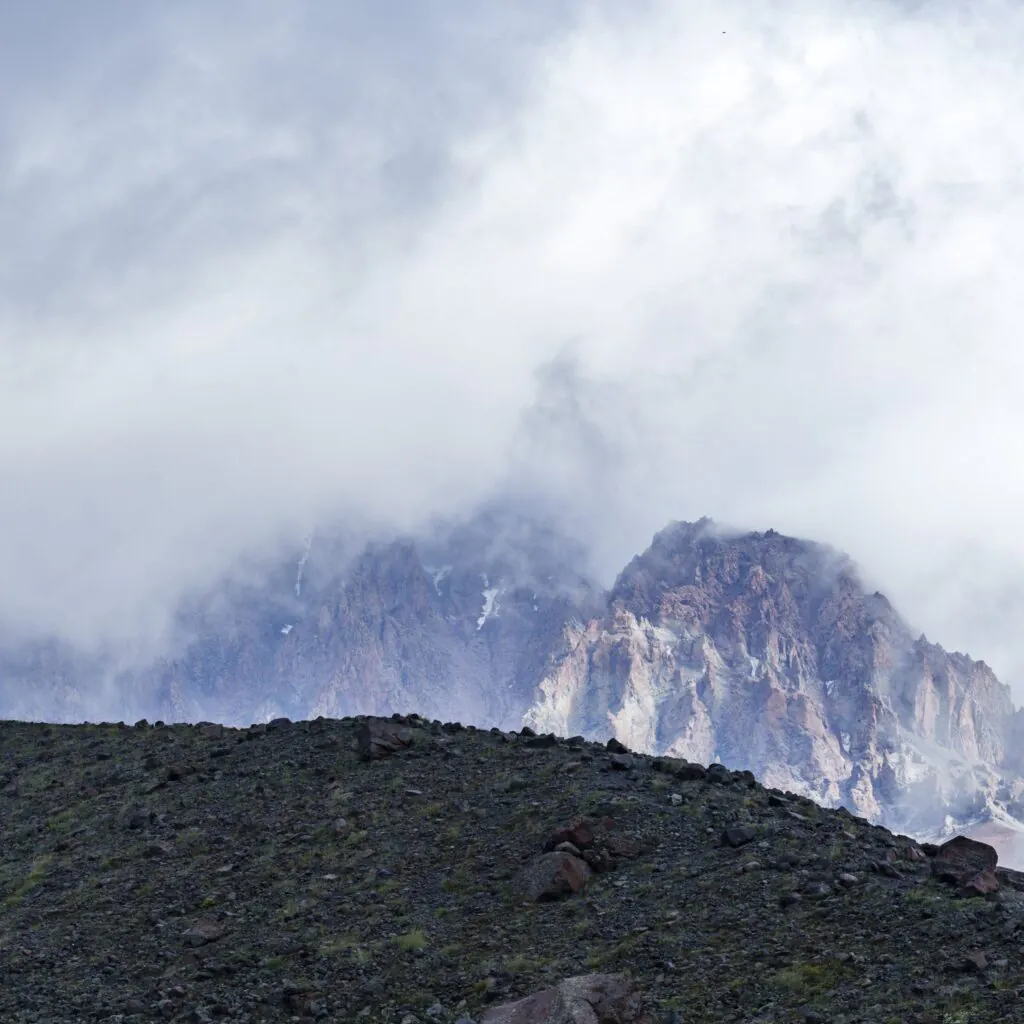
Chaukhi isn’t a single mountain — it’s an entire rock massif with several jagged peaks, the tallest just over 3,800 meters. In shape, they genuinely resemble the Italian Dolomites: sharp, vertical, grey-and-rust-colored rock jutting straight out of green alpine meadows. That contrast — soft green below, jagged stone teeth above — is exactly what makes this spot one of the most photogenic in the region.
The route itself
The classic option is to walk from Juta up to the lake at the foot of Chaukhi — the most popular route and also the most accessible. The trail gains elevation gradually, running through alpine meadows, along streams, past grazing cows and horses — the Kazbegi region is famous for livestock wandering right across the hiking trails. In good weather, the whole out-and-back walk takes 5–7 hours at a relaxed pace, the elevation gain is moderate, and you don’t need any special physical preparation — unlike, say, climbing Kazbek itself, where you won’t get far without a certain fitness level and acclimatization.
For those who want more, there’s the Chaukhi Pass option (sometimes called the Atsunta Pass) — a considerably more serious route with elevation gains past 3,400 meters and a descent toward Khevsureti, but that’s a multi-day undertaking and a whole different level of difficulty, not a single-day hike.
We often recommend Juta-Chaukhi to guests already training for a bigger climb, as a warm-up or acclimatization day. The logic is simple: there’s real elevation gain, but not a punishing amount, and the exertion helps your body adjust before tackling something more serious like Kazbek itself. If you’re seriously preparing for the climb, we have a separate piece on building a training plan, and Juta can easily serve as one of your checkpoints along the way.
казбек восхождение
What you’ll see along the way
Besides the Chaukhi spires themselves, the trail offers a view of Kazbek from an angle completely different from the classic viewpoints near Stepantsminda — and a lot of people actually prefer it. Along the way you’ll pass alpine flower meadows, especially striking in June and July, small ice-cold mountain lakes, and, if you’re lucky, herds being driven up to summer pastures by local shepherds.
The lake at the foot of the ridge makes a good spot for a break — the stream water is drinkable, but it’s still worth carrying your own supply, especially on a hot day. Many hikers stop here for lunch and to take in the rock formations up close before heading back down.
When to go
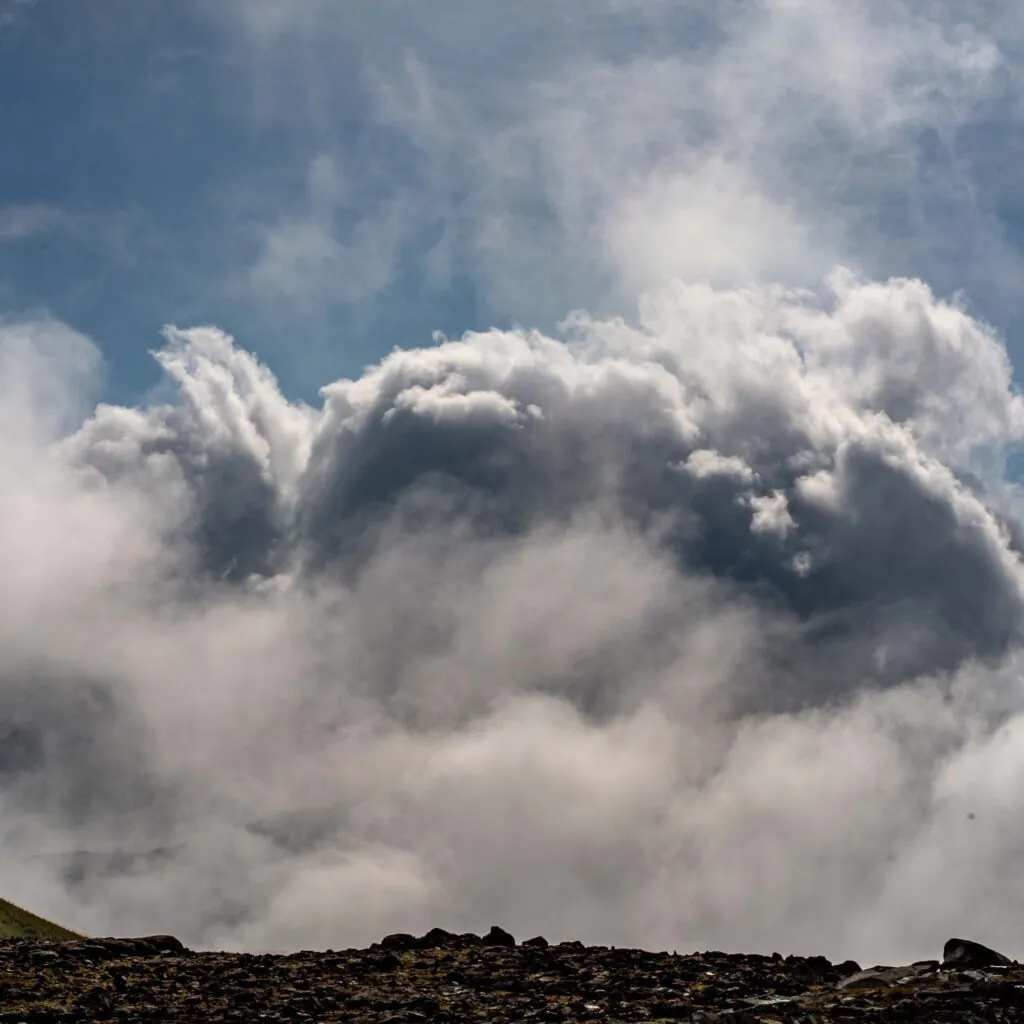
The season for this hike almost overlaps with Kazbek climbing season — late June through September. Earlier, snow still lingers on the trail, especially on the approach to the lake; later, come October, it gets cold, and weather in this region can turn fast — clouds can roll in and it can start raining within an hour.
The best window, in our view, is July and the first half of August, when the meadows are in bloom, the trail is fully dry, and mountain visibility is at its best. If you’re after fewer crowds while the weather’s still holding, early September is also a solid choice.
Juta, Chaukhi, or Kazbek — what to choose
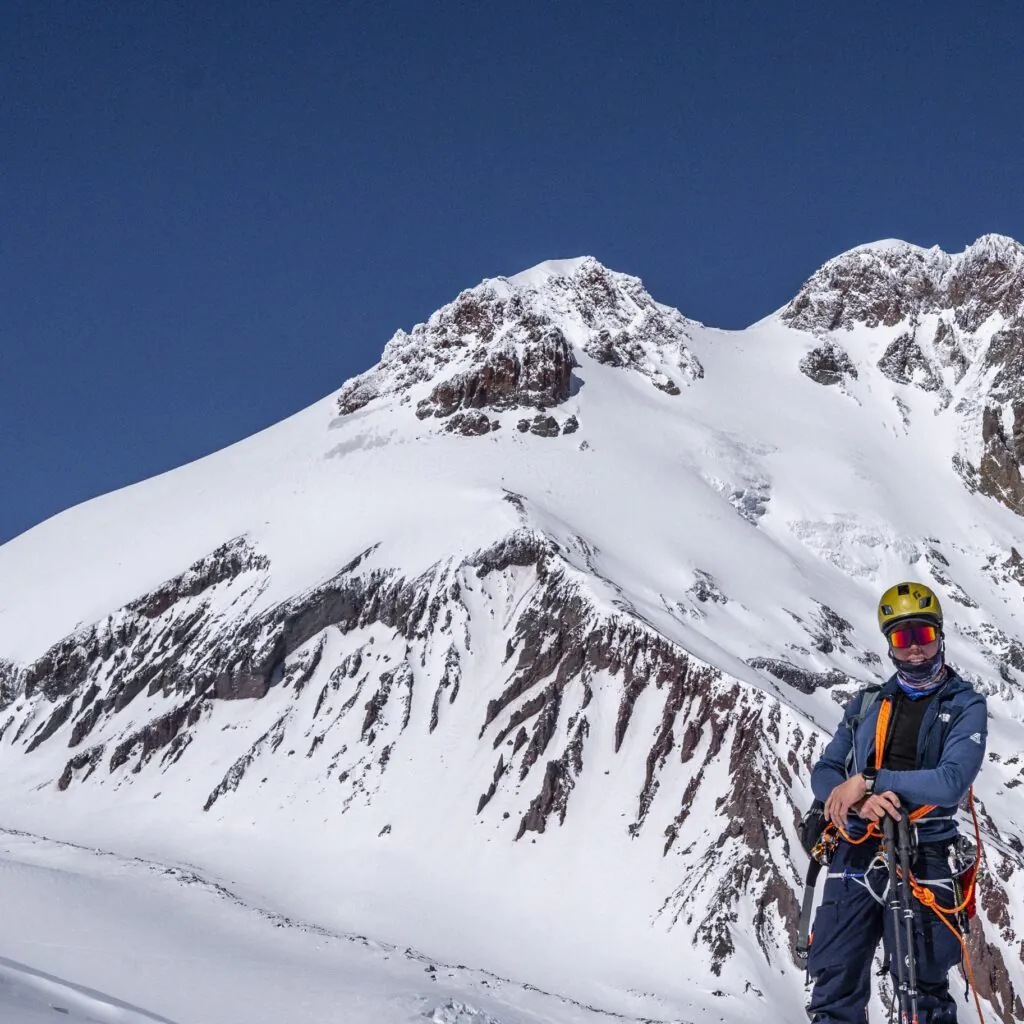
A question we get a lot from people planning a trip to the region: is it worth just doing the Chaukhi hike, or should they go straight for a Kazbek climb? It helps to understand the difference in format. Juta-Chaukhi is a single-day hike with no special gear needed, accessible to almost anyone in reasonable shape. Climbing Kazbek is a full multi-day expedition involving a glacier, crampons, an ice axe, and a night camping at altitude — a completely different undertaking in terms of both preparation and risk.
If you’re a beginner and just want to see whether the Kazbegi mountains are for you, start with Juta — we’ve got a separate guide for those just getting started with the region that breaks down the best way to ease in. And if you’re already an experienced hiker weighing different Caucasus peaks, we’ve written a comparison of Kazbek versus Elbrus that covers how these mountains differ in difficulty and climbing format.
A lot of our guests end up doing both: a day on Juta-Chaukhi first, as acclimatization and simply a beautiful hike, followed by the full Kazbek climb. Logistically it works well too, since both routes start from the same region and moving between them takes about half an hour.
How to organize the hike
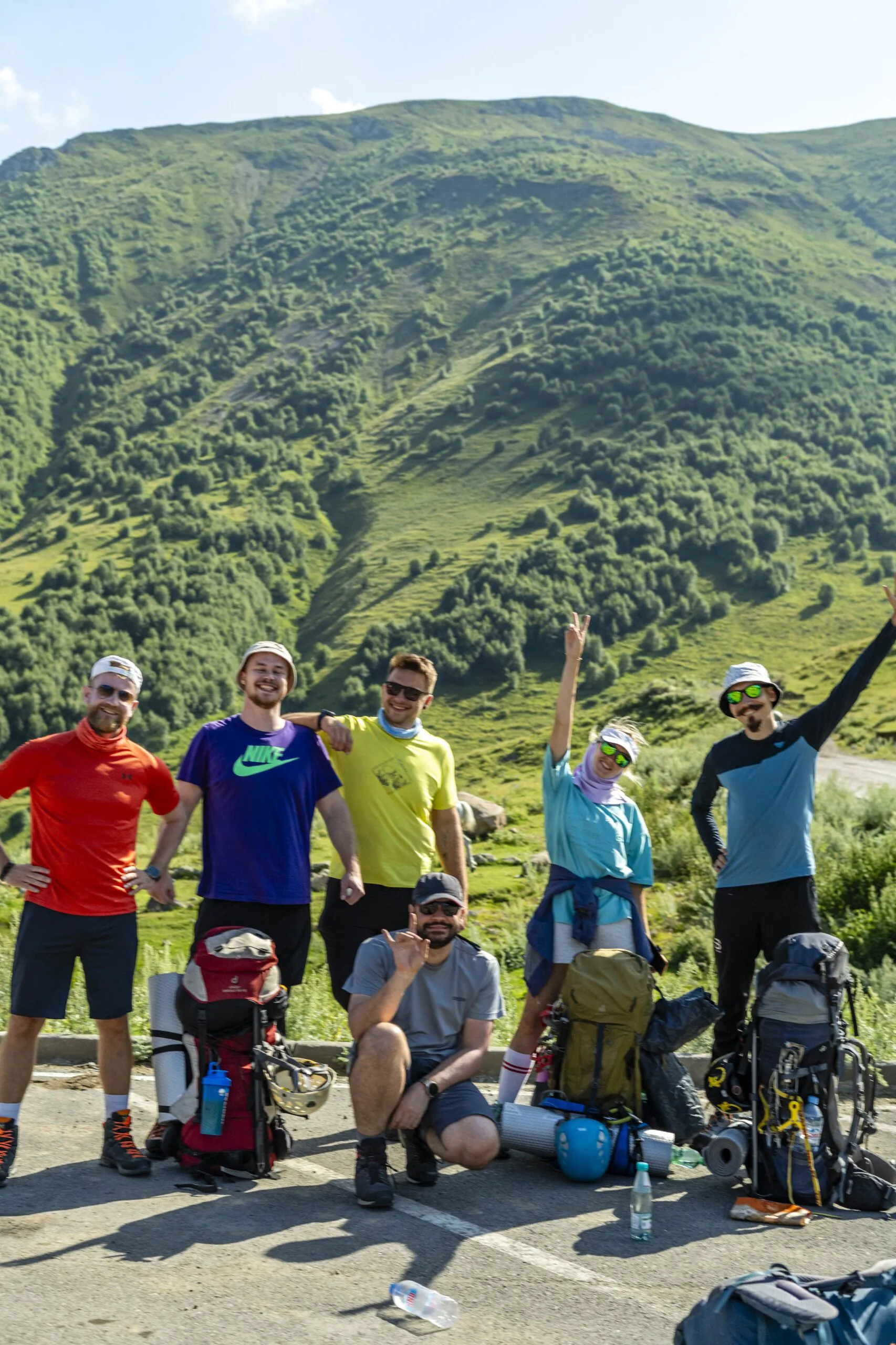
You can reach Juta and hike up to Chaukhi entirely on your own — the trail is marked, it’s hard to get lost, and during peak season there are always other hikers around. But if this is your first time in the region and you’d rather skip the logistics — arranging a car to Juta, sorting out a guide, timing the weather window — we organize this hike as a standalone day or fold it into longer Kazbegi tour programs, including alongside climb preparation.
We’ve also put together a full guide to the Kazbegi region and organizing climbs, where you can see all the route options and figure out the best program for your dates and fitness level. If you’re not sure what to pick, just reach out and we’ll map out the best route for your trip.
восхождение на казбеги
FAQ
How long does the Juta-Chaukhi hike take? The standard out-and-back route from Juta to the lake at the foot of Chaukhi takes about 5–7 hours at a relaxed pace, depending on your fitness and how long you linger at the lake.
Do you need any special gear for this hike? No. This isn’t a mountaineering route — good hiking boots, layered clothing, water, and sun protection are enough. That’s a key difference from an actual Kazbek climb, which requires crampons, an ice axe, and glacier travel skills.
Can beginners do this hike, or do you need prior experience? Beginners can absolutely do it. The elevation gain is moderate and the trail is well marked, which is exactly why we recommend it in our guide for those new to the region as a great first taste of the Kazbegi mountains.
Is it possible to combine Juta-Chaukhi with a Kazbek climb? Yes, and many of our guests do exactly that — using Juta-Chaukhi as an acclimatization day before the full Kazbek expedition. The two starting points are close enough that switching between them takes about half an hour.
What’s the best month to hike Juta-Chaukhi? July and the first half of August, when the meadows are blooming and the trail is fully dry. Early September works well too if you want fewer people around while the weather is still stable.


