
Cat-Skiing in Goderdzi: A Day With the Snowcat
There’s a particular sound a snowcat makes when it’s climbing through deep snow, and once you’ve heard it you don’t forget it. It’s the sound of not having to skin.
Cat-skiing is the middle ground between lift-served and heli-skiing: a machine takes you up, you ski down, it takes you up again. In Georgia, Goderdzi is the place it happens. Here’s what a day actually looks like, from the beacon check at the bottom to the last tired run in flat light. For the full country-wide picture, see our freeride in Georgia.
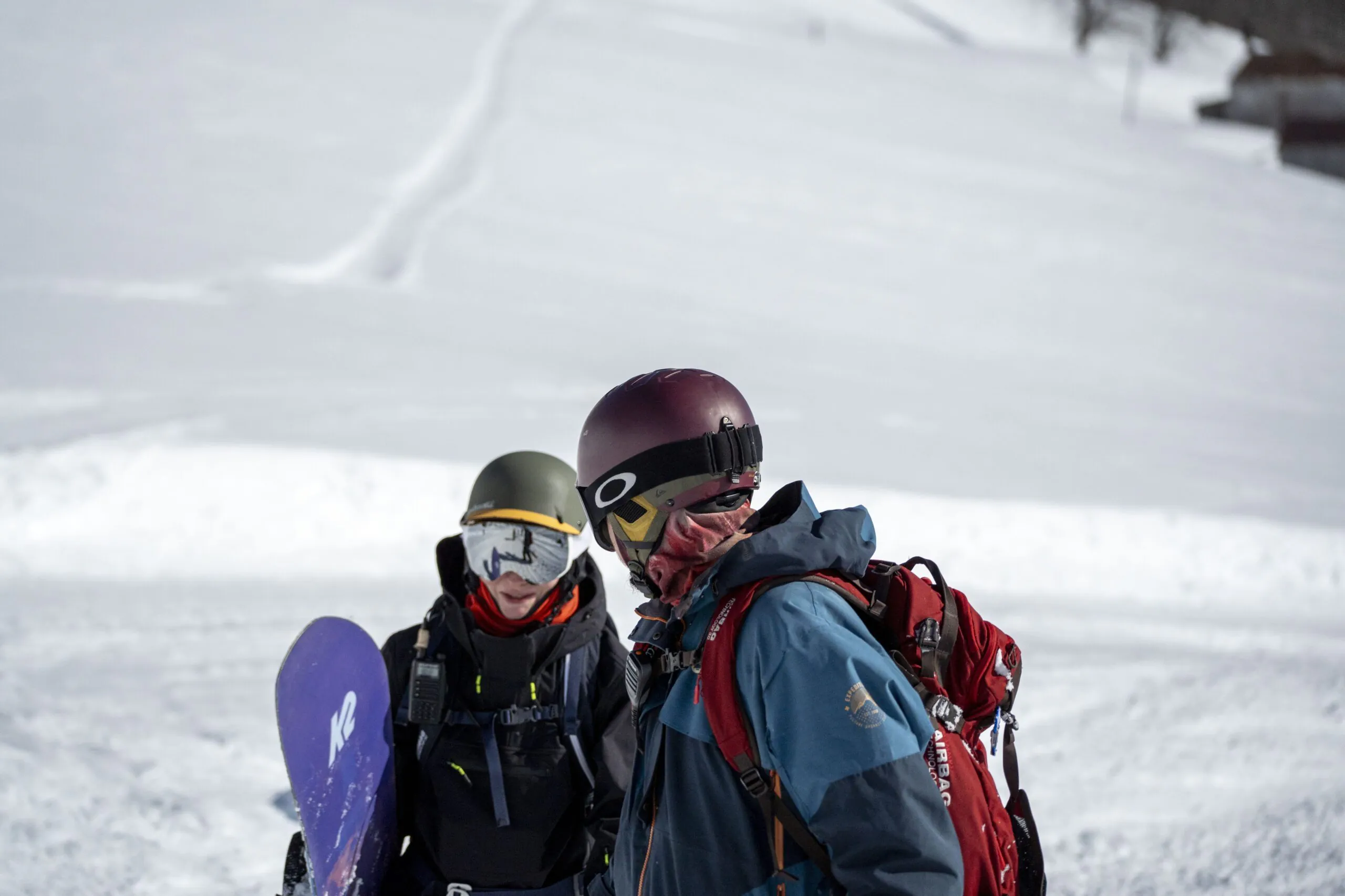
How Cat-Skiing Works
You meet early, load into the snowcat, and ride up a forest road or cut track to the day’s first drop point. The machine waits while you ski, then collects you at the bottom. Depending on terrain and conditions, you get four to eight runs in a day.
The cat itself is a modified PistenBully-type machine with a passenger cab on the back, usually seating ten to twelve. It’s warm, loud, and smells of diesel. Inside there’s a bench, a heater that works too well, and a rack for skis on the outside. Your pack goes on your back or between your knees.
The rhythm of the day is set by the machine, not by you. A climb takes twenty to forty minutes depending on the route and how deep the snow is. A run takes five. Then you stand at the bottom, breathing hard, grinning, waiting for the cat to come back down and collect you. Repeat until the light goes or the group runs out of legs.
Between runs there’s a lot of standing around, a lot of coffee, and a lot of watching the next group drop in. It’s a social day as much as a skiing day. Bring a flask and something to share.
A Day, Hour by Hour
Most operators want you at the base by eight. That’s not because the skiing starts at eight — it’s because the briefing, the beacon check and the loading all take time, and the best snow is usually gone by early afternoon.
The morning routine is the same everywhere. Everyone switches a transceiver on and does a check, one by one, while someone watches. Then the guide talks through the plan: where you’re going, what the avalanche forecast says, where you regroup, what to do if someone gets caught. Listen to this properly. It’s not theatre.
By nine you’re in the cat and climbing. First run is usually a warm-up on a mellow line so the guide can see how the group skis. If someone is out of their depth, better to find out on a gentle glade than on a 35-degree chute with a cliff at the bottom.
Lunch happens when it happens — often in the cab, often a sandwich with your gloves off. Some operators run back to a hut. Either way, don’t expect a restaurant. The afternoon is for the bigger runs, once the guide trusts the group. Last drop is usually around four, and the final run is often the best one because everyone has stopped thinking so hard.
Why Goderdzi Suits It
The terrain is the reason. Beech forest, natural glades, and consistent fall lines that hold snow well. Because the resort is small, the cat can access zones that would take two hours to reach on skins — which means more vertical and fewer tired legs.
The altitude band is right, too. Most of the cat terrain sits between roughly 1,700 and 2,300 metres, which is low enough to have trees and high enough to hold cold snow. In a continental range that band would be wind-scoured; in Adjara it’s sheltered and deep.
It also works in weather that would ground a helicopter. That matters in Adjara, where storms roll in fast and visibility can vanish. A cat can follow a road it cut yesterday; a helicopter needs a horizon. On a flat-light day with snow falling, the cat is still skiing while the heli is on the ground.
Cat-Ski vs Ski Touring
Touring is cheaper, quieter and better exercise. Cat-skiing is faster, more expensive, and lets you ski far more vertical in a day. If your goal is learning to tour, skin. If your goal is racking up powder runs with friends, the cat wins.
There’s a fitness argument on both sides. A cat day is not a rest day — five or six powder runs in heavy snow will wreck legs that aren’t used to it. But you skip the 900 metres of climbing, so you arrive at each drop fresh enough to actually ski well. For a lot of people, that’s the difference between eight good runs and three tired ones.
Our ski touring in Goderdzi guide covers the human-powered version, and the Goderdzi freeride programme mixes both depending on conditions.
What a Day Costs and Includes
Cat-ski days are priced per machine or per seat, and the number depends on group size, terrain and how many runs you get. It’s not a budget option, but split between a full cat it’s often more reasonable than people expect. The maths is simple: one machine, one driver, one guide, one day of fuel. The more seats you fill, the cheaper each seat becomes.
Usually included: the snowcat, guiding, and avalanche safety briefing. Usually not: gear, lunch, accommodation and transfers. Confirm the details before booking — this is one area where operators differ a lot. Some quote per seat and guarantee a minimum number of runs; others quote per machine and let you decide when to stop. Ask which one you’re buying.
One thing worth understanding: you’re not paying for the descent. You’re paying for access, for the guide’s judgement, and for the machine that makes both possible. Judged per vertical metre, a cat day often comes out cheaper than a lift ticket plus a lot of traversing.
Tree Skiing Technique
Most cat terrain in Goderdzi is gladed beech forest, so tree skiing isn’t optional. The good news is that it’s a technique you can learn in a day, and the bad news is that bad habits get expensive fast.
Keep your hands forward and low, in front of your hips, so a pole doesn’t catch a trunk and wrench your shoulder. Look at the space between the trees, never at the tree. Your skis go where your eyes go, and this is not a metaphor.
Carry a little more speed than feels comfortable. Constant braking in deep snow burns your legs and puts you off balance; a rounder turn that uses the gaps is less work. In the tight stuff, stay centred and use short pivot or hop turns rather than leaning back into the tails.
Watch for tree wells after a big dump — the loose pocket of snow around a trunk that can swallow a rider head-first. Ride with a partner, keep them in sight, and don’t cut close on the downhill side of a trunk. And mind the stumps and deadfall under the surface in early season, when coverage is thinner than it looks.
What to Bring on a Cat Day
You need less than on a tour and more than you think, because you spend a lot of time standing still.
- Beacon, probe and shovel — mandatory, no exceptions
- Helmet and goggles, plus a spare lens for flat light
- Layers you can add at every stop: a warm mid-layer and a shell
- Two pairs of gloves, one thin for skiing and one warm for standing
- Flask, water, lunch and something to share
- Sunscreen and lip balm — the cab windows are brutal
Leave the touring skis at home if you have a choice. A heavier freeride ski with a normal alpine binding is more fun in the descent, and you’re not earning your turns. If you’re renting, tell the shop you’re cat-skiing, not touring.
Is It Right for You?
You should be comfortable skiing powder in trees, at speed, with variable snow underneath. Cat-skiing isn’t a lesson. If you’ve never ridden off-piste, spend a week building those skills first — our freeride camp in Gudauri exists precisely for that.
For the lift-served version of the same mountains, see our freeride guide to Gudauri.
A useful test: can you link ten turns in ungroomed snow without stopping, on a slope steep enough to make you think about it? If yes, you’ll have a good day. If not, you’ll survive but you won’t get the most out of it, and you’ll be exhausted by run three.
If you’re already competent, the cat is a brilliant way to spend a storm day — and in Adjara there are a lot of storm days.
Heli or Cat?
Georgia has both, and they suit different people. Helicopters reach bigger, wilder terrain but are weather-dependent and much more expensive. Cats are slower, more reliable and better in trees.
There’s also a comfort factor. A helicopter puts you on a ridge with no easy exit; a cat is always somewhere below you, and the guide knows the way out. For a first trip to Georgia, or a first season of off-piste, the cat is the lower-risk introduction.
We compare them directly in Heli-Ski or Cat-Ski in Georgia.
Traveler’s FAQ
Do I need avalanche gear?
Yes. Even with a guide and a machine, you’re in avalanche terrain. Beacon, probe and shovel are mandatory, and you should know how to use them before you arrive.
Can beginners cat-ski?
Strong intermediate skiers can enjoy it in good snow, but tree skiing in deep powder is a specific skill. Be honest about your level — the guide will be.
How many runs do you get?
Four to eight, depending on conditions and group pace. Nobody guarantees a number, and anyone who does is selling you something.
What if the weather is bad?
The cat runs in worse weather than a helicopter, but not in everything. Operators usually offer a rescheduled day or a credit if they cancel. Ask before you book.
Can I combine it with touring?
Yes, and it’s the best way to do it. A week that mixes cat days with skin tracks gives you more skiing and a better read on the terrain.
Book a Cat Day
Details and dates are on the Goderdzi cat-ski programme page — check there for what’s included, as it varies by season and group size. If you want the full regional picture, see the Goderdzi freeride programme, all freeride camps, or the multi-region trip.


