
Gudauri Snow Conditions: The Short Answer
Gudauri snow conditions follow a clear arc across the winter. The resort sits at roughly 2,200 metres with lifts running past 3,000 metres, so snow accumulates steadily from the December opening and peaks in March. Mid-mountain depths average around 34 cm in December, 57 cm in January, 75 cm in February, 88 cm in March and 81 cm in April — the reliable window for deep, rideable snow runs from mid-January to late March.
What are Gudauri snow conditions like by month? December is a fresh, sometimes thin early season; January is cold and stable with building base; February is the deepest and snowiest month; March holds the deepest snowpack of the year and the best freeride weather; April turns to warm, sunny corn snow before the lifts close around mid-April. This guide walks through each month so you can pick the right week to book.
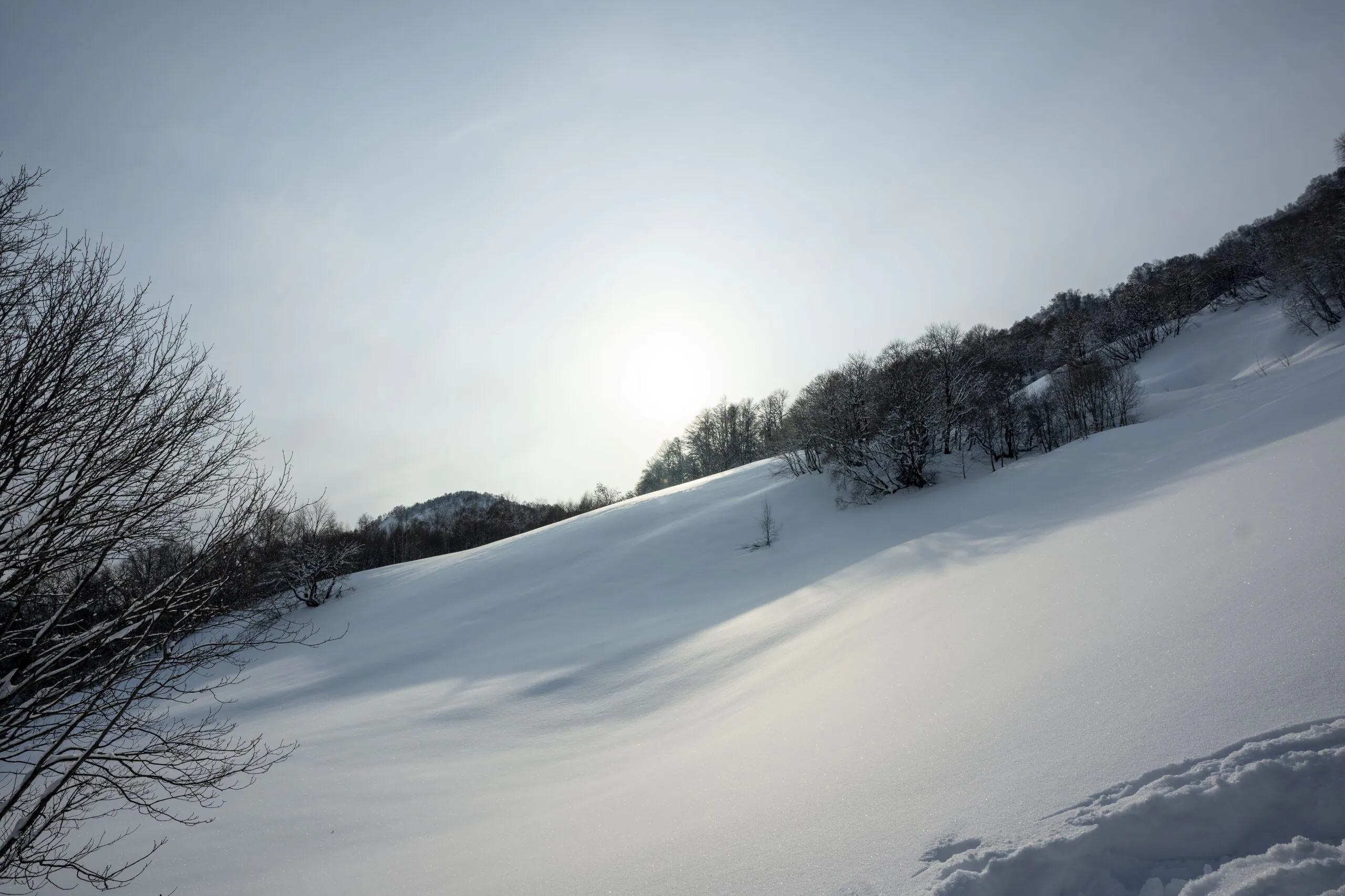
How Gudauri's Elevation Shapes the Snow
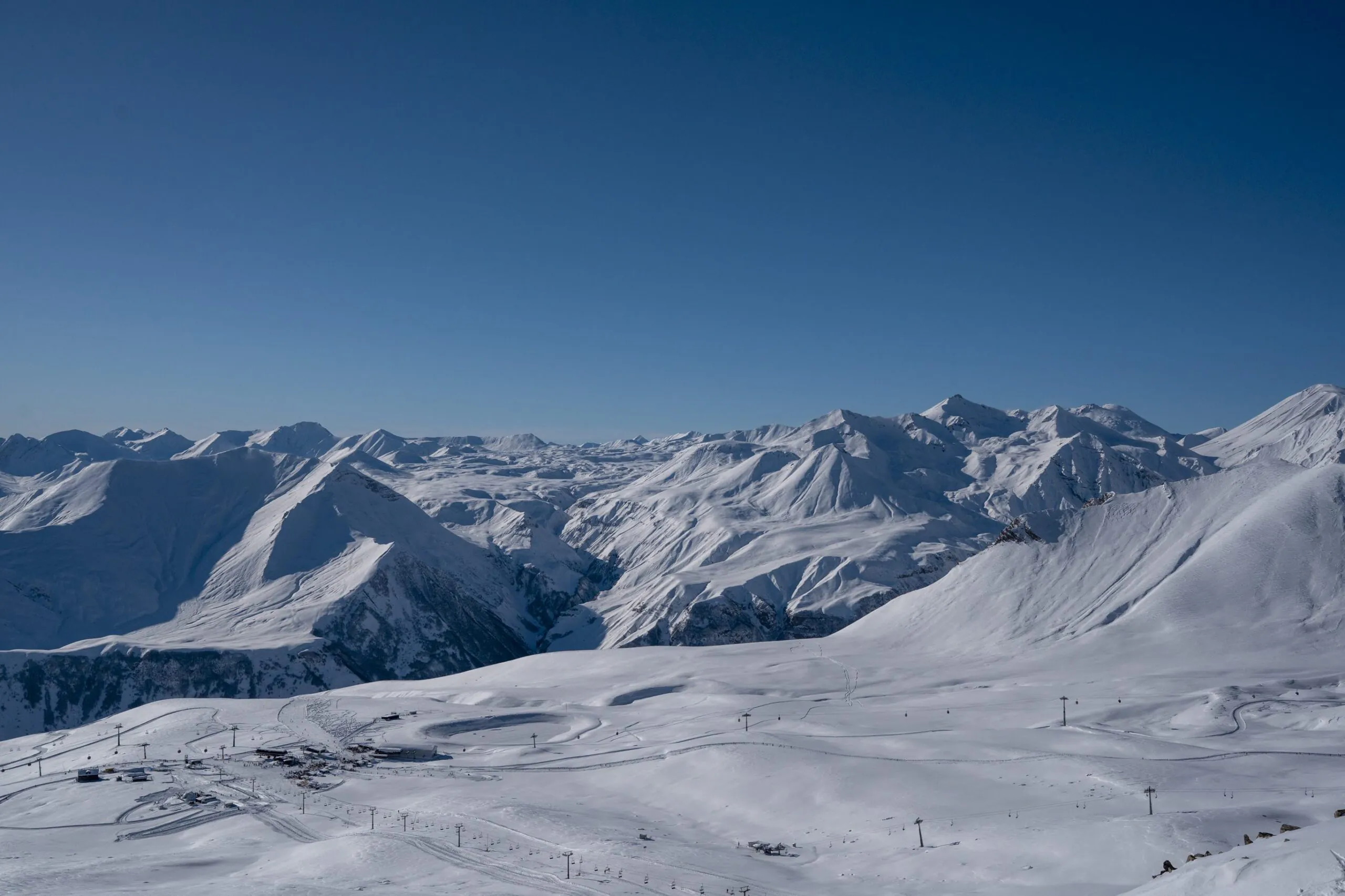
The single biggest reason Gudauri snow conditions are so dependable is vertical drop. The village and lower lifts start near 2,000 metres, the main ski area sits around 2,200 to 2,500 metres, and the top of the lift system tops out above 3,000 metres on the slopes of Mount Sadzele. That is a huge elevation spread, and it means the upper mountain holds snow when the valley below is green and raining.
It also means the month-by-month story plays out differently depending on where you stand. The mid-station at 2,292 metres is the number most snow reports quote, and it is the honest middle of the resort — the village sits about 1,900 metres and thins out fast in April, while the high alpine bowls above 2,500 metres stay deep until the very last lift. When you read a depth chart, remember the number is the middle of the mountain, not the top.
If you are still weighing Gudauri against other resorts in the country, our Goderdzi vs Gudauri comparison breaks down how the snow, terrain and logistics stack up side by side.
Gudauri Snow Depth by Month: The Numbers
Snow depth is the number that actually decides what is skiable, and in Gudauri it changes fast as you climb. At mid-mountain (2,292 m) the average Gudauri snow depth runs 34 cm in December, 57 cm in January, 75 cm in February, 88 cm in March and 81 cm in April — but the same month looks very different at the village level and high on the upper slopes.
| Month | 1,938 m (village) | 2,292 m | 2,497 m | 2,292 m · last 5 winters |
|---|---|---|---|---|
| December | 24 cm | 34 cm | 38 cm | 31 cm |
| January | 41 cm | 57 cm | 63 cm | 52 cm |
| February | 56 cm | 75 cm | 83 cm | 69 cm |
| March | 57 cm | 88 cm | 98 cm | 88 cm |
| April | 28 cm | 81 cm | 91 cm | 77 cm |
Average natural snow depth over the last 20 winters at three elevations in Gudauri; final column shows the last five winters at mid-mountain. Based on long-term resort snow records.
Two practical takeaways. First, snow depth at 2,497 m sits consistently 10–20 cm above mid-mountain, which is why the upper terrain stays skiable into April while the fringes near the village go patchy. Second, reliability beats the average: from 20 February to 17 April the depth at 2,292 m reached 50 cm or more in at least 90% of the last 20 winters — the closest thing Gudauri has to a guarantee.
December: Season Opening and a Fresh Base
The lifts usually start turning around 20 December, and early December snow is exactly what you would expect: a thin but workable base with new snow arriving in bursts. Long-term averages put mid-mountain depth around 34 cm in December, which is enough to open the pistes but not enough to send you into the rocky sidecountry with a clear conscience. Some winters arrive deep and cold; others hold back until the New Year.
The honest read on December is that it is a piste month with the odd powder day, not a freeride month. That said, the end of the month is the single busiest stretch of the whole season, because New Year in Gudauri is a genuine event. If you want the holiday atmosphere, it is brilliant; if you want empty powder, it is the wrong week. We have a full breakdown in our New Year in Gudauri guide.
January: Cold, Stable and Getting Deep
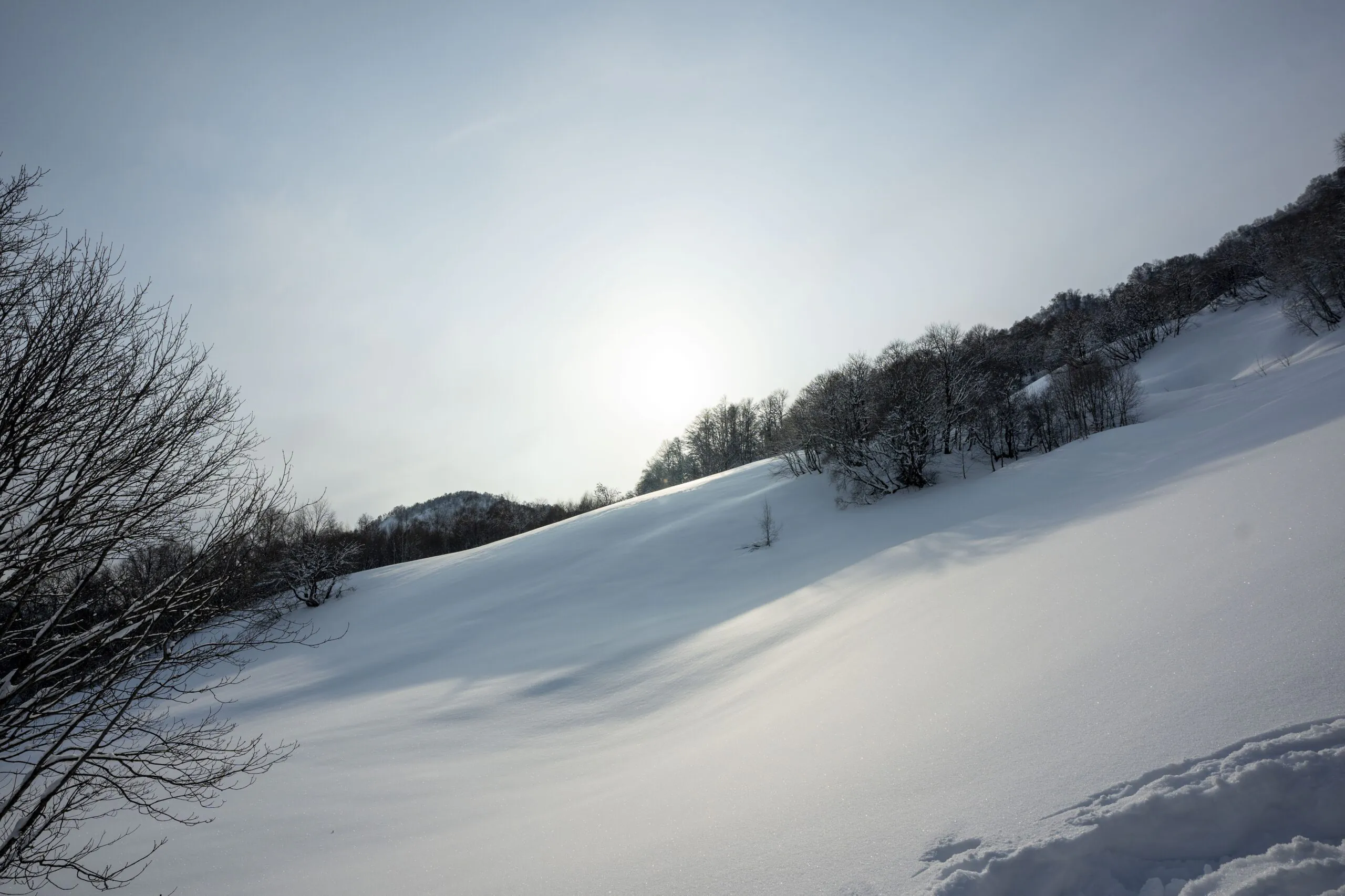
By January the mountain settles into proper winter. Mid-mountain depth climbs to around 57 cm, daytime temperatures sit between minus 3 and minus 7 degrees Celsius, and the snowpack stops being a question mark. This is the month when the freeride terrain genuinely opens up, because the base is deep enough to cover most of the early-season rocks and stumps on the main lines.
January is the sweet spot for people who want cold, dry powder and a stable snowpack without the holiday crush. The crowds thin out after the first week of January, prices dip, and the weather tends to be the coldest and clearest of the season. If you are a first-time freerider building toward your first off-piste week, this is a strong month to be on the hill — and our freeride for beginners guide will tell you exactly what to pack and how to prep.
February: The Deepest, Snowiest Month
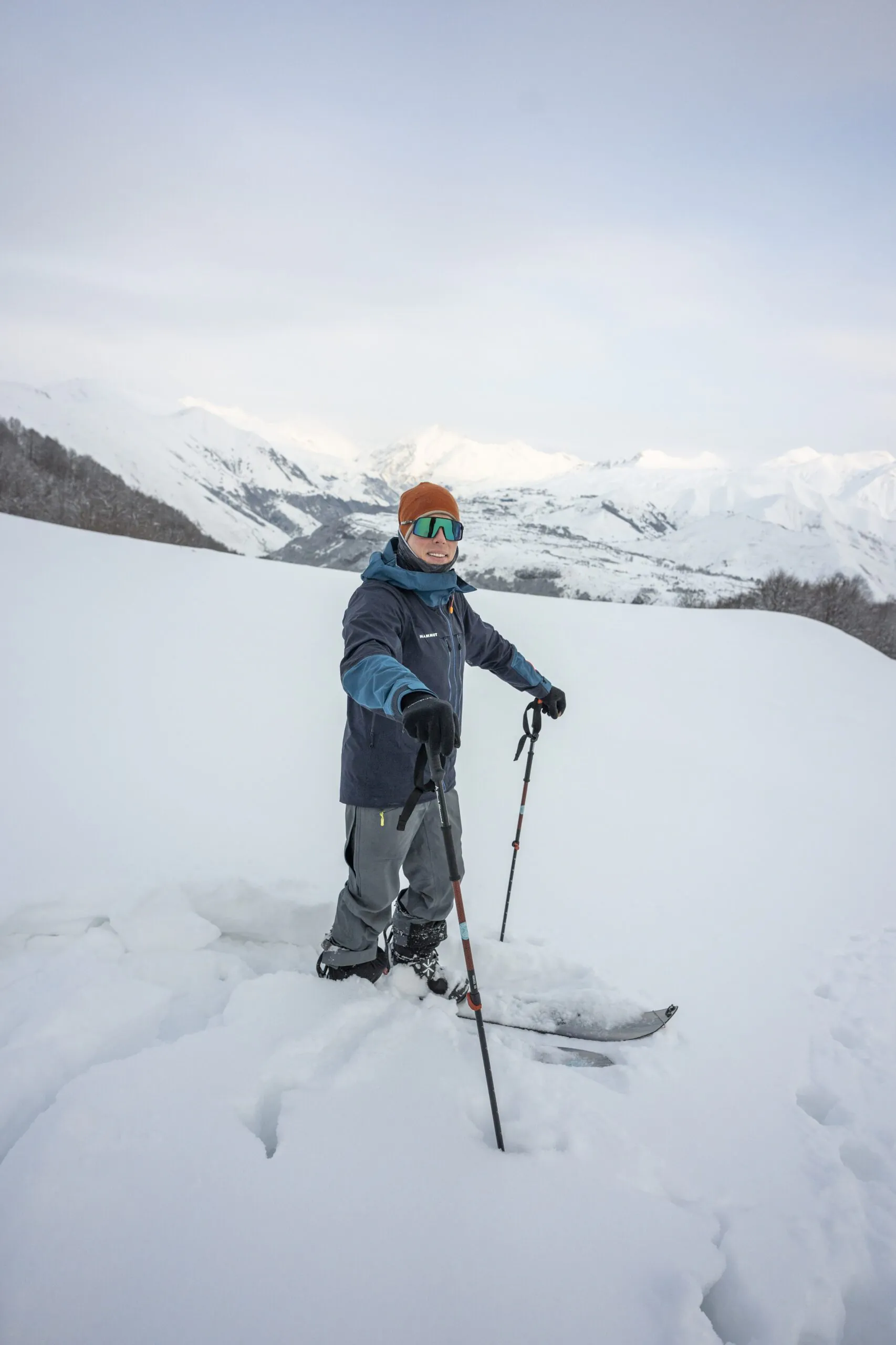
February is where Gudauri snow conditions hit their stride. Mid-mountain depth averages around 75 cm, and the upper stations run deeper still — the high elevation zones above 2,497 metres average closer to 83 cm. February is reliably the coldest and snowiest month, and the back half of the month is about as snow-sure as skiing gets: the week around 20 February has held 50 cm or more at mid-mountain in every one of the last twenty winters.
Gudauri in February is the month most freeride coaches quietly plan around: the base is deep enough to open the steeper lines, storms keep topping it up, and the snow stays cold and dry in between.
For a freerider, February is the headline act. Deep base, regular storms, cold dry snow, and the terrain is fully open. The trade-off is that everyone else knows it too, so expect more people on the good lines than in January. If you are coming for a full week of off-piste, this is the month the 7-day freeride camp and the one-day private guide or group camp formats really earn their keep — local knowledge of where the snow landed and what is safe matters most when the base is deep.
March: Peak Base and the Freeride Sweet Spot
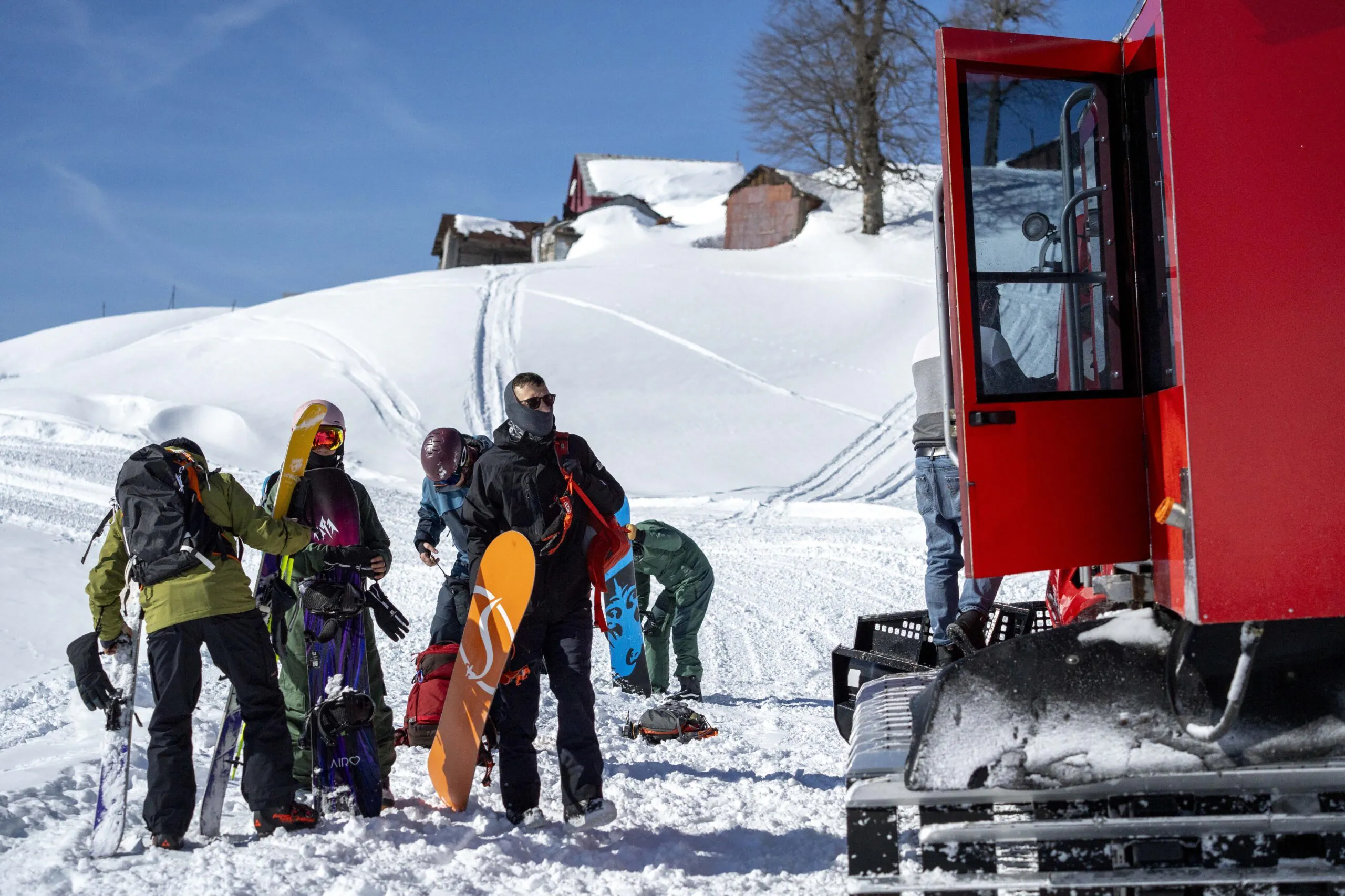
Most people are surprised to learn that March, not February, holds the deepest snow of the year. Mid-mountain depth averages around 88 cm in March, with the high alpine above 2,497 metres pushing toward 98 cm. The season’s storms have stacked up all winter, the base is at its absolute maximum, and the days have stretched long enough that you are not racing the last lift at 4 pm.
Gudauri in March gives you the deepest base of the season without the February holiday crowds — longer days, more direct sun on the south aspects, and the best window for long ski-touring days.
March is the freeride sweet spot precisely because you get February-style depth with March-style light. Mornings are often clear and cold, afternoons can cloud over with a bit of wind, but there are plenty of bluebird days in the mix. On south-facing slopes the snow starts to corn up by late March, which is fantastic if you like long, fast spring runs and easier kick-turns. For a full picture of what the terrain offers once you leave the pistes, our Gudauri freeride zones guide walks through Sadzele, Kudebi, Bidara and Lomisa one by one.
April: Corn Snow, Long Days and the Last Lift
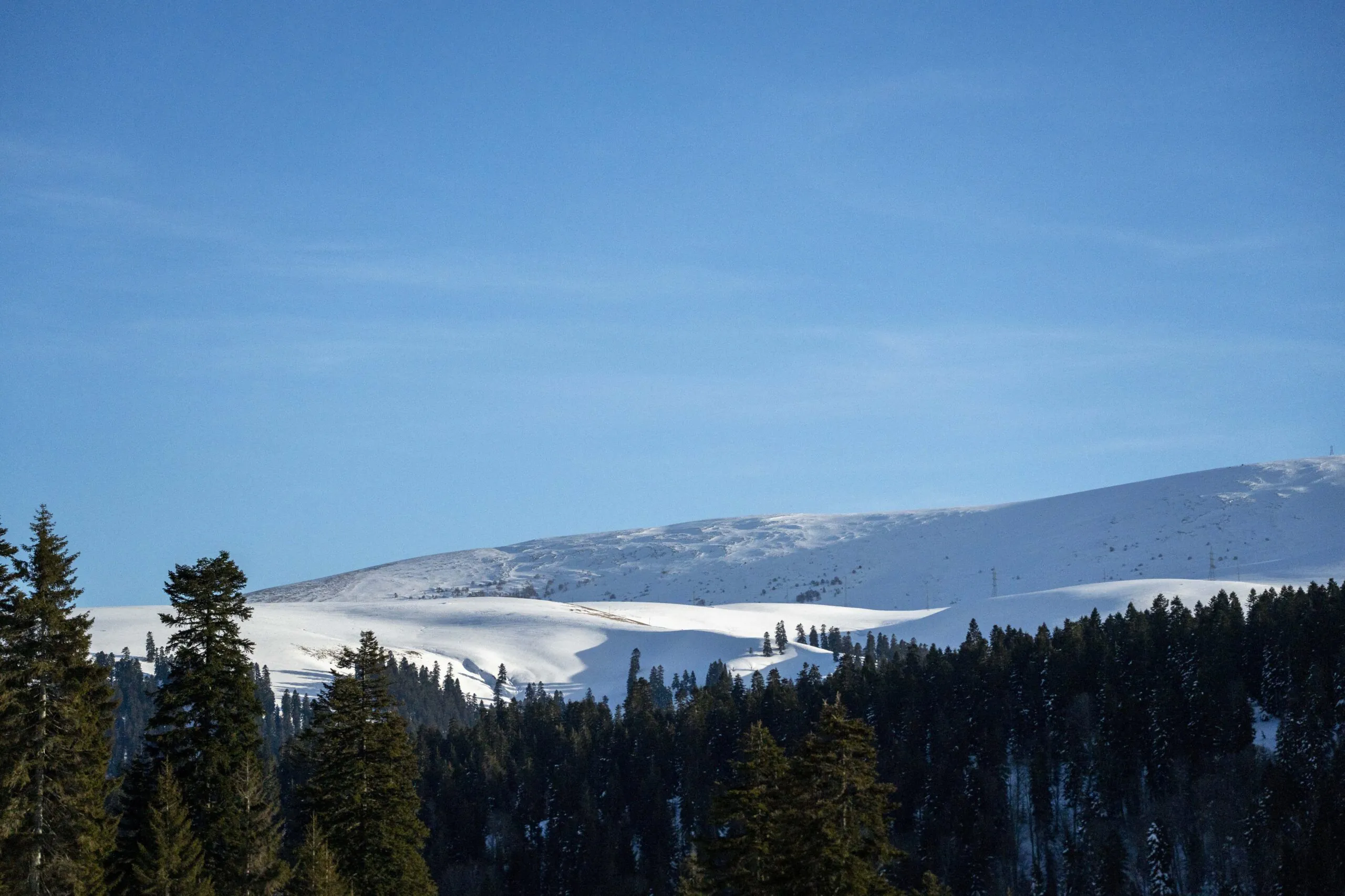
April is a different sport and a lovely one. Mid-mountain depth is still around 81 cm, and the upper mountain holds well above 90 cm on the north-facing and high alpine terrain — but the village down at 1,900 metres is down to a thin 28 cm and melting fast. Daytime temperatures at the top stations run 5 to 10 degrees Celsius, so the snow is firm and grippy first thing, then softens into that perfect spring corn by late morning.
The season usually runs to mid-April, and April is the month of relaxed, sun-soaked ski touring. Long days, warm skin tracks, and nobody in a hurry. It is also when the south-facing lines are at their most predictable, which is exactly why our Lomisa ridge ski tour and the wider ski touring in Gudauri guide point spring riders toward corn season. If you have never tried it, read what ski touring actually is before you rent the kit.
Best Time to Ski Gudauri: Freeride and Ski Touring Windows
If you are choosing a single month, here is the honest ranking for what most people actually want. For pure deep-powder freeride, February is the answer — deepest and snowiest, with the most consistent storm cycles. For the best all-round freeride experience, March wins: maximum base, longer daylight, and a mix of powder days and corn. For ski touring, split the season in two — January and February for cold, stable uphill days and mid-winter powder descents, and late March through April for warm corn touring when the snowpack has settled and the days are long.
There is no wrong month, only the wrong expectation. If you want the whole decision mapped to a season timeline, our best time for freeride and ski touring in Georgia guide covers the wider picture beyond Gudauri.
Crowds by Month: When to Dodge the Queues
Gudauri’s crowd curve is almost the opposite of its snow curve, which is good news if you plan around it. The busiest time by a mile is the New Year holiday, roughly 28 December to 7 January, when the resort fills to the brim and lift queues are real. After that it drops off sharply, and mid-January to early February is noticeably quieter despite excellent snow. School holidays across Europe and Russia bring another pulse in mid-February, then March thins out again as most holidaymakers head home.
March and early April are the sleeper picks for crowd-free riding — you get the deepest or second-deepest snowpack of the year while the pistes are half empty. If avoiding queues matters more to you than catching a specific storm, aim for late January or the second half of March. And if logistics are the thing holding you back, our how to get to Gudauri in winter guide sorts the transfer from Tbilisi.
What to Book When: A Practical Calendar
Here is the whole thing in one timeline you can actually act on. Book the New Year week only if you specifically want the party, and lock it in early — accommodation goes first. For a family piste holiday, aim for late January or early March, when snow is deep but the resort is calm. For a dedicated freeride week, February is the safest bet for powder, while a March freeride week gives you the deepest base and the longest days. For a ski-touring week, January and February for mid-winter touring, or late March and April for corn.
Whatever you pick, sort the lift pass before you arrive — prices and the exact opening date live on our Gudauri ski pass prices page. And if you want a full picture of what a week on the mountain actually costs, the cost of a freeride trip in Georgia guide does the honest maths for you.
Snow Safety: What the Base Depth Does Not Tell You
A deep base is not the same thing as a safe one. Gudauri sits on exposed, wind-loaded terrain, and the same storms that stack up that 88 cm in March also build wind slabs on the lee slopes above Sadzele and Kudebi. Reading the snowpack is a skill, not a number, and it is the difference between the best day of your winter and the worst. If you are riding off-piste, a local guide is not a luxury — it is how you find the good snow and come home.
Before you go, learn to read the reasons to ride with a freeride guide, and check the daily bulletin on avalanche.ge before every off-piste day. We have a full explainer on the levels and what they mean in our Gudauri avalanche forecast guide (in Russian). The mountain rewards the people who respect it.
Traveler's FAQ
When is the best time to ski Gudauri?
Mid-January to late March is the most reliable window. February is the deepest and snowiest month, while March holds the deepest snowpack of the year with longer days and fewer crowds.
How deep is the snow in Gudauri?
At mid-mountain (about 2,292 metres) the long-term average runs roughly 34 cm in December, 57 cm in January, 75 cm in February, 88 cm in March and 81 cm in April. The high alpine above 2,497 metres runs deeper still.
What is the best month for freeride in Gudauri?
February for consistent deep powder, or March for the deepest base combined with longer daylight and a mix of powder and corn. Both are strong; it comes down to whether you prefer cold storms or spring sunshine.
When does the Gudauri ski season open and close?
The lifts usually open around 20 December and run through to roughly mid-April. The exact opening date can move with early snow, so check the season opening details before you book.
Is Gudauri good for skiing in April?
Yes, if you know what to expect. The upper mountain stays deep, with warm sunny days and firm mornings softening into corn by late morning. It is a relaxed, crowd-free month, best for piste cruising and ski touring.
What is the temperature in Gudauri in winter?
January daytime temperatures average roughly minus 3 to minus 7 degrees Celsius at altitude. By April the upper stations warm to around 5 to 10 degrees, which is what turns the snow to spring corn.
Final Word
Gudauri snow conditions are the rare kind that get better as the season goes on. The base builds from December to a March peak, the crowds do the opposite, and somewhere in between there is a perfect week with your name on it. Decide what kind of riding you actually want — cold powder, deep spring corn, or empty pistes — then pick the month that delivers it. The mountain will do the rest.


