
The most straightforward way to learn freeriding from scratch is to take private lessons in Gudauri, in a compact group of two or three people. Every day, you'll ski off-piste with a guide, review videos of your skiing in the evening, and practice using avalanche safety gear separately. The course lasts 5-7 days and is designed for confident skiers and snowboarders.
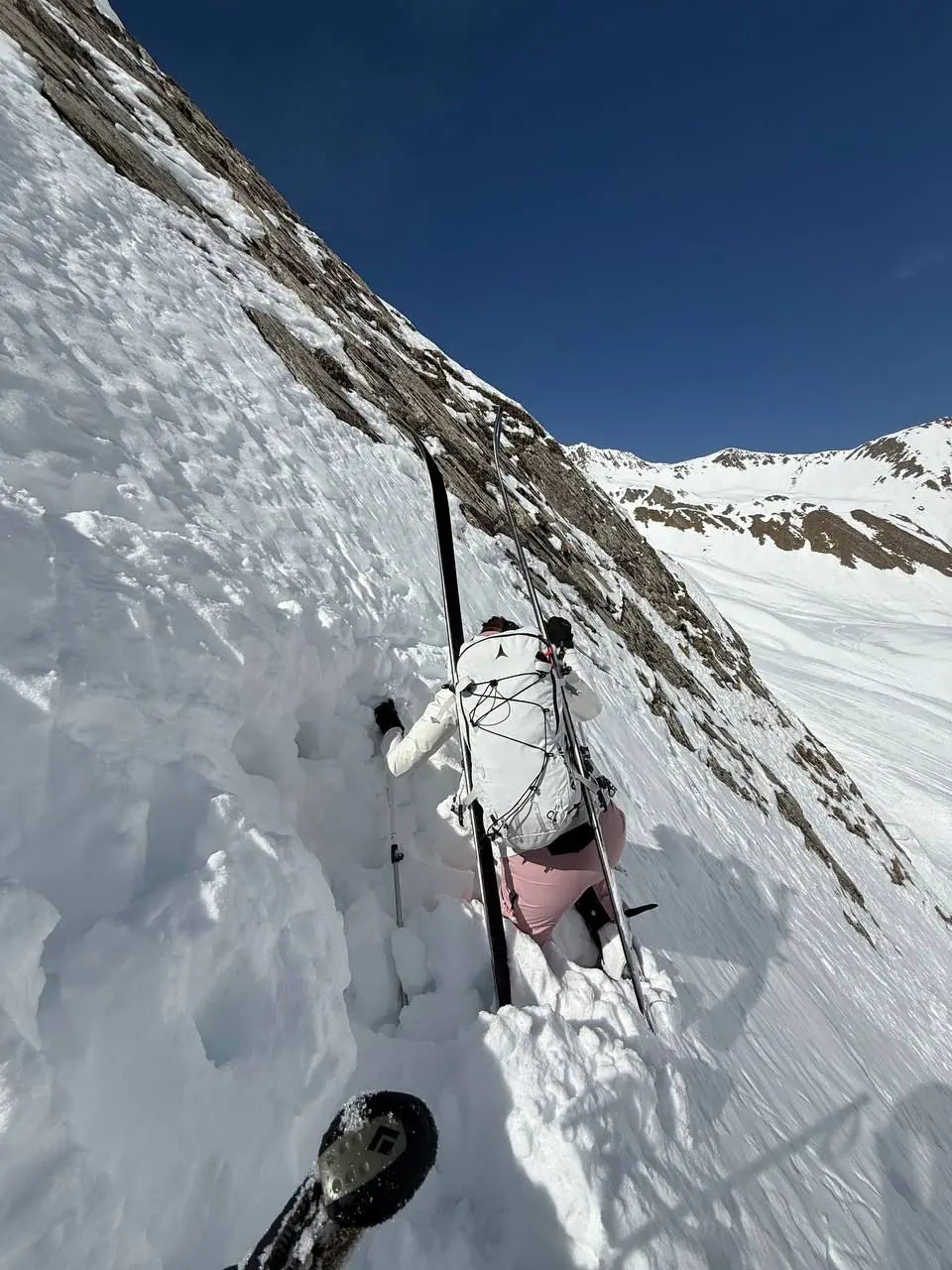
This isn't a lecture format or independent trips along a track from an app. It's a week of structured training, where freeriding is built around a specific task: controlling speed in powder, reading terrain, choosing a safe line, descending through the forest, navigating a couloir. The guide sets the task, you complete it, and in the evening, you watch the recording and analyze your mistakes frame by frame.
We run a program in Gudauri, Georgia's premier freeride region, with altitudes ranging from 2000 to 3270 meters, stable snow cover, and short approaches to the ski areas. For more information on the terrain, read our Gudauri off-piste terrain overview . It's convenient to combine training on groomed slopes with off-piste excursions. For general information on the season, please refer to our article on the 2026/27 ski season in Georgia.
The format we'll be discussing is a freeride course for beginners with a private guide and a group of up to three participants. This is a key difference from the classic seven-day freeride camp in Gudauri and Ortsveri , which gathers up to five people per group. Price is available upon request and depends on the dates, number of participants, and the chosen lodge.
Who is this course suitable for: those who are confident on groomed slopes but are venturing beyond the poles for the first time, and those who have already explored the powder independently, but without a system or analysis. This format is not suitable for complete beginners who are just starting out on skis or a board—they first need a confident level of piste skiing, which can be developed over one or two full seasons.
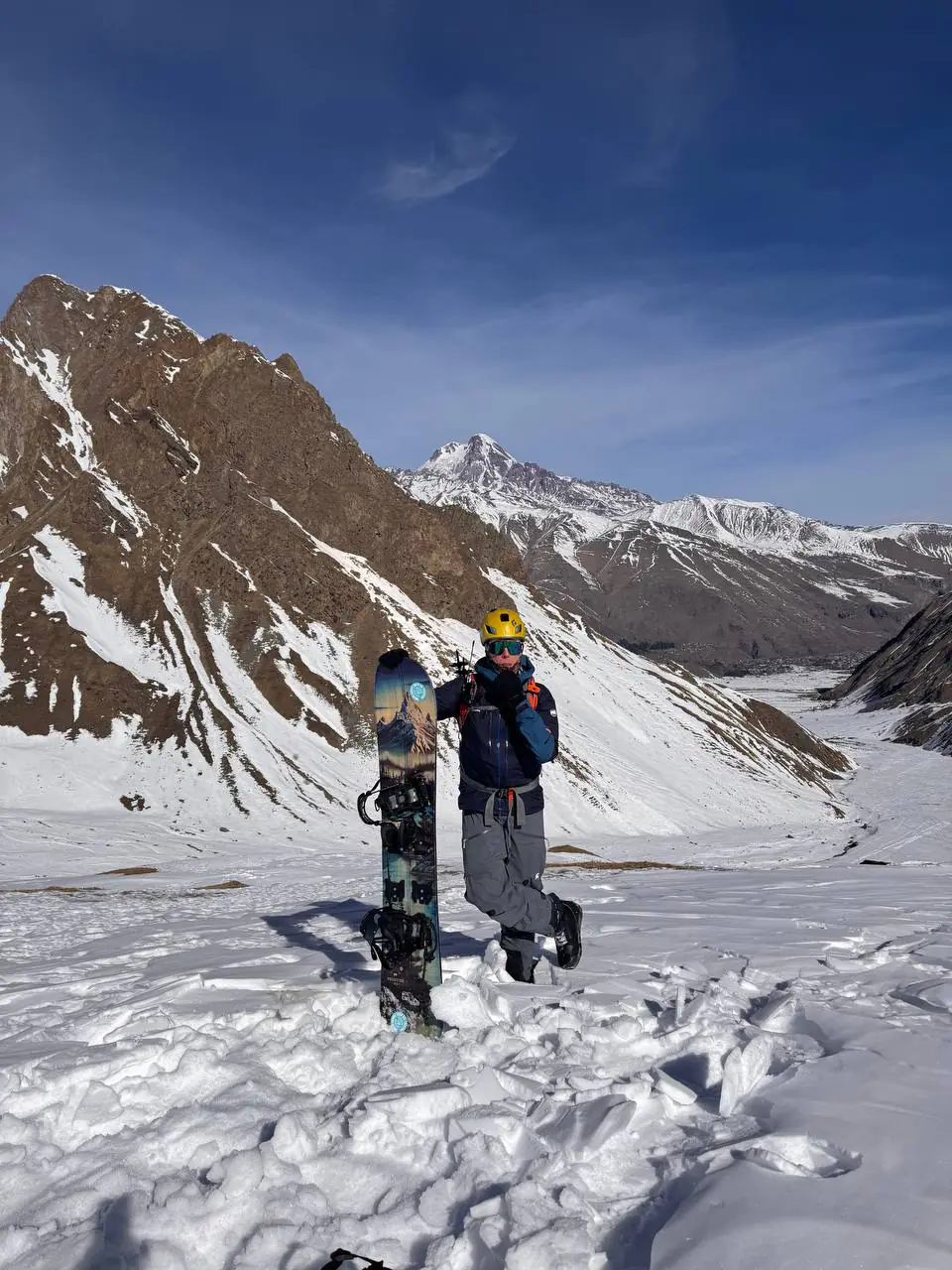
Accommodation in a guest house with single occupancy
You'll stay in a guesthouse in Gudauri or in a village at the foot of the mountain, with single occupancy—a private room for each participant. This isn't a matter of comfort, but rather a work requirement: after five to six hours on the slopes, you need to get a good night's sleep, dry your gear, and quietly review videos of your skiing without disturbing your neighbors. The house has a common room where evening lectures are held, and a space for drying boots and clothes. The guesthouses are a five- to fifteen-minute drive from the base station of the lifts and the off-piste starting points. There's Wi-Fi, a shared kitchen, and a gear dryer—after wet snow, boots and gloves dry overnight.
Food
The price includes breakfast and dinner at the lodge. Breakfast is hearty and quick, and dinner is prepared with a lecture or video analysis in mind. Lunch is either packed or can be booked on the slopes. Dietary restrictions are taken into account when preparing meals; please notify us in advance when booking. Dinner is served after you return from the mountain, before the lecture, to keep the evening short and allow you time to relax.
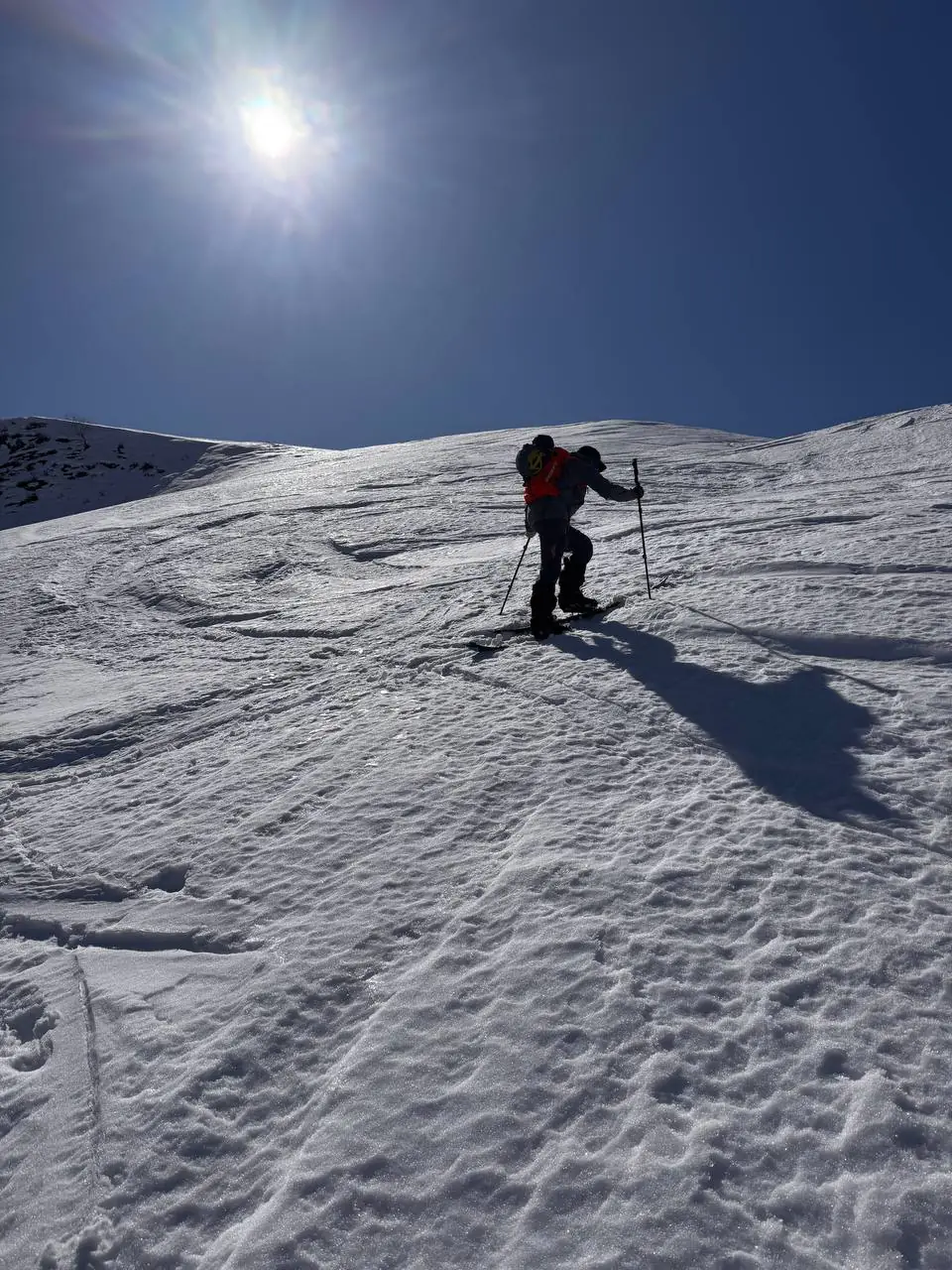
Private freeride guide
A private freeride guide is an instructor with local knowledge of the terrain and avalanche conditions, who leads the group throughout the course. They don't just show the route; they set technical challenges for each descent, select a line appropriate to your skill level, and monitor your progress. The guide knows which slopes in Gudauri hold snow after wind, where hard wind slabs form, and which couloirs open up after snowfall. They distinguish windward and leeward slopes by snow drifts, read snow stratification by testing, and won't lead the group down a suspicious slope, even if the route looks spectacular. The decision to depart is made in the morning, based on the actual snow conditions, not according to a plan drawn up a week earlier. Before each trip, they check the forecast and select an area specifically for the group, not the other way around. A comparison of these formats is summarized in the article " Private Guide or Camp in Gudauri ."
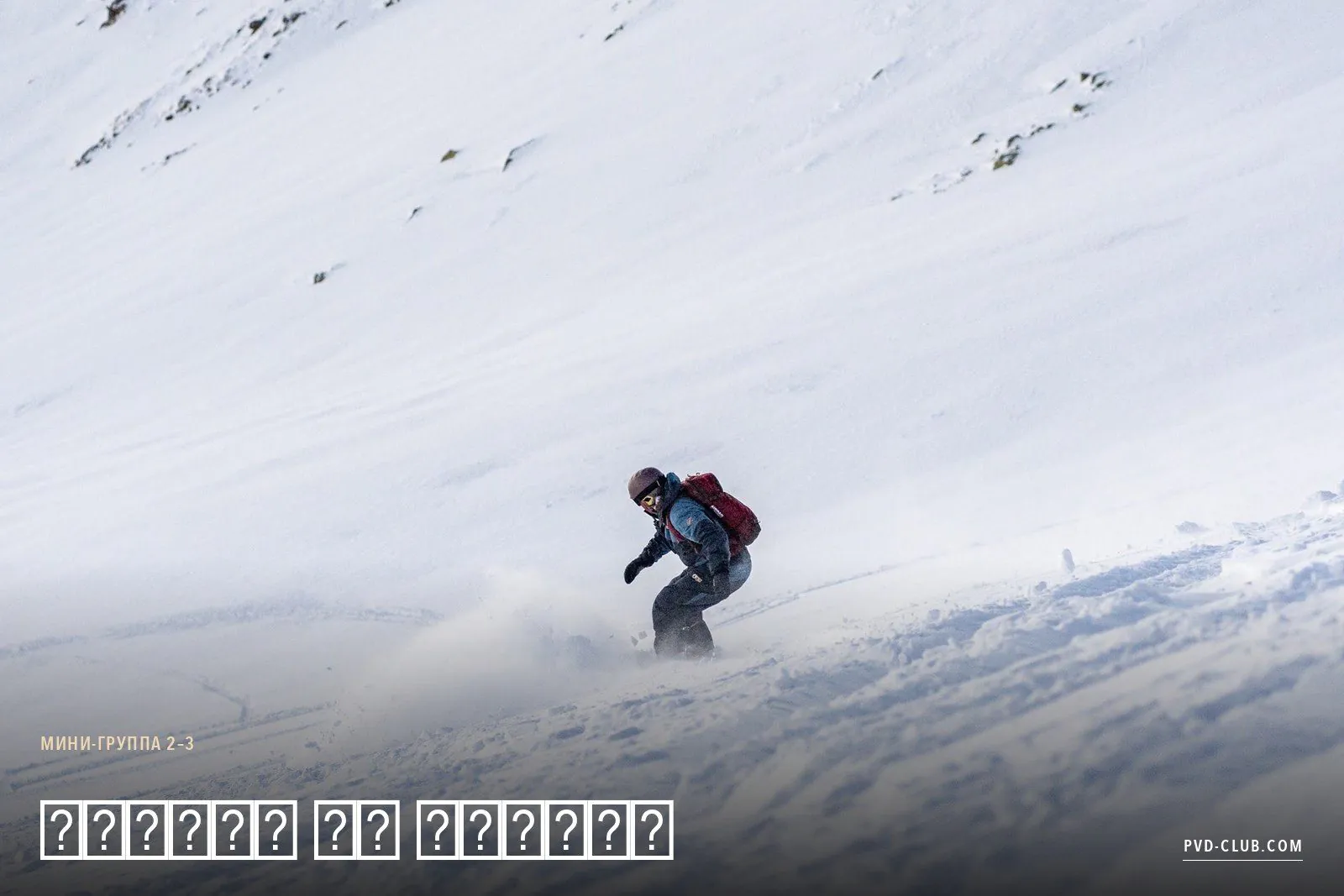
Compact group of up to three people
A group is limited to a maximum of three participants. This is the main difference from a larger camp, where a group can have five or more people. Three people allows the guide to monitor everyone on each descent and adjust the pace to the slowest climber without leaving the others idle.
| Mini-group 2-3 | Large group 6+ | |
|---|---|---|
| Attention of the guide | to each participant on each descent | distributed among six or more |
| Pace | adapts to the group without downtime | averages out, part of the group waits on the slope |
| Video analysis | personal, according to your personnel | common, among others and among our own together |
| Price per person | higher due to the small group | lower due to the number of participants |
A small group means a higher price per person—a direct payment for the intense attention and personalized coaching. For those new to off-piste skiing, this ratio is justified: it's cheaper to correct mistakes early on than to spend a week reinforcing them.
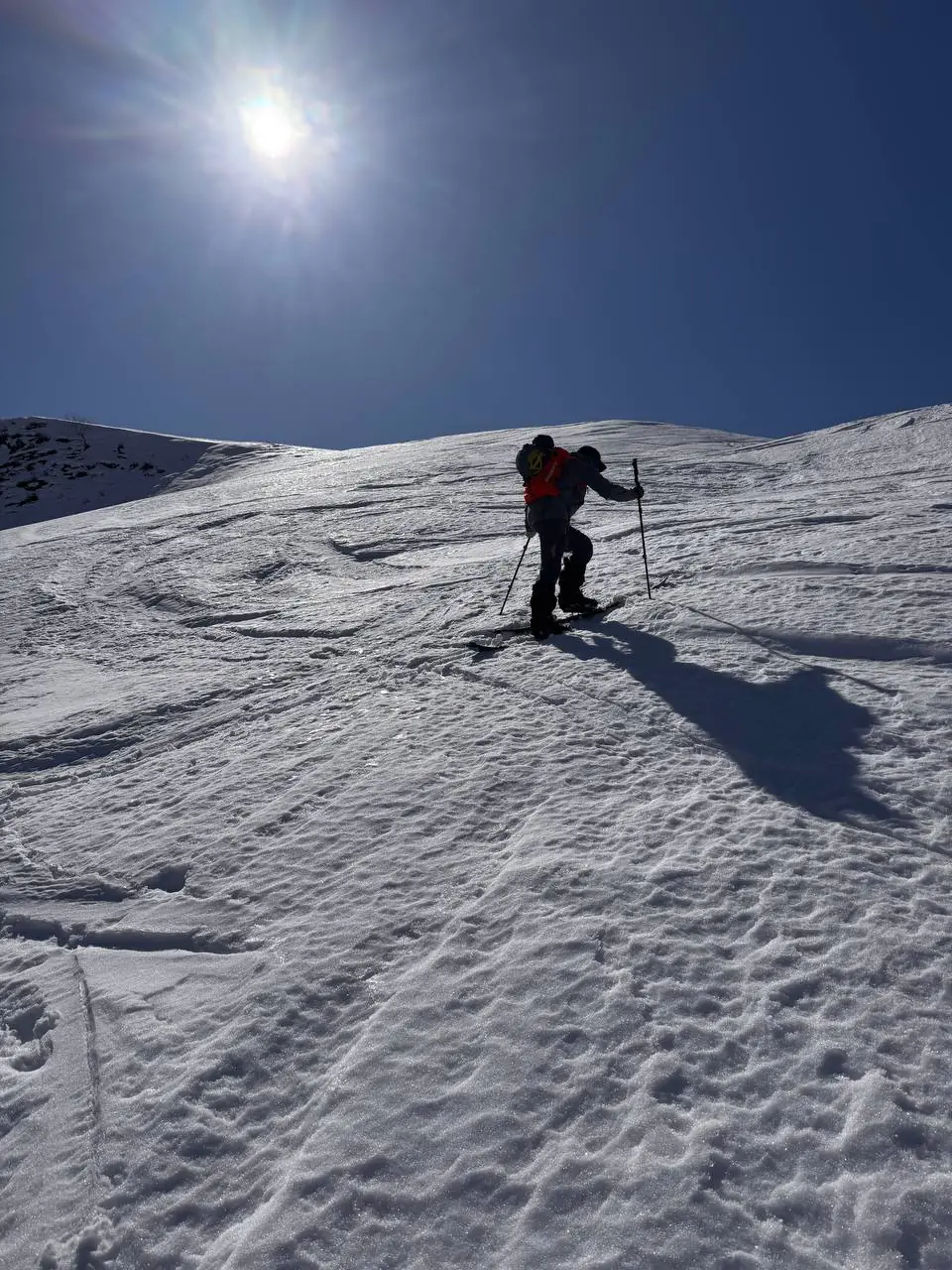
Daily Slope Activities: Freeride for Beginners
The schedule includes daily freeride lessons in Gudauri , built on an incremental schedule. The first few days focus on speed control and turning in powder snow on gentle slopes, then on more challenging terrain: forests and narrow chutes. By the end of the week, a full descent along a chosen line with independent terrain reading is possible. Lessons last 4-6 hours with a break; in bad weather, we move to groomed slopes or into a sheltered forest. Where exactly we ski depends on the snow conditions—it varies monthly; see Gudauri snow conditions by month . A typical day looks like this: a morning warm-up on a groomed slope, then two or three powder runs with analysis in between. After lunch, a more challenging task, such as a couloir or a descent through the forest, with controlled spacing between participants.
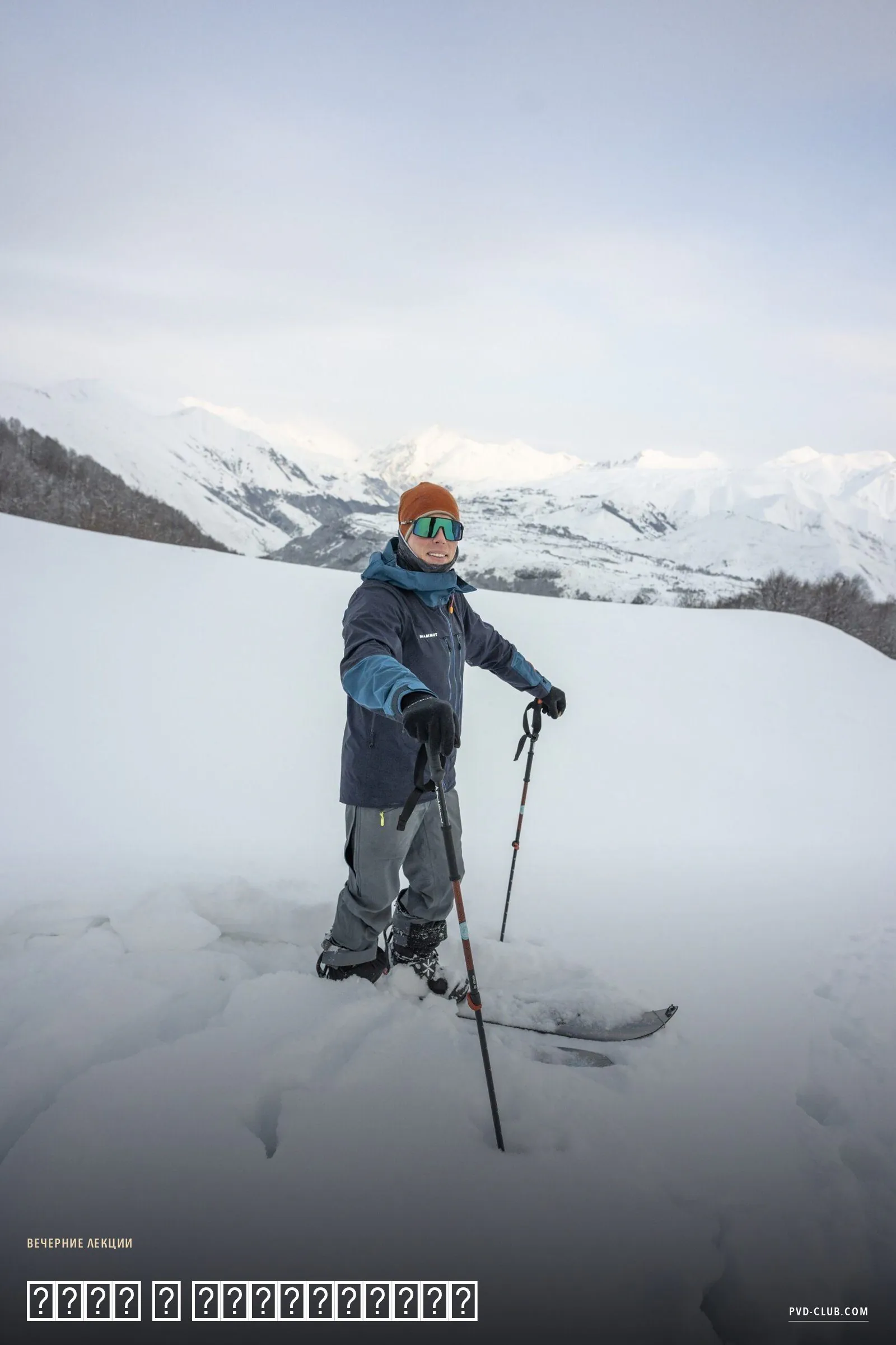
Evening lectures
In the evenings, there are short lectures lasting 40–60 minutes. Topics include reading avalanche forecasts, snow cover types, choosing a line on a slope, using a beeper and a shovel, and route planning using a map. This isn't theory for theory's sake—each topic is practiced on the snow the following day. It's helpful to check Gudauri's freeride zones in advance for skiing zones . We also review the map: where are the safe couloirs in Gudauri, where are the terrain traps, and how to predict the type of snow lying there based on the slope's exposure.
Video analysis of skating
Every day, a guide films your descents, and in the evening, you analyze the footage frame by frame. The video shows what you don't feel: where your body leans back, where your arms go forward, where you lose contact with the terrain. The analysis is based on specific moments of your skiing, not on other people's videos. The recording is done from the side and from below, so your entire body, not just your back, is visible. After three or four days of analysis, you begin to recognize your typical mistakes even before the guide calls them out.
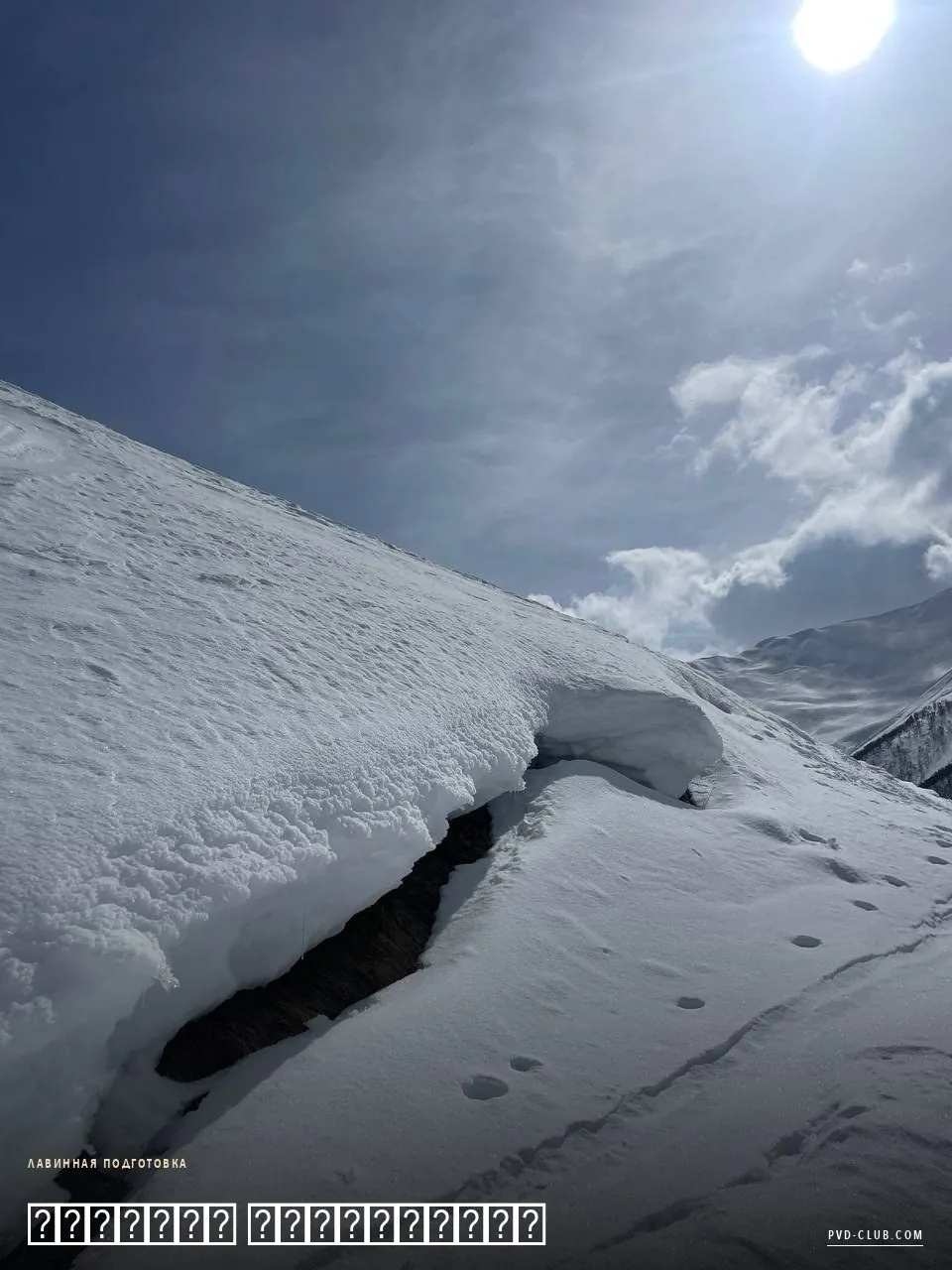
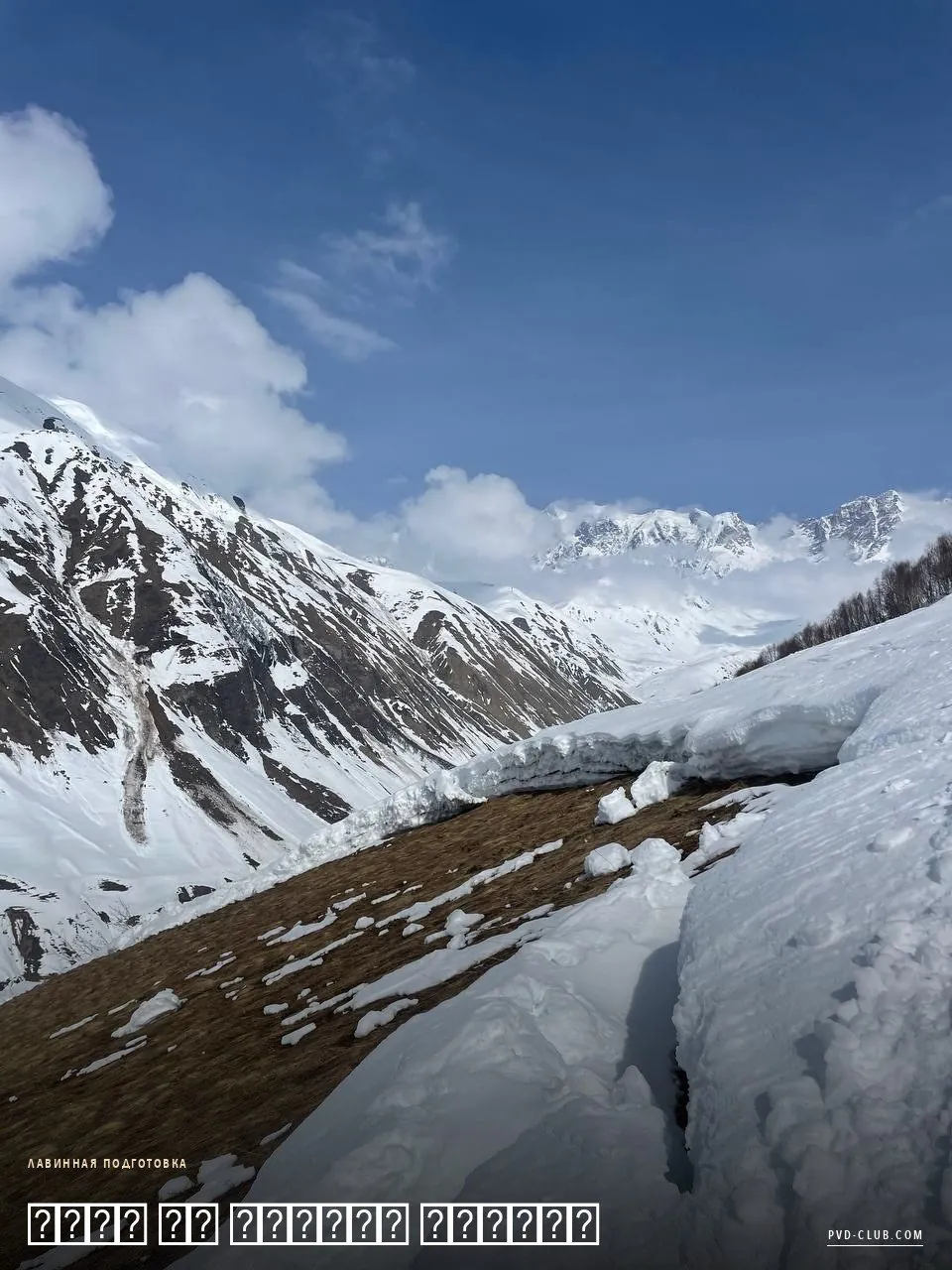
Avalanche training
One full day is dedicated to avalanche training: searching with a beeper and a stopwatch, probing, digging with a shovel, analyzing snow profiles and testing stability, assessing slope angle and exposure. The time limit for searching for a single signal is up to three minutes, and at the end of the day, you take a timed test. Before each trip into virgin snow, we repeat the beeper check for the entire group. We consult the avalanche forecast for Gudauri for the current situation . We practice not only single but also multiple searches: working with overlapping signals and digging out the situation when there are multiple victims. In a mini-group, such training proceeds more quickly because the guide monitors each action in turn.
Off-piste ski touring day
One day of off-piste ski touring: ascent on ski touring bindings and skins, then descent on untouched snow. This is an opportunity to practice ascent technique, terrain transitions, and line selection where the lift isn't waiting. The route is selected based on weather and snow conditions, from a short hike up to the Lomisi Ridge. For a basic overview of technique, see the material about ski touring in Gudauri , and for the specific route, see the description of the ski touring along the Lomisi Ridge . Ski touring days begin earlier than usual, setting out at dawn to ensure you're up and down before the sun softens the slopes. A backpack contains an avalanche kit, a thermos, and a spare layer.
Daily transfers
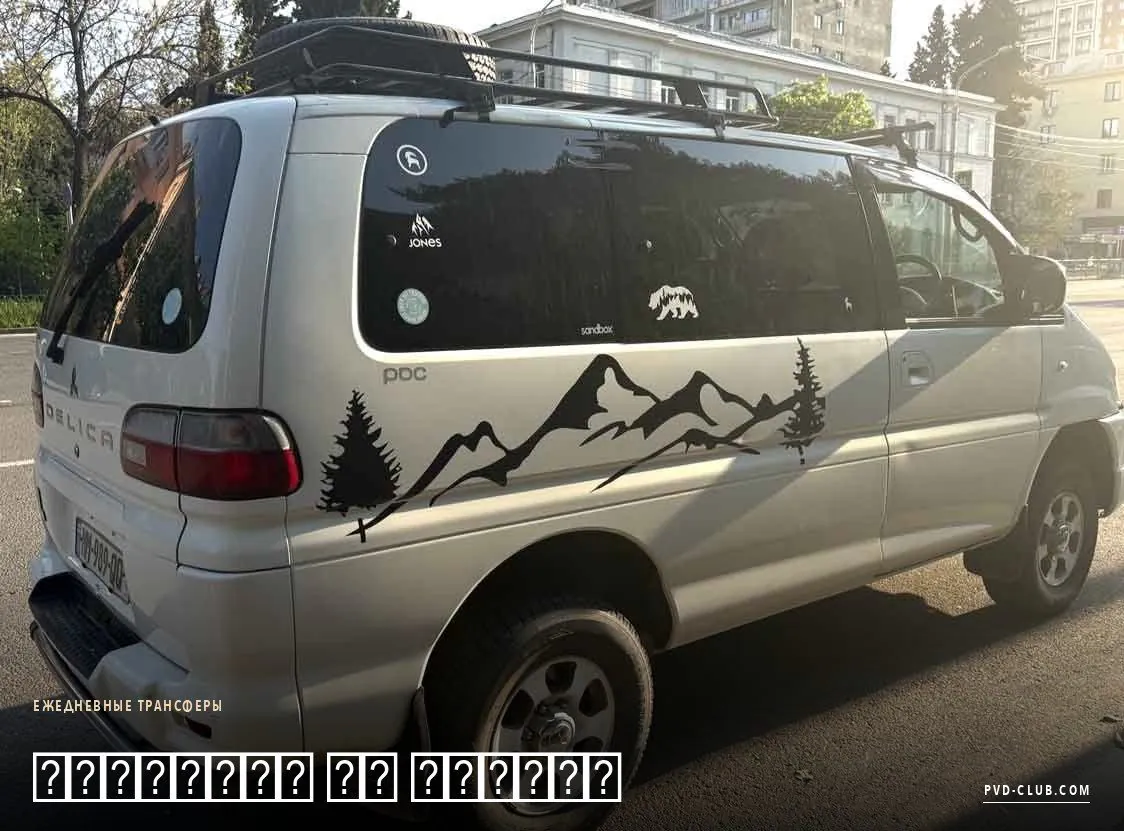
Daily transfers—from home to the starting point and back. Many of Gudauri's freeride areas are not located near the ski lifts, but on passes and in neighboring valleys, accessible by car. The transfer is included in the program, eliminating the need to worry about logistics and car rental. A car picks up the group from their home in the morning and returns them in the evening; at the launch point, the driver waits below to save time walking back to the car.
Safety equipment included
Avalanche equipment is included in the course price: a beeper, shovel, probe, and backpack are provided. You can bring your own kit; it will be checked on the first day. A helmet is required, and you can rent off-piste skis or a snowboard in Gudauri if you don't have your own. A full list of what a beginner will need is available in the guide " How to Start Off-Piste Skiing and What Gear You Need ." Beepers are checked every morning—all participants transmit and receive signals before heading out onto the snow. This is a rule, not a formality.
What is not included
The course does not include a ski pass, ski or snowboard rental, airfare, or off-piste insurance. Lunch on the slopes, alcohol, and personal expenses are at the participant's own expense. The Gudauri 2026/27 ski pass is purchased separately; its price depends on the number of days and category.
Frequent Questions
Do I have enough skills if I only ski confidently on pistes?
Yes. The course is designed for those who are comfortable skiing on groomed slopes and are new to powder. Skiers and snowboarders need confident speed and turn control on red runs; we'll cover deep powder on site.
How is this format different from the seven-day camp?
Group and personalized attention. Up to three participants and a private guide for the entire week are available here, while the camp offers up to five. Fewer people means more attention on the descent, personal video analysis, and a pace tailored to you. The next camp dates are: February 1–7, 2027, February 15–21, 2027, March 8–14, 2027, and March 15–21, 2027.
What is par for the course?
Price upon request. The price depends on the dates, number of participants, and the guesthouse chosen. We will confirm the exact price after a brief discussion of the dates and group composition.
What happens if the weather closes access to virgin lands?
The course runs during the snow-covered season, from December to March. If the weather prevents access to virgin snow, the day is rescheduled for groomed slopes or sheltered forests—the program never stops. The guide always has one or two backup options, so there's no wasted day.
Do I need to bring my own avalanche equipment?
You can bring your own kit—it will be checked on the first day. If you don't have your own, a beeper, shovel, probe, and backpack are provided for the course and are included in the price.
How to get to Gudauri?
The nearest airport is Tbilisi, from where Gudauri is about a two-hour drive along the Georgian Military Highway. For detailed route information, see our guide on how to get to Gudauri in winter.


